Saucy Rossy BBQ
Seafood

Oceanside Smoked Tuna with Garlic Butter Rub

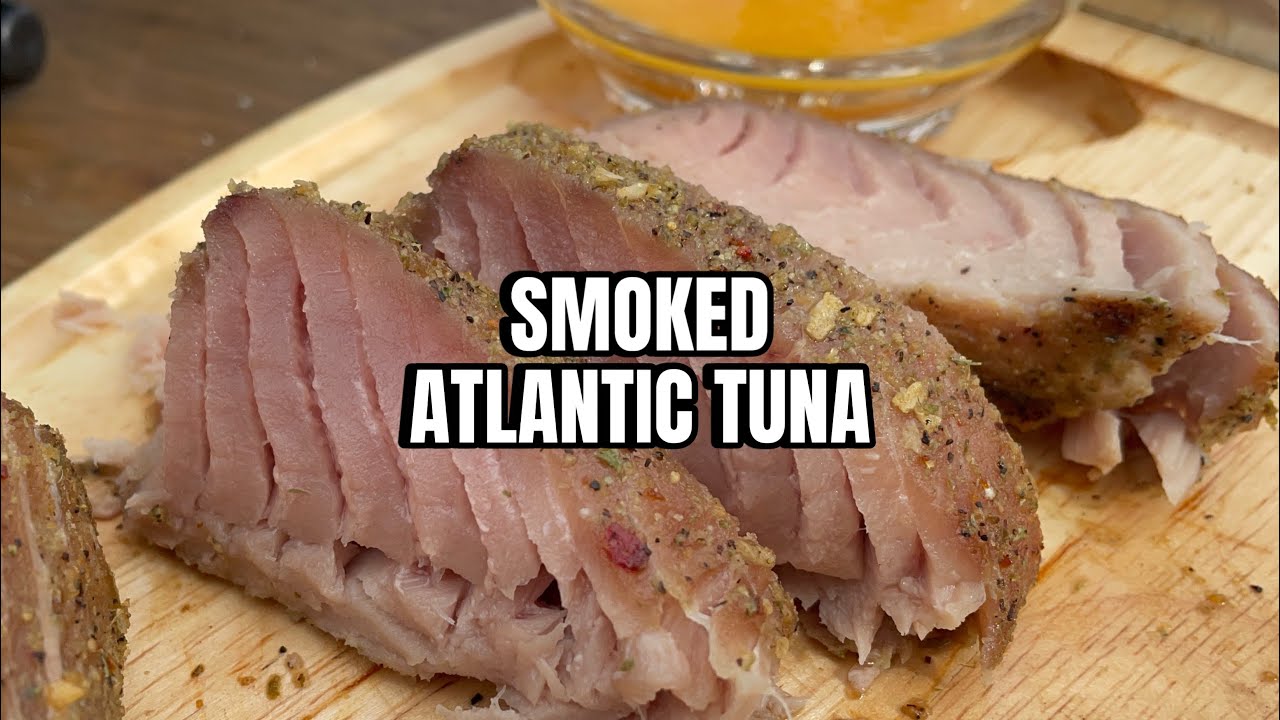
Fresh-caught Atlantic tuna seasoned with garlic butter rub, smoked gently to 120°F on a Pit Boss, and dipped in Spicy Boys OG hot sauce.
TimeLow & slow Prep10 min YieldServes 4 CategorySeafood Watch2:31
Oceanside Smoked Tuna with Garlic Butter Rub — watch on YouTube

Watch the full cook on YouTube

Method

  1. 1Season the tuna all over with Heath Riles Garlic Butter Dry Rub.Pat the tuna completely dry first. A garlic butter rub carries fat, which helps on a fish this lean — tuna has almost none of its own and dries out faster than salmon.
  2. 2Set the Pit Boss pellet grill up for a low and slow cook.Low and slow here means around 200–225°F. Tuna is dense and lean, and gentle heat is what keeps it from going chalky.
  3. 3Smoke the tuna gently until it reaches 120°F internal.120°F is deliberately low and it is the whole point — this is tuna, not salmon. It should come off rare to medium-rare in the centre, the way you would eat a seared tuna steak. Taking it to 145°F would give you something closer to canned tuna.
  4. 4Pull it off the grill and give each piece a dip in Spicy Boys OG Hot Sauce.Dipping rather than glazing means the sauce never sees heat, so a vinegar hot sauce stays sharp instead of cooking down.
  5. 5Serve right away — tender, juicy, and smoky with a fiery finish.Serve immediately. Tuna carries over and firms up as it sits, so the window between perfect and overdone continues after it leaves the grill.

Watch it on YouTube

What each ingredient is doing

Tuna
Very lean and dense, with almost no intramuscular fat. That is why it comes off at 120°F rather than the 145°F you would use for salmon — there is nothing to keep it moist past rare.
Garlic butter dry rub
A rub carrying fat, which genuinely helps on a fish this lean. Garlic and butter are also assertive enough to stand up to smoke without being lost.
Hot sauce
Used as a dip after cooking rather than a glaze during it, so the vinegar stays sharp rather than cooking down. Acidity is exactly what a rich smoky fish wants.
Pellet grill
Its steady low-temperature control suits a fish with a very narrow window. On a fish this lean, temperature stability matters more than smoke volume.

Temperature guide

StageTempWhat it means
The target120°F / 49°CRare to medium-rare. Tuna is lean and dense — this is not salmon.
Too far135°F+ / 57°C+Chalky and dry, closer to canned tuna in texture.
Smoker200–225°F / 93–107°CGentle. Higher heat drives moisture out of a lean fish fast.
ServeImmediatelyIt keeps firming as it sits.

Pitmaster tips

  • Start with the freshest tuna you can get, ideally sushi- or sashimi-grade, since it's cooked gently and served on the rare-to-medium side.
  • Keep the smoker low — this is about flavour and gentle warmth, not searing. A steady low temp gives you even doneness from edge to centre.
  • Pull at 120°F for a moist, tender, medium finish. Tuna keeps cooking off the heat, so err early; past about 130°F it dries out fast.
  • Pat the tuna dry before seasoning so the rub sticks and the surface takes on colour.
  • Use a mild wood — a lighter smoke complements fish, while heavy hickory or mesquite will bulldoze it.
  • Slice against the grain in thick pieces and serve right away; smoked tuna is best warm off the grill.
  • 120°F, not 145°F. This is the single most important thing here — tuna is lean and dense and should come off rare, the way you would eat a seared tuna steak.
  • Give it 20–30 minutes uncovered in the fridge after seasoning. A tacky pellicle is what smoke sticks to, and without it you get very little flavour.
  • Use a fish mat or grill basket. Tuna holds together well raw but flakes once cooked, and lifting it off a bare grate is where it falls apart.
  • Dip rather than glaze. Keeping the hot sauce off the heat means the vinegar stays sharp rather than cooking down into sweetness.

If it goes wrong

It came out dry and chalky
Past 120°F. Tuna has almost no fat and its window is narrower than salmon's — check early and pull the moment it reads.
It has no smoke flavour
Give it 20–30 minutes uncovered in the fridge after seasoning to form a pellicle. Smoke slides off a wet surface.
It fell apart on the grate
Tuna is dense but flakes once cooked. Use a fish mat or grill basket, or leave the pieces thicker so they hold together.
It tastes overwhelmingly smoky
Fish takes smoke fast. Use a mild pellet and a shorter cook — 45 minutes is enough for a piece this size.
The centre was raw and the outside overcooked
The grill was running hotter than set. Check at grate level; a lean dense fish shows temperature errors immediately.

Ways to change it up

Sear after smoking
Smoke to 110°F then sear hard for 30 seconds a side. A smoked reverse-seared tuna steak, and arguably the best version.
Sesame crust
Coat in sesame seeds before smoking and serve with soy and wasabi. Takes it in a completely different direction.
Tuna salad
Flake cooled smoked tuna into mayo, celery and lemon. A dramatically better tuna salad than the tinned version.
Different fish
Swordfish and mahi behave similarly — lean, dense and unforgiving. Salmon is the opposite and wants 145°F.
Citrus and herb
Lemon zest, dill and olive oil in place of the garlic butter rub. Lighter and more classic with fish.

What to serve it with

  • Immediately, while it is still warm and rare in the centre.
  • Lemon or lime wedges — acidity against smoke and fat.
  • A crisp salad or slaw.
  • Rice or crusty bread.
  • A crisp white wine or a cold lager.

Storage & reheating

Smoked tuna is best eaten fresh, but leftovers keep refrigerated up to 2 days in an airtight container. Because it's lean, it dries out quickly, so store it as a piece rather than sliced thin.

Rather than reheating (which overcooks it), enjoy leftovers cold — flaked over a salad, folded into a rice bowl, or on toast. Freezing isn't recommended; the texture suffers.

FAQ

Is smoked tuna cooked all the way through?

This recipe cooks it gently to 120°F, which is a medium, still-moist finish — not raw, but not the dry, flaky texture of a fully cooked fillet. Start with very fresh, high-quality tuna for a cook this gentle.

What internal temperature should smoked tuna be?

Around 120°F for tender, medium doneness. If you prefer it more cooked through, go a little higher, but expect it to firm up and dry out quickly past 130°F.

What wood pairs best with tuna?

Light, mild woods — alder, apple or a little maple — add smoke without overwhelming the fish. Avoid strong woods like mesquite.

Can I use frozen tuna?

Yes, if it's high-quality and properly thawed in the fridge — a lot of 'fresh' tuna was flash-frozen at sea anyway. Pat it very dry before seasoning so it takes smoke and colour.

Why only 120°F when salmon goes to 145°F?

Because tuna is lean and dense where salmon is fatty. Salmon's fat keeps it moist at 145°F; tuna has almost none, so at that temperature it goes chalky and dry — closer to canned tuna. Treat smoked tuna the way you would a seared tuna steak: rare in the middle.

How do I get smoke to stick to fish?

Form a pellicle. Season the fish and leave it uncovered on a rack in the fridge for 20–30 minutes so the surface dries into a slightly tacky layer. Smoke particles adhere to that and slide straight off a wet surface — it is the most commonly skipped step in smoking fish.

Know your cook

More information, cause recipe back stories are stupid

No 500-word life story — just the good-to-know stuff on what’s actually in this cook. Here’s the rundown on every real ingredient, health and nutrition wise.

Tuna
Tuna is a very lean, high-protein fish rich in omega-3s, selenium, and B12. Because it's lean it dries out easily, which is why it's smoked gently and served on the rare side.

General nutrition info only, not medical or dietary advice — portions, brands and add-ons change the numbers.

← All recipes  ·  All 9 seafood recipes