Built to last
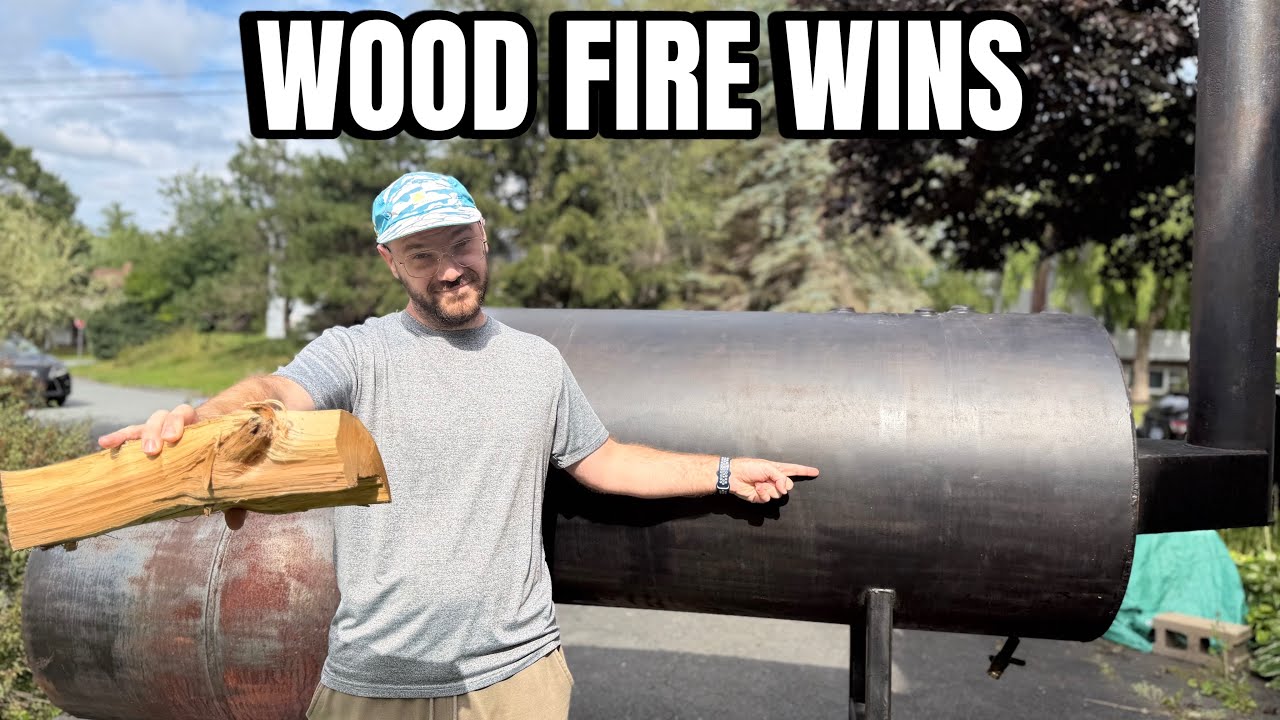
Ross owns a pellet smoker and a charcoal grill, and still calls the offset the pinnacle. His is custom built, from what he estimates is quarter-inch steel, and it is heavy: somewhere around 1,200 to 1,500 pounds by his guess. That weight is the first reason on his list. A pit built like that is not going to rust away in the driveway.
It can still pick up surface rust, and he looks after it the way you would a cast iron pan, by seasoning it. A thin coat of cooking oil heated onto the steel forms a protective layer that keeps moisture off, and touching up bare or rusty patches as they appear stops surface rust from turning into anything worse. With that basic maintenance, his view is that a pit like this will last a lifetime.
The weight matters for cooking too, not just longevity. Heavy steel holds heat, so the temperature in the chamber moves slowly and predictably rather than swinging with every gust of wind or lid opening. The construction is simple as well, with no electronics to fail and very little that can break.
Real wood, and your choice of it
Two of the reasons on his list go together: you are cooking over real wood, and you choose which wood. On an offset you build and feed the fire yourself, so the smoke comes from whatever goes into the firebox. Ross names maple, apple, oak, mesquite, hickory, peach and cherry, and says the list goes on.
The design is what makes that smoke count. The firebox sits to one side, and the draw from the chimney pulls heat and smoke across the cook chamber and out the other end. In Ross's words, the pit is meant to breathe smoke, and that airflow through the main chamber is a big part of why he rates its flavour above a pellet smoker or a charcoal grill.
Choosing the wood is a real lever on flavour. Fruitwoods such as apple, cherry and peach give a mild, slightly sweet smoke, and maple is similarly gentle. Oak is the middle ground: clean, steady and well suited to long cooks like brisket. Hickory is stronger, and mesquite is the strongest of the common woods, which is why it is often used with a lighter hand. Whatever the wood, it should be seasoned and burning cleanly; thin, pale-blue smoke tastes far better than thick white smoke from a smouldering fire.
Fire control and capacity
Reason three is fire control. Ross finds he can move the temperature up or down faster on the offset than on his other cookers: add logs to bring it up, remove some coals to bring it down. He calls it easy to be precise with, once you understand and master it.
That learning curve is the trade-off, and Ross does not hide it. Offsets are hands-on, they need patience, and you have to learn how to manage a fire. That is exactly what he likes about them, and in his view it makes you a better barbecue cook. The fundamentals are simple enough: start from a solid coal bed, keep the fire burning cleanly, add small splits before the temperature drops rather than after, and make one adjustment at a time.
The next reason is capacity. On his pit, Ross estimates he could cook 20, maybe 25, pork shoulders at once, around 12 trimmed whole briskets, or perhaps 30 racks of ribs laid out properly after trimming. If you regularly cook for a crowd, that kind of space is the difference between one cook and several.
More than low and slow
Low and slow is what offsets are known for, and Ross calls it king. But he counts hot and fast as a reason in its own right. The cooking in the main chamber is still indirect, but at higher temperatures it behaves more like a convection oven, which suits large items: a big turkey, a goose, or a leg of deer.
Some offsets also let you cook directly in the firebox. Ross's is big enough to set cast iron straight into the coal bed for cowboy-style cooking. Not every offset has a firebox built for that, so check before you buy if the feature matters to you.
He also uses his for smoking cured meats at low temperatures, and has made sausages on the channel from jalapeño cheddar to Halifax donair. He describes smoking cured meat at around 140°F, which is inside the 40–140°F range food-safety guidance calls the danger zone. As he says, that sounds sketchy but is not a problem as long as the meat is cured properly. The curing salt, which contains sodium nitrite, is what guards against botulism during those long hours at low temperature, so it has to be measured exactly. The same approach covers kielbasa, other cured and smoked meats, and salmon.
Finally, the offset works year-round. A wood fire produces enough heat to cook in any season, and Ross was already looking forward to winter cooking on his. For anyone on the fence, that is his closing argument: real wood, real control, and a cooker that does far more than one job.


