Setting up on site
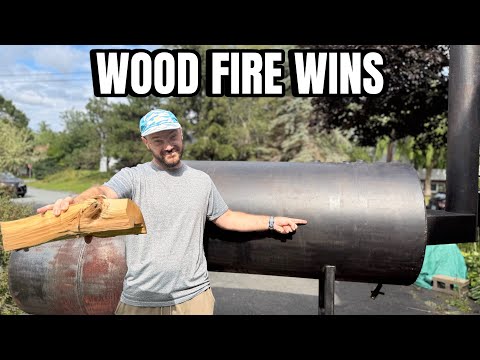
This is the weekend itself; the game plan was laid out in part one. Ross set up at Smoke on the Bay near Clare, on the southwest shore of Nova Scotia, with two cookers: his offset smoker and his Traeger Woodridge Pro. The wind was blowing, cloud was rolling in and rain was all but certain, so a tent went up over a covered workstation before the meat came out.
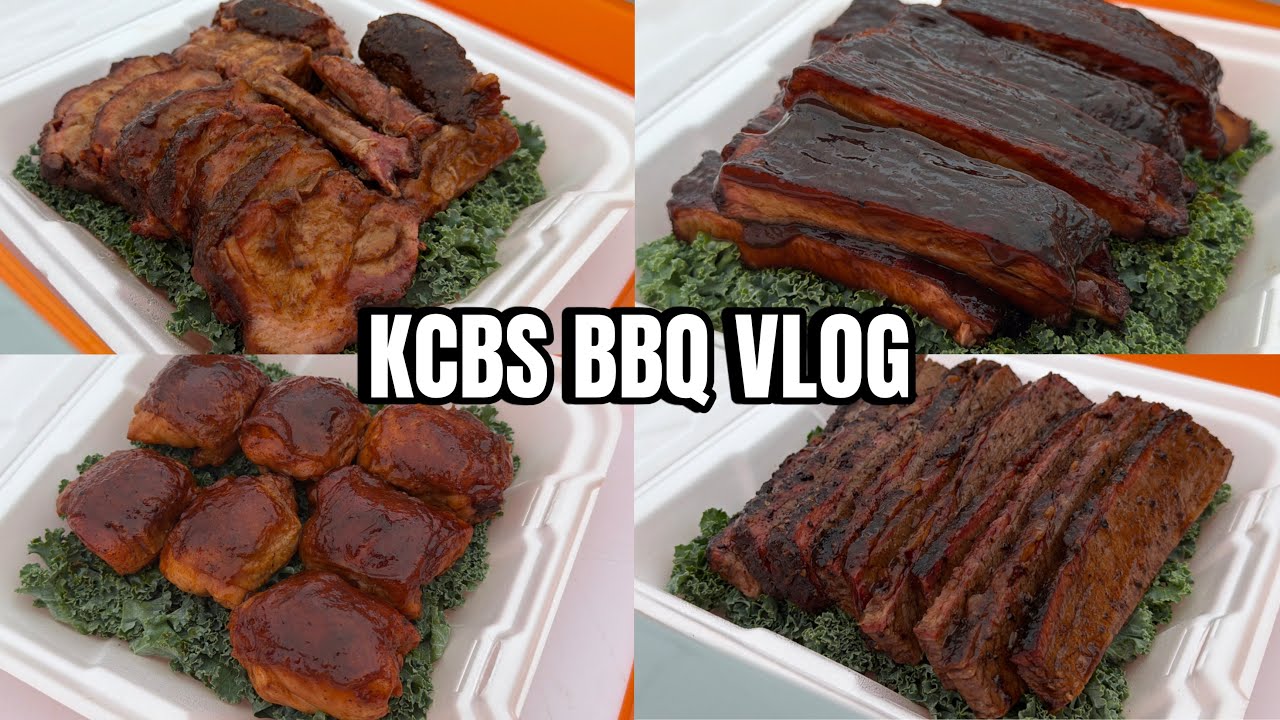
The load was a brisket, three pork shoulders, four racks of ribs and twenty-something chicken thighs. Nearly everything went on the offset; the chicken went on the Traeger. Splitting the work that way makes sense at a contest. Chicken is a short cook that happens late in the morning, while the offset is committed to the long cooks from the night before, and putting the chicken on a second cooker means neither has to compromise.
His next-door neighbour on the site was Alex of Back Forty Smoke Co., a Nova Scotia builder who makes smokers and had one of his own pits at the competition. That is part of the appeal of a contest: cooking next to people who build and run this equipment, and seeing how they work.
Running the offset through the night
The brisket, Nova Scotia grass-fed beef from Vessel Meats, was seasoned and on the smoker at around 10 p.m., running low and slow at 225°F overnight. At 11:30 p.m. Ross was winding down while a few teams were still at their stations prepping seasonings, sauces and injections. At 2 a.m. he put on the pork shoulders and the money muscles he had separated from them.
Working backwards from turn-in is what dictates those hours. Brisket and pork shoulder are long cooks with plenty of variability, so they go on the night before, while the shorter cooks follow in the morning. Getting it wrong is costly in either direction: too late and the meat is not ready, too early and it has to be held for hours.
Around 6 a.m. he started spritzing the brisket and pork shoulders with apple cider vinegar. His aim was to build bark without letting the surface dry out. A light spritz keeps the edges from drying and darkening too fast; too much, or too often, washes at the rub and cools the surface, which softens the bark and slows the cook.
By then it was pouring. The firebox had a good coal bed, nothing too intense, and the smoker was running at about 250 to 275°F, closer to 275°F by his reckoning since he had just had the lid open. Holding a steady fire in heavy rain is harder than it sounds. Wet splits burn poorly and a steel pit loses heat to the weather, which is where a heavy-walled offset earns its keep.
Sauces, wraps and the morning push
At almost 9 a.m. Ross fired up the Traeger Woodridge Pro for the chicken. The sauces were all Atlantic Canadian: Maritime Madness Super Sauce for the ribs, Maritime Madness Bold and Smokey BBQ sauce for the pork shoulder, and Royal Nova Company Sweet With A Little Heat for the chicken. He does not make his own sauces yet, and that is common. Plenty of competition teams turn in bottled sauces, often adjusted to their own taste.
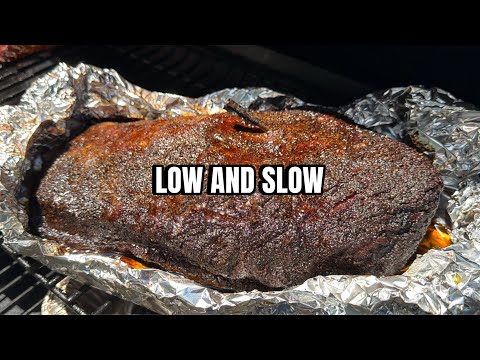
On the offset, the pork money muscles were wrapped and the ribs were at about the three-hour mark, due to be wrapped shortly. The brisket went into a foil boat: foil folded up around the bottom and sides while the top stays exposed. The boat protects the underside and catches the rendering fat and juices, but leaves the bark open to the smoke so it keeps setting. Ross was working hard on the brisket bark and says he wished it had come out more resilient.
The chicken was glazed by pouring sauce over it and brushing it all around, playing Bob Ross, as he puts it, while trying not to leave it too sticky. On the ribs he wanted the opposite: a properly sticky glaze, and he was happy with how they looked.
How it went, and what he would change
Ross is straightforward about the result: he did not place high, and a lot of things went wrong over the weekend. He does not go through every one of them, but he does name two points about the food itself.
The first is the money muscle, which came out a little fatty. He says he should have trimmed more fat off it before the cook. In a competition box, unrendered fat is hard to hide. Judges get a bite or two, and a greasy or chewy mouthful counts against the entry.
The second is less a mistake than a question. The brisket, in his words, was pretty spectacular: it came apart with a quick squeeze and the intermuscular fat had rendered right down. But most brisket boxes are built from neat slices of the flat, because that is what most judges look for. Ross points out that you can turn in bigger, chunkier pieces, you just never see anyone do it, and he questions why more cooks do not.
The weekend was still worth it. He spent it around people he thinks highly of, met new people both from Nova Scotia and from abroad, and says he had a blast despite the rain and the result. His advice to backyard cooks is to look for a KCBS event near you and enter, as a way to take the hobby further.