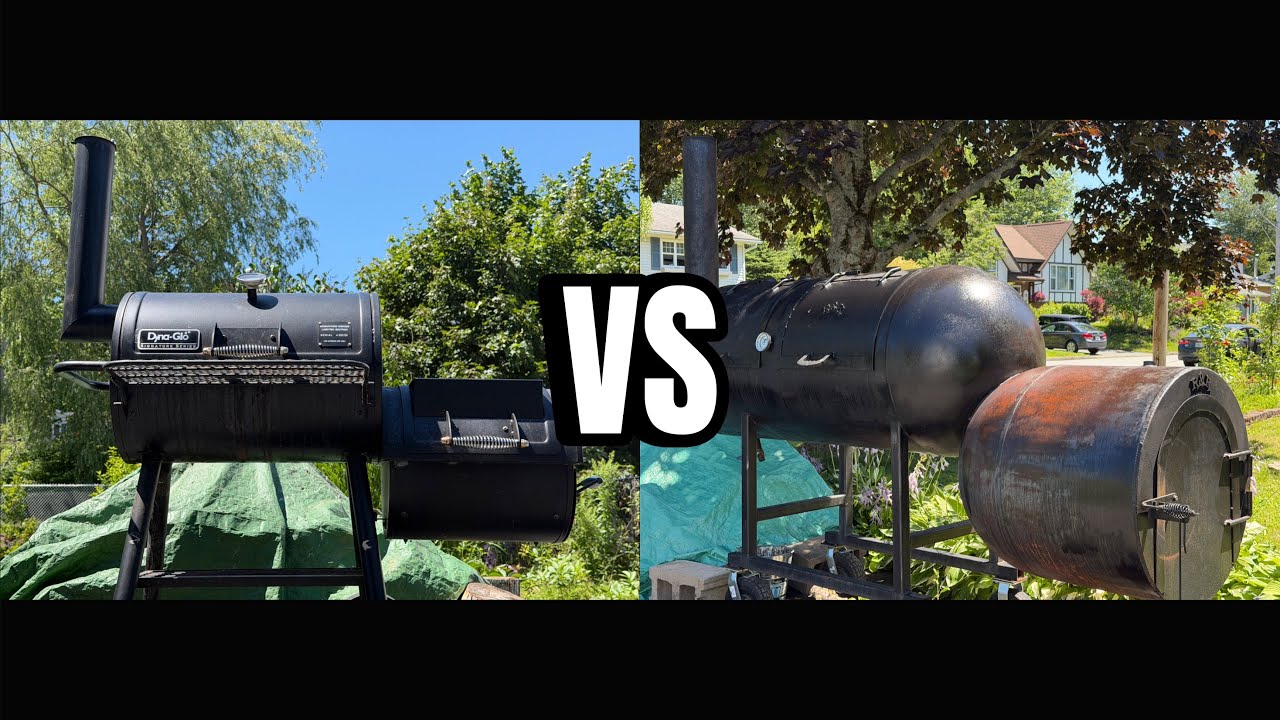
The smoker that taught the lessons
The first smoker was small, thin-walled and genuinely difficult to cook on. It ran hot, then cold, then hot again. It needed feeding constantly. It punished every mistake immediately and visibly.
That difficulty turned out to be the education. A cheap offset gives you no thermal mass to hide behind, so you learn what actually moves a fire: how much fuel, how much air, how quickly a temperature responds to a vent change, and how long it takes to recover from opening the lid. On a forgiving cooker those lessons arrive slowly, if at all.
The frustration is real and it is worth being honest about. Plenty of people buy a budget offset, have a bad first cook, and conclude that barbecue is beyond them. It is not — the equipment was simply working against them while they were still learning.
What actually carried over
Fire management is the skill, and it transfers completely. Learning to build a clean-burning fire — one producing thin blue smoke rather than thick white — is the same discipline whether the firebox is small or enormous. So is the habit of making one adjustment and waiting, rather than chasing the temperature with a series of panicked corrections.
Reading the cook rather than the clock transfers too. When a smoker will not hold a steady temperature, you stop relying on timings and start relying on colour, feel and a thermometer. That is the right instinct anyway, and cooking on something unreliable forces you into it early.
Patience is the third thing, and it is the least glamorous. A difficult smoker teaches you that the cook takes as long as it takes, because you have no way to force it.
What the bigger pit changed
Moving to a custom-built 250-gallon offset changed the workload rather than the skill. The mass means it holds temperature through weather, lid openings and fuel additions that would have derailed the small one. You add a split, the needle barely moves, and the cook carries on.
The cooking space changes what is possible — several briskets, or a brisket and a pork butt and a rack of ribs together, rather than choosing. For anyone cooking for events or competition that is not a luxury, it is the difference between doing the job and not.
What it does not do is cook for you. A big pit run badly still makes bitter smoke and dry brisket. The fire management learned on the small cooker is what makes the big one worth having.
If you are starting out
Do not wait for better equipment. Whatever you have — a kettle, a cheap offset, a drum, a pellet grill — will teach you something, and the fundamentals of fire, smoke, temperature and patience are the same on all of them.
Learn to run your fire clean before you worry about anything else. Thin blue smoke, a fire that is burning rather than smouldering, and fuel added before the temperature drops rather than after. Almost every complaint about acrid, over-smoked barbecue traces back to that one thing.
And buy a thermometer before you buy anything else. Not a better smoker, not more rubs — an accurate instant-read thermometer will improve your cooking more than any equipment upgrade at that stage.


