 Beef
10:02
Beef
10:02
Low & Slow Offset Smoked Brisket
A whole beef brisket smoked low and slow over oak with a simple SPG rub, pushed through the stall and rested overnight for buttery-tender slices.
View recipe →Beefy Vessel Meats short ribs seasoned with W Sauce and Cow Cover, smoked over oak on the offset for 8 hours until they hit a tender 203°F.
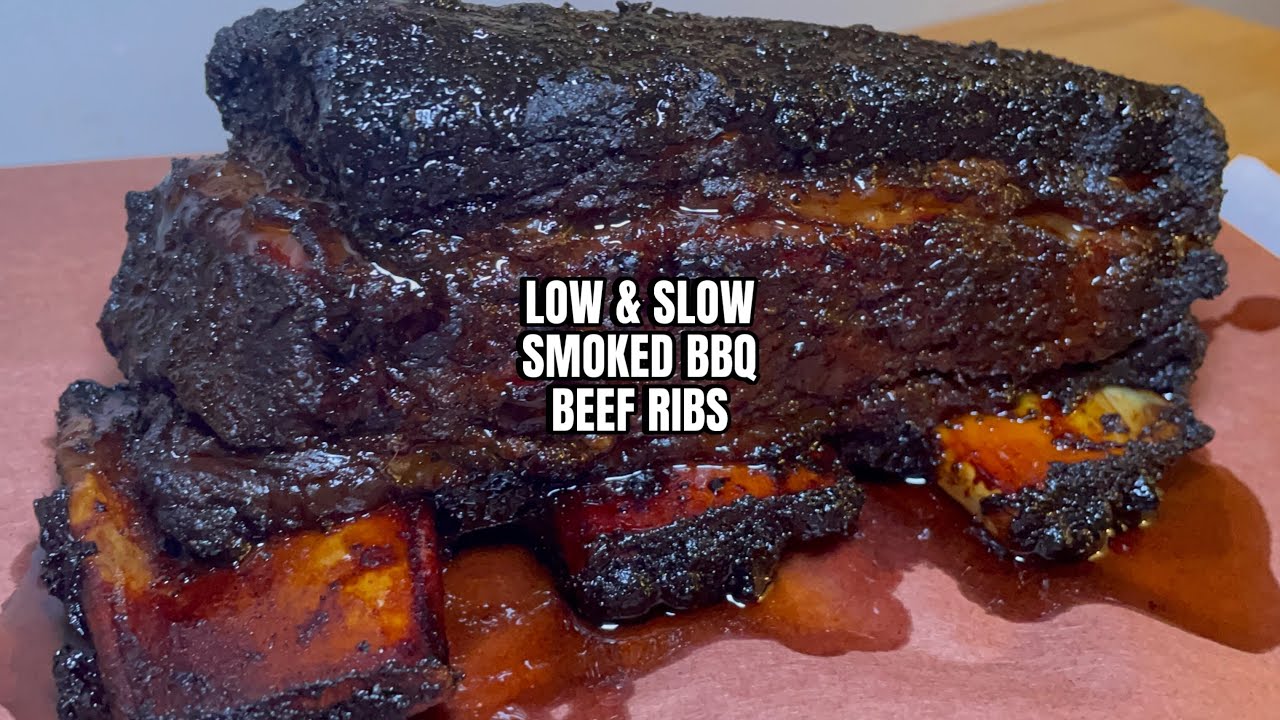
Watch the full cook on YouTube
| Stage | Temp | What it means |
|---|---|---|
| The stall | 150–170°F / 66–77°C | Expect a plateau. Short ribs can run unwrapped straight through it. |
| Probe tender | 198–208°F / 92–98°C | 203°F is the landmark, but the feel between the bones is the real test. |
| Visual | Bones pulled back | The meat draws back from the bone ends and the rack jiggles when lifted. |
| Rest | 30–60 min | Loosely wrapped. They hold enormous heat and rendered fat. |
Short ribs keep 3–4 days refrigerated, stored on the bone and wrapped tightly rather than cut into individual ribs. Their high fat content makes them one of the more forgiving barbecue leftovers — the fat sets in the fridge and protects the meat, then melts back through on reheating.
Reheat wrapped in foil at 250°F with a splash of beef broth until warmed through. Do not rush it; a fast, hard reheat drives out the fat that took eight hours to render in.
They freeze well for about three months, whole on the bone rather than sliced. Vacuum-seal if you can. The best reheat by a distance is a sealed bag in barely simmering water, which brings them back close to fresh because the meat never exceeds its cooked temperature.
Short ribs come from the plate or chuck and are thick, meaty and heavily marbled, with the meat sitting on top of the bone. Back ribs come from the rib primal after the ribeye is removed, so most of the meat is between the bones. Short ribs are the far better barbecue cut.
No. They carry so much fat that they can run unwrapped the entire way, which gives the best bark. Wrapping speeds them through the stall and guarantees tenderness at the cost of some crust — a reasonable option, but genuinely unnecessary on this cut.
Probe between the bones. When the thermometer slides in with no resistance at all, they are ready — usually between 198°F and 208°F. The meat will also have pulled back from the bone ends and the rack will jiggle when you lift it.
Yes, from the bone side, the same as pork ribs. It is a tough silverskin that never renders and it blocks smoke and seasoning from that whole face. Lift a corner with a knife, grip it with a paper towel and pull.
Charcoal gives a steady, clean heat base while the wood splits supply the smoke. It is easier to keep a clean fire that way than with wood alone, particularly over eight hours — and a clean fire is the difference between good smoke and bitter smoke.
Around 8 hours at 225–250°F, or roughly 6 at 275°F. They are among the thickest, most collagen-heavy cuts you can smoke and there is no shortcut — the time is what converts the connective tissue.
No 500-word life story — just the good-to-know stuff on what’s actually in this cook. Here’s the rundown on every real ingredient, health and nutrition wise.
General nutrition info only, not medical or dietary advice — portions, brands and add-ons change the numbers.
Beef
10:02
A whole beef brisket smoked low and slow over oak with a simple SPG rub, pushed through the stall and rested overnight for buttery-tender slices.
View recipe → Beef
4:54
Beef
4:54
A Steak School look at the tender flat iron, seasoned with Maritime Madness Mesquite Dry Rub and grilled hot for a crusty, medium-rare finish.
View recipe → Beef
6:17
Beef
6:17
A Steak School breakdown of picanha — the top sirloin cap and its signature fat cap — cooked three ways to a juicy medium-rare.
View recipe → Beef
4:47
Beef
4:47
A Steak School feature on the budget-friendly Rancher steak, seasoned with Royal Nova Company BBQ Spice and grilled hot and fast to medium-rare.
View recipe → Beef
3:55
Beef
3:55
Leftover smoked brisket piled on King's Hawaiian rolls with pickled jalapeños, red onion, and Tex Mex cheese, then toasted until melty and crisp.
View recipe → Beef
9:30
Beef
9:30
Meaty Vessel Meats beef ribs smoked 9 hours on a tabletop pellet smoker with W Sauce and Perpetual Beef rub, served with maple beans and a spicy crunch.
View recipe →