 Beef
6:17
Beef
6:17
Steak School: Picanha (Top Sirloin Cap)
A Steak School breakdown of picanha — the top sirloin cap and its signature fat cap — cooked three ways to a juicy medium-rare.
View recipe →A Steak School look at the tender flat iron, seasoned with Maritime Madness Mesquite Dry Rub and grilled hot for a crusty, medium-rare finish.
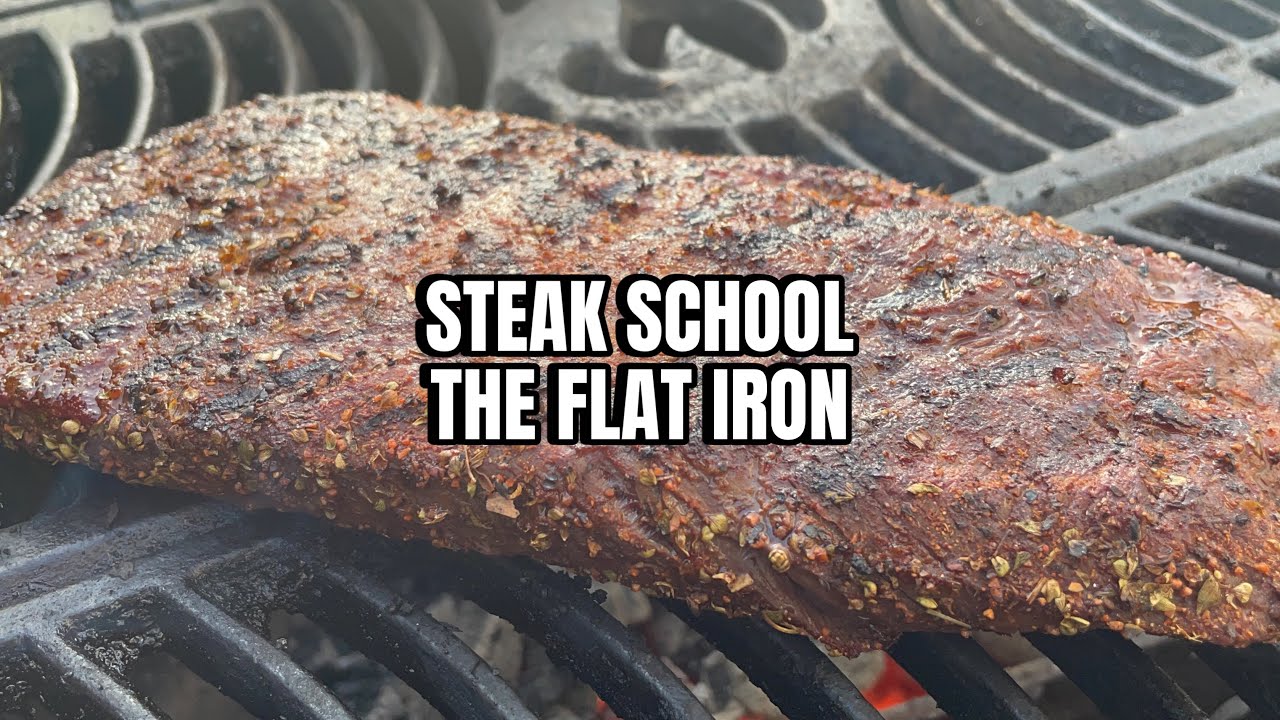
Watch the full cook on YouTube
| Stage | Temp | What it means |
|---|---|---|
| Medium-rare | 130–135°F / 54–57°C | The target for a lean chuck muscle. |
| Too far | 140°F+ / 60°C+ | It firms up and loses the tenderness that makes the cut worth buying. |
| Cook time | 3–4 min per side | Uniform thickness means predictable timing, unusually for a steak. |
| Rest | 5–10 minutes | Then slice thin across the grain. |
Cooked flat iron keeps 3–4 days refrigerated and is one of the better steaks to eat cold, since its fine grain slices neatly and it does not go rubbery the way a fattier cut can. Reheat fast and hot for seconds a side, or skip reheating and use it cold in wraps and salads.
Raw flat iron freezes for 6–12 months wrapped airtight. Its even thickness means it thaws and cooks predictably, which makes it a good cut to keep portioned in the freezer for weeknights — thaw overnight in the fridge and pat dry before seasoning.
It is cut from the top blade muscle in the chuck, with the tough central gristle line removed by the butcher. That trimming is what turned an unloved chuck cut into one of the best-value steaks available — the meat on either side of that seam is exceptionally tender.
Yes. Tenderness testing consistently ranks the top blade second only to the tenderloin, and unlike tenderloin it has real beefy chuck flavour. The catch is that it must be a properly cut flat iron with the gristle seam removed, not a blade steak cut straight across the muscle.
The same muscle, cut differently. A blade steak is sliced across the top blade and leaves the line of gristle running through the middle of each steak. A flat iron is cut along the muscle with that seam removed, giving two clean, even steaks. The gristle does not render on a fast cook, so the distinction matters.
130–135°F for medium-rare. It is a lean chuck muscle, so past medium it firms up and loses the tenderness that makes it worth buying. Hot and fast, rest it, and slice thin against the grain.
Yes. Tenderness testing consistently ranks the top blade second only to the tenderloin, and unlike tenderloin it has real beefy chuck flavour. The catch is that it must be a properly cut flat iron with the gristle seam removed, not a blade steak cut straight across the muscle.
The same muscle, cut differently. A blade steak is sliced across the top blade and leaves the line of gristle running through the middle of each steak. A flat iron is cut along the muscle with that seam removed, giving two clean, even steaks. The gristle does not render on a fast cook, so the distinction matters.
No 500-word life story — just the good-to-know stuff on what’s actually in this cook. Here’s the rundown on every real ingredient, health and nutrition wise.
General nutrition info only, not medical or dietary advice — portions, brands and add-ons change the numbers.
Beef
6:17
A Steak School breakdown of picanha — the top sirloin cap and its signature fat cap — cooked three ways to a juicy medium-rare.
View recipe → Beef
5:13
Beef
5:13
A steakhouse-classic Delmonico reverse-seared on the grill with Unreal Pepper rub — low and slow to medium-rare, then finished hot for a golden crust.
View recipe → Beef
5:20
Beef
5:20
Butterflied Merlot steaks rolled around provolone, sautéed peppers, and red onion, seasoned with Cow Cover, and grilled hot and fast over charcoal.
View recipe → Beef
3:55
Beef
3:55
Leftover smoked brisket piled on King's Hawaiian rolls with pickled jalapeños, red onion, and Tex Mex cheese, then toasted until melty and crisp.
View recipe → Beef
5:00
Beef
5:00
A Steak School breakdown of the underrated Boston sirloin — a beefy top sirloin butt cut seasoned simply and seared hot and fast to medium-rare.
View recipe → Beef
4:47
Beef
4:47
A Steak School feature on the budget-friendly Rancher steak, seasoned with Royal Nova Company BBQ Spice and grilled hot and fast to medium-rare.
View recipe →