Saucy Rossy BBQ
Beef

Steak School: Rancher Steak

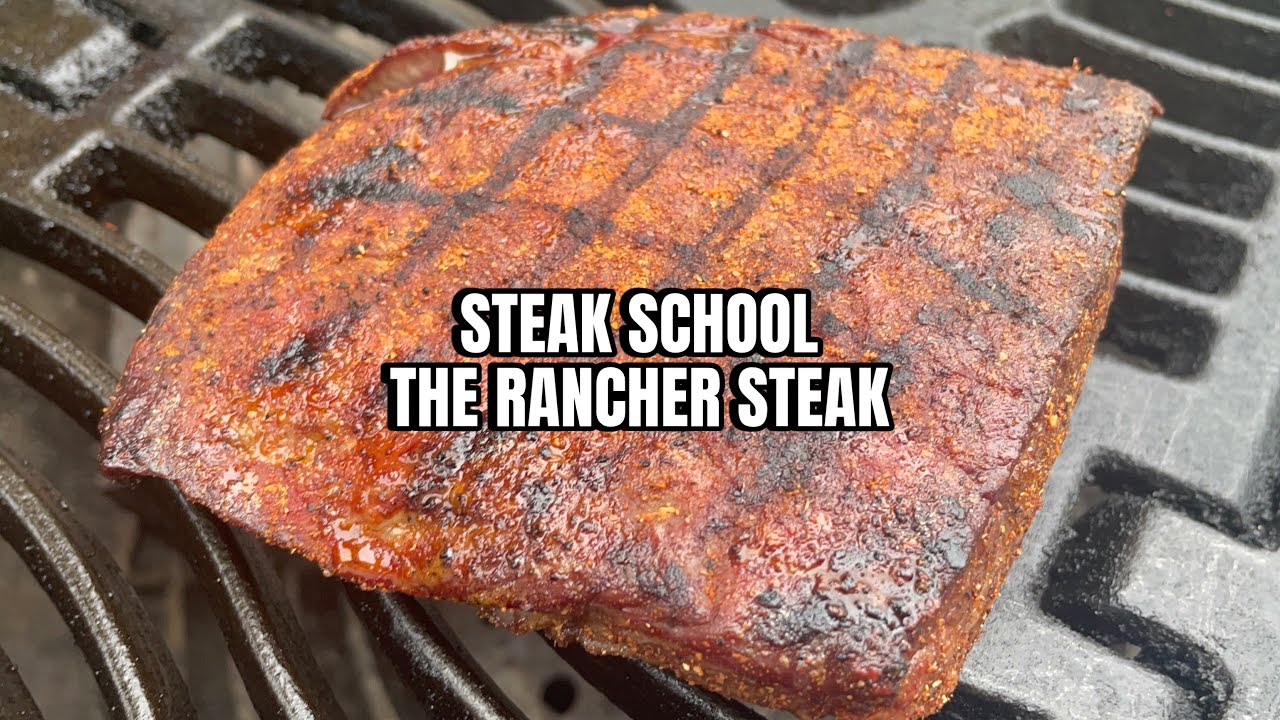
A Steak School feature on the budget-friendly Rancher steak, seasoned with Royal Nova Company BBQ Spice and grilled hot and fast to medium-rare.
TimeHot & fast Prep10 min YieldServes 2 CategoryBeef Watch4:47
Steak School: Rancher Steak — watch on YouTube

Watch the full cook on YouTube

Method

  1. 1Score any visible fat cap to help it render and crisp.Score through the fat only, at intervals. Unscored fat contracts faster than the muscle and curls the steak off the heat.
  2. 2Season the steak with Royal Nova Company BBQ Spice — a bold, balanced rub that pairs beautifully with beef.Pat it dry before seasoning. A lean steak has very little time to build crust, so surface moisture is costly.
  3. 3Grill or sear over high heat to develop a flavourful crust; this hardworking cut performs best hot and fast.High heat and a short stay. A lean, worked muscle held over moderate heat just tightens without browning.
  4. 4Cook to an internal temperature of 130–135°F for medium-rare.130–135°F. There is very little marbling here, so unlike a ribeye there is nothing to gain from going further.
  5. 5Rest the steak for 5–10 minutes before slicing.Rest 5–10 minutes on a rack.
  6. 6Slice against the grain to shorten the muscle fibres and maximize tenderness.Slice thin, hard across the grain. On a chuck cut this does more for tenderness than anything you do over the fire.

Watch it on YouTube

What each ingredient is doing

Rancher steak
A boneless centre cut from the chuck shoulder clod, also sold as ranch steak or shoulder centre. Lean, firm and strongly beefy — one of the cheapest true steaks on the counter, because the chuck is a working part of the animal.
Royal Nova Company BBQ Spice
A balanced BBQ rub. On a budget cut the seasoning is doing more of the flavour work than it would on a marbled steak, so use it generously.
Hot grill or cast iron pan
Either, provided it is genuinely hot. A lean chuck steak needs a hard fast sear — moderate heat gives you a grey, tightened steak with no crust.

Temperature guide

StageTempWhat it means
Medium-rare130–135°F / 54–57°CThe target and effectively the ceiling on a lean chuck cut.
Too far140°F+ / 60°C+Very little intramuscular fat, so it firms up quickly.
Cook time3–4 min per sideHot and fast. A long cook just tightens it.
Rest5–10 minutesThen slice thin across the grain.

Pitmaster tips

  • The rancher steak — also sold as ranch steak or shoulder centre — comes from the chuck shoulder clod. It is a hardworking muscle, which is exactly why it is cheap and why it tastes strongly of beef.
  • Hot and fast is not optional. A lean, worked muscle held over moderate heat just tightens; you want a hard sear and a short stay.
  • 130–135°F and no further. This is a budget cut without much marbling to hide behind, and the difference between medium-rare and medium is very obvious in the chew.
  • Score any fat cap before it goes on so it renders rather than curling the steak.
  • Slice thin, hard against the grain. On a chuck cut this does more for tenderness than anything you do over the fire — a thick slice of ranch steak is chewy even when cooked perfectly.
  • It takes well to a marinade with a little acid, since a chuck muscle has more connective tissue than a loin cut and benefits from the head start.
  • Slice thin and hard across the grain. On a chuck cut this does more for tenderness than anything you do over the fire.
  • Score the fat cap before cooking so it renders rather than curling the steak off the heat.
  • Be generous with the seasoning. A budget cut relies on the rub more than a well-marbled one does.
  • Get the pan or grate genuinely hot. A lean worked muscle over moderate heat just tightens without ever browning.

If it goes wrong

It is chewy
Two likely causes and often both — overcooked past medium-rare, and sliced too thick. This cut punishes both more than a marbled steak would.
It curled on the grill
The fat cap was unscored. Score through the fat before cooking.
No crust formed
The surface was wet or the heat too moderate. Dry it hard and get the grate or pan genuinely ripping.
It tastes flat
Under-seasoned. A budget cut relies more on the rub than a marbled one does — be generous, and consider a marinade.
It was tough despite hitting 130°F
Slicing. Cut thin and hard across the grain — on a chuck muscle that is the single biggest factor.

Ways to change it up

Marinated
A chuck muscle has more connective tissue than a loin cut, so a few hours in something acidic gives you a real head start on tenderness.
Steak sandwich
Sliced thin into crusty bread with onions and horseradish. A firm lean steak slices cleanly and suits a sandwich.
Stir fry
Sliced thin across the grain and cooked fast in a very hot pan. Rancher steak is excellent value for this.
Compound butter
A slice of herb butter over the rested steak adds the richness a lean cut lacks.
Reverse sear
Gentle heat to 115°F then a hard sear. Gives a more even interior on a thicker piece.

What to serve it with

  • Chips, potatoes or rice — something to carry it.
  • A sharp salad or slaw for acidity.
  • Compound butter or a sauce to supply richness.
  • Grilled onions and mushrooms.
  • A cold beer; this is a weeknight steak.

Storage & reheating

Cooked rancher steak keeps 3–4 days refrigerated. Because it is lean it is better used cold or gently warmed than properly reheated — sliced thin into a sandwich, a stir fry or a hash, it is excellent, whereas reheating a lean chuck steak on its own usually takes it past where it wants to be.

Raw, it freezes for 6–12 months wrapped airtight, and being an inexpensive cut it is a sensible one to buy several of and freeze. Thaw overnight in the fridge and dry the surface well before seasoning — a wet lean steak will steam rather than sear, and this cut needs the crust.

FAQ

What is a rancher steak?

A boneless centre cut from the chuck shoulder clod, also sold as ranch steak or shoulder centre steak. It is lean, firm and strongly beefy, and it is one of the cheapest true steaks on the counter because the chuck is a working part of the animal.

Is rancher steak tough?

It is firmer than a loin steak, but not tough if you handle it right: cook it hot and fast to medium-rare, rest it, and slice it thin against the grain. Overcook it or slice it thick and it will be chewy — this cut punishes both mistakes more than a marbled steak would.

Should I marinate a rancher steak?

It helps more here than on a premium cut. A chuck muscle has more connective tissue, so a marinade with some acid in it gives you a head start on tenderness and seasons a lean steak through. Just do not marinate so long that the surface turns mushy — a few hours is plenty.

What temperature should I cook it to?

130–135°F, medium-rare. There is very little intramuscular fat to render, so unlike a ribeye there is no benefit to pushing it toward medium — you only lose moisture from a cut that had little to spare.

What is a rancher steak?

A boneless centre cut from the chuck shoulder clod, also sold as ranch steak or shoulder centre steak. It is lean, firm and strongly beefy, and it is one of the cheapest true steaks on the counter because the chuck is a working part of the animal.

Should I marinate a rancher steak?

It helps more here than on a premium cut. A chuck muscle has more connective tissue, so a marinade with some acid gives you a head start on tenderness and seasons a lean steak through. Do not marinate so long that the surface turns mushy — a few hours is plenty.

Know your cook

More information, cause recipe back stories are stupid

No 500-word life story — just the good-to-know stuff on what’s actually in this cook. Here’s the rundown on every real ingredient, health and nutrition wise.

Beef
Beef is a complete protein and one of the best food sources of highly absorbable heme iron, zinc, and vitamin B12 — key for energy, immunity, and healthy blood. Fattier BBQ cuts are calorie-dense, so lean trimming and sensible portions keep it balanced.
Pork
Pork is a protein-rich meat that's especially high in thiamine (vitamin B1) — more than most other meats — plus B6, niacin, and selenium. Tenderloin and loin are lean; shoulder and belly are richer, so portion the fattier cuts.

General nutrition info only, not medical or dietary advice — portions, brands and add-ons change the numbers.

← All recipes  ·  All 46 beef recipes