Saucy Rossy BBQ
Chicken

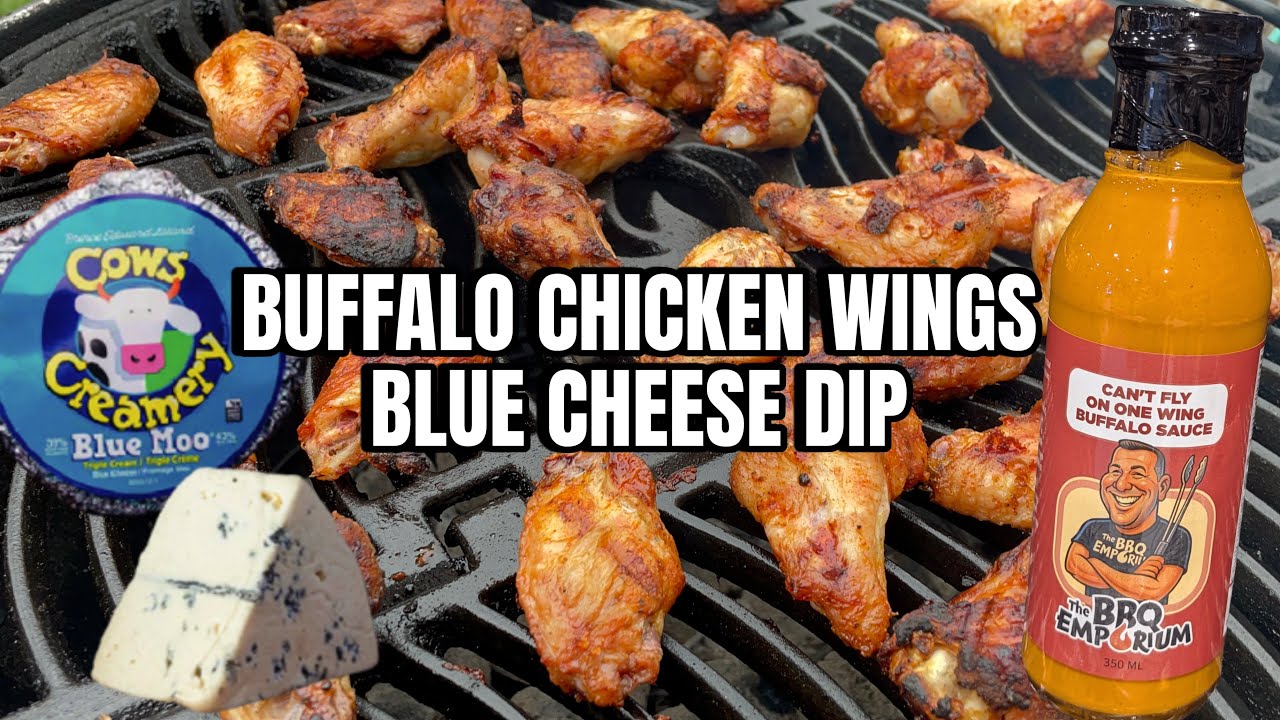
Grilled Buffalo Chicken Wings + Blue Cheese Dip

Crispy charcoal-grilled buffalo wings tossed in a bold buffalo sauce, served with an easy homemade blue cheese dip.

Time~45 min Prep15 min YieldServes 4 as an appetizer CategoryChicken Watch4:51
Grilled Buffalo Chicken Wings + Blue Cheese Dip — watch on YouTube

Watch the full cook on YouTube

Method

  1. 1Season the wings generously with chicken dry rub.Pat them completely dry first — wet skin steams instead of crisping, and this is the single biggest factor in the finished texture. Season every surface, including the underside of the drums. If you have a few hours, leave them seasoned and uncovered on a rack in the fridge so the skin dehydrates.
  2. 2Grill over direct heat on a charcoal grill, rotating every 10 minutes, until they hit 185°F internal.Keep the coals moderate rather than ripping — spread rather than piled — and rotate positions as well as flipping so no wing sits over a fat flare. If flames come up, move the wings and shut the lid; water on a fat fire just throws ash onto the food. Expect 30–40 minutes.
  3. 3Finish over direct heat for crispy skin, then toss in buffalo sauce while hot.A final two or three minutes over the hottest part blisters the skin. Then get them into a bowl immediately — sauce hitting hot, dry skin clings; sauce on cooled wings slides off and pools in the bottom.
  4. 4For the dip, crumble the Blue Moo blue cheese and add 1 tbsp mayo, 1 tbsp sour cream, a splash of lemon juice, a splash of apple cider vinegar, and salt & pepper.Make this first so it has time to sit — the cheese needs half an hour or so to soften into the base and the flavour to round out. Use a fork rather than a whisk so you keep texture.
  5. 5Mix until creamy with small chunks remaining, and serve with the wings.Leave real lumps of cheese in it. A smooth blue cheese dip is just a tangy mayonnaise; the chunks are what give you the occasional sharp, salty bite that makes it worth having over ranch.

Watch it on YouTube

What each ingredient is doing

Chicken wings
Whole or separated both work. Separated pieces have more surface for rub and sauce and cook slightly faster; whole wings stay marginally juicier. Fresh beats frozen — thawed wings hold water that fights crisp skin.
Chicken dry rub
Seasons the meat and, more importantly, the salt draws surface moisture out so the skin can crisp. Any savoury chicken rub works. Keep sugar low, since the wings spend time over direct heat here.
Buffalo sauce
Traditionally cayenne pepper sauce emulsified with butter. The butter is what makes it cling and takes the raw edge off the vinegar. If your sauce is thin and sharp, melting butter into it is the classic fix.
Blue cheese
A triple cream blue is mild and very rich, which suits a dip. A firmer, sharper blue like Stilton gives more punch and more distinct crumbs. Either works — the fat is what actually cools the chili heat.
Mayo and sour cream
The base. Mayo brings fat and body, sour cream brings tang and loosens it. Greek yogurt substitutes for the sour cream and makes a lighter, sharper dip.
Lemon juice and cider vinegar
Two different acids doing two jobs — lemon for brightness, vinegar for a sharper background note that stands up to the blue cheese. Either alone works if that is what you have.

Temperature guide

StageTempWhat it means
Food-safe minimum165°F / 74°CSafe, but the connective tissue has not rendered and the skin is still soft.
Where wings improve175°F / 79°CCollagen starts converting to gelatin and the texture softens.
The target185°F / 85°CFully rendered skin, tender meat, clean bite off the bone.
Too far195°F+ / 90°C+Meat dries and falls off the bone instead of biting off it.

Pitmaster tips

  • 185°F is the target for wings, not 165°F. They are mostly skin and connective tissue, and that extra 20 degrees is where the collagen renders and the meat starts pulling cleanly from the bone.
  • Rotate every 10 minutes. Wings are small, they render a lot of fat, and left in one spot they will either flare or scorch on the down side.
  • Toss them in sauce the moment they come off, while the skin is still hot and dry. Sauce hitting cooled wings just slides off and pools in the bottom of the bowl.
  • Real buffalo sauce is cayenne pepper sauce cut with butter — the butter is what makes it cling and takes the raw edge off the vinegar. If your sauce seems harsh, melting a little butter into it is the traditional fix.
  • Make the blue cheese dip at least half an hour ahead. The cheese needs time to soften into the mayo and sour cream, and the flavour rounds out considerably.
  • Leave real chunks of blue cheese in the dip rather than mashing it smooth. The texture contrast against a saucy wing is the point of blue cheese over ranch.
  • Dry the wings hard before seasoning, and give them space on the grate. Crowded wings steam each other and never crisp.
  • Spread the coals rather than piling them. Wings over a fierce concentrated fire char before they are cooked through.
  • Keep the lid closed between rotations to hold heat and smother any flare-up before it takes hold.
  • Save the wing tips for stock. They are mostly skin and bone and will burn long before the drums are done.

If it goes wrong

The wings are soft, not crispy
Surface moisture, crowding, or a fire that was too cool. Dry them hard, give them room, and finish over direct heat for the last few minutes. Already cooked? Eight minutes at 400°F in an oven or air fryer will crisp them.
The sauce slid straight off
The wings had cooled, or the sauce is too thin. Toss immediately off the grill while the skin is hot, and whisk melted butter into a thin vinegar sauce to give it body.
The dip is runny
Too much sour cream or a very soft triple cream blue. Add more crumbled cheese and a spoon of mayo, and chill it for half an hour — it firms up considerably as the fat sets.
The dip tastes flat
It needs acid and salt. Another splash of vinegar or lemon and a proper pinch of salt usually fixes it. Blue cheese is salty but the mayo and sour cream around it are not.
Flare-ups charred the wings
Rendering fat hitting live coals. Rotate positions, keep the lid closed, and move wings away from flames rather than spraying — water throws ash onto the food.
Some wings burnt while others were underdone
Hot spots on the coal bed. Rotate positions as well as flipping, and move outer wings into the middle as you go. Spreading the coals more evenly at the start also helps.

Ways to change it up

Hot honey buffalo
Whisk a spoonful of warmed hot honey into the buffalo sauce. Sweet, hot and sticky, and it clings even better than butter alone.
Ranch instead
Swap the blue cheese for a buttermilk ranch if blue cheese is a hard sell at your table. Milder, and it works the same way — the fat is what cools the heat.
Extra hot
Add a spoonful of your hottest sauce or a pinch of cayenne to the buffalo mix, and serve extra dip. Increase the butter as you increase the heat, or it becomes harsh rather than hot.
Dry buffalo
Skip the sauce and toss the hot wings with a cayenne, salt and a little vinegar powder. Crispier and far less messy, and they hold much longer for a crowd.
Oven or air fryer
425°F on a rack over a sheet pan for 40–45 minutes, turning once. No charcoal flavour, but the sauce and dip carry the dish.

What to serve it with

  • The blue cheese dip, obviously — the fat physically dissolves capsaicin, which is why it cools the burn.
  • Cold celery and carrot sticks for crunch and relief between wings.
  • A vinegary slaw or cucumber salad if you want something more substantial alongside.
  • Cold lager or cider; carbonation and cold scrub the sauce off your palate.
  • Plenty of napkins — buffalo sauce is not a tidy condiment.

Storage & reheating

Sauced wings keep 3–4 days refrigerated but never come back as crisp. Cool them fully before sealing so trapped steam does not soften them further, then reheat in a 375–400°F oven or air fryer for 8–10 minutes to recover as much crunch as possible. The microwave undoes everything the charcoal did.

If you expect leftovers, hold some wings back unsauced and sauce them fresh on reheating — unsauced wings re-crisp far better because there is no wet layer sitting on the skin.

The blue cheese dip keeps 5–7 days sealed in the fridge and genuinely improves after the first few hours. Do not freeze it: mayo and sour cream both split on thaw and it goes grainy. Cooked wings themselves freeze for about three months — freeze them in a single layer first, then bag them, and reheat from frozen at 400°F.

FAQ

What actually is buffalo sauce?

Cayenne pepper hot sauce emulsified with melted butter, in roughly equal parts to two-to-one depending on how hot you want it. The butter is not optional — it is what makes the sauce cling to the wing and rounds off the vinegar's sharp edge. Everything beyond that is variation.

Why blue cheese with buffalo wings rather than ranch?

Fat and funk against heat and acid. Blue cheese is high in fat, which physically dissolves capsaicin and cools the burn, and its sharpness stands up to the vinegar in the sauce in a way a milder ranch does not. Ranch works, but blue cheese is the traditional pairing for a reason.

What temperature should wings be cooked to?

185°F, well past the 165°F safety minimum. Wings are mostly skin, cartilage and connective tissue, and that extra range is where collagen renders into gelatin. Pulled at 165°F they are safe but noticeably rubbery.

Can I make the blue cheese dip ahead?

Yes — it is better for it. Half an hour lets the cheese soften into the base and the flavours round out, and it keeps 5–7 days sealed in the fridge. Do not freeze it, though; the mayo and sour cream split on thaw.

Why won't my sauce stick to the wings?

Either the wings cooled before tossing or the sauce is too thin. Toss straight off the grill while the skin is hot and dry, and whisk melted butter into a thin vinegar-based sauce — that emulsion is what makes buffalo sauce cling.

Direct or indirect heat for wings?

This recipe runs direct with regular rotation, which works if the coals are spread rather than piled and you stay at the grill. Indirect with a hot finish is the more forgiving route — fewer flare-ups, less babysitting, and the last few minutes over the coals still gets you crisp skin.

Know your cook

More information, cause recipe back stories are stupid

No 500-word life story — just the good-to-know stuff on what’s actually in this cook. Here’s the rundown on every real ingredient, health and nutrition wise.

Chicken
Chicken is a lean, versatile source of complete protein, B vitamins (especially niacin and B6), and selenium. Skinless breast is leanest; thighs and skin add flavour and a little more fat. Always cook poultry to a safe 165°F.
Cheese
Cheese is a good source of protein and calcium and pairs naturally with smoke, but it's also high in saturated fat and sodium — a little delivers big flavour, so treat it as a rich accent.
Citrus
Citrus brightens rich, smoky food and brings vitamin C and antioxidants along with its acidity. A squeeze at the end cuts fattiness and lifts flavour without added salt or sugar.
Apple
Apples add natural sweetness, fibre, and vitamin C. In a brine or alongside pork they balance salt and smoke; on their own they're a low-calorie, gut-friendly fruit.
Salt
Salt is essential for seasoning and, in brines and cures, for texture and safety — but sodium adds up fast in BBQ. Season with intention and balance salty cooks with fresh sides.

General nutrition info only, not medical or dietary advice — portions, brands and add-ons change the numbers.

← All recipes  ·  All 33 chicken recipes