 Snacks & Sides
5:06
Snacks & Sides
5:06
Smoked Bison Jalapeño Poppers
Jalapeño halves stuffed with seasoned ground bison, cream cheese, and cheddar, smoked over a hickory-cherry-maple blend and finished with apple molasses BBQ sauce.
View recipe →An ultra-lean Noble Premium Bison round steak dry brined with spruce tip sea salt, then seared hot and fast on cast iron grates to a perfect rare.
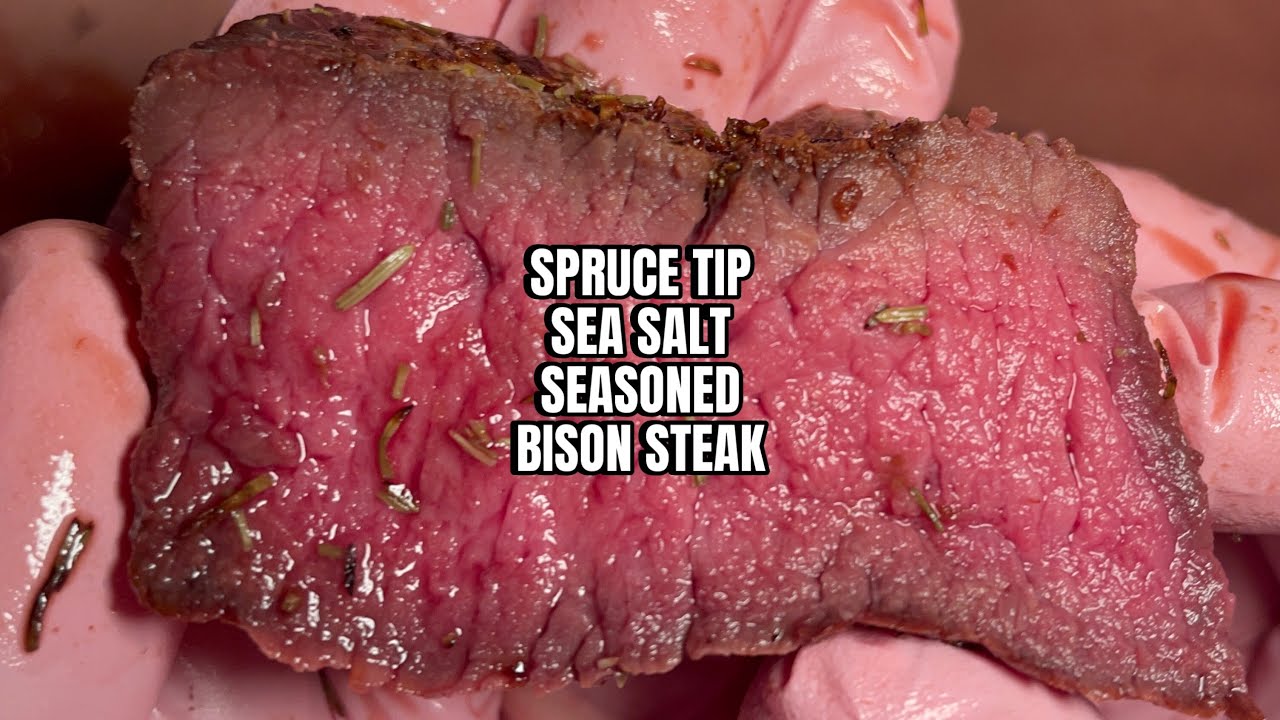
Watch the full cook on YouTube
| Stage | Temp | What it means |
|---|---|---|
| Dry brine | 4–6 hours refrigerated | Uncovered on a rack. Salt draws moisture out, then carries flavour back in. |
| Grate temperature | 600°F / 315°C | Scorching. A slow sear overcooks lean bison before a crust forms. |
| Rare | 120–125°F / 49–52°C | Where this cut belongs. Pull here. |
| Medium rare, at most | 130°F / 54°C | The absolute ceiling for bison round. |
| Rest | 5 minutes | Then slice thin across the grain. |
Cooked bison keeps 3 days refrigerated. Store it whole rather than sliced — every cut face dries, and this cut has no fat to spare.
Do not reheat it. A steak cooked to rare cannot be reheated without going past where it should be, so eat leftovers cold. Sliced thin over a salad or in a sandwich, cold rare bison is genuinely excellent.
Raw bison freezes for 6–12 months wrapped airtight, considerably longer than fatty beef because there is less fat to go rancid. Thaw overnight in the fridge, then dry brine as normal — freezing draws moisture to the surface, so the rack time matters even more.
It carries roughly a third the fat of comparable beef, with less marbling and a slightly sweeter, more mineral flavour. Practically, that means it cooks faster and has far less margin: what would be medium in a beef steak is well past done in bison.
120–125°F for rare, and 130°F is the absolute ceiling. This is not a matter of taste — a lean round cut with almost no intramuscular fat has nothing to keep it moist past that point, and it turns dry and tough quickly.
Salt draws moisture to the surface, dissolves into it, and is carried back into the meat as a concentrated brine. Over four to six hours it seasons throughout rather than just on the outside, and the surface dries out — which is exactly what you need for a crust.
So air circulates underneath and the entire surface dries, not just the top. A steak dry-brined on a plate sits in its own released moisture, and a wet surface has to boil dry before browning can start.
Because the steak has to be rare when it comes off. At a moderate heat, the inside climbs past 130°F long before a crust develops. Scorching heat forms the crust in a couple of minutes, which is all the time this cut can spare.
Round is a hard-working muscle with long, tough fibres. Slicing across them cuts those fibres short so your teeth do not have to. On a lean cut like this, slicing does as much for tenderness as the cooking does.
No 500-word life story — just the good-to-know stuff on what’s actually in this cook. Here’s the rundown on every real ingredient, health and nutrition wise.
General nutrition info only, not medical or dietary advice — portions, brands and add-ons change the numbers.
Snacks & Sides
5:06
Jalapeño halves stuffed with seasoned ground bison, cream cheese, and cheddar, smoked over a hickory-cherry-maple blend and finished with apple molasses BBQ sauce.
View recipe → Beef
4:23
Beef
4:23
Lean steak rounds seasoned with Newfoundland Seasonings Steak and Burger blend, seared for crosshatch marks, then finished gently on the warming rack to medium-rare.
View recipe → Beef
10:02
Beef
10:02
A whole beef brisket smoked low and slow over oak with a simple SPG rub, pushed through the stall and rested overnight for buttery-tender slices.
View recipe → Snacks & Sides
4:57
Snacks & Sides
4:57
Bite-sized all-beef hot dogs smoked over hickory, then glazed with butter, brown sugar, and Habanero Moonshine sauce for a sweet-and-spicy party snack.
View recipe → Bison
4:12
Bison
4:12
A lean Noble Premium Bison ribeye seared hot and fast over ripping charcoal with a salt-free Newfoundland herb blend for a clean, juicy rare finish.
View recipe → Bison
4:23
Bison
4:23
A lean Lindsey Lake Farms bison ribeye smoked over sugar maple to 100°F, then seared blazing hot in the firebox for a perfect medium rare.
View recipe →