Saucy Rossy BBQ
Bison

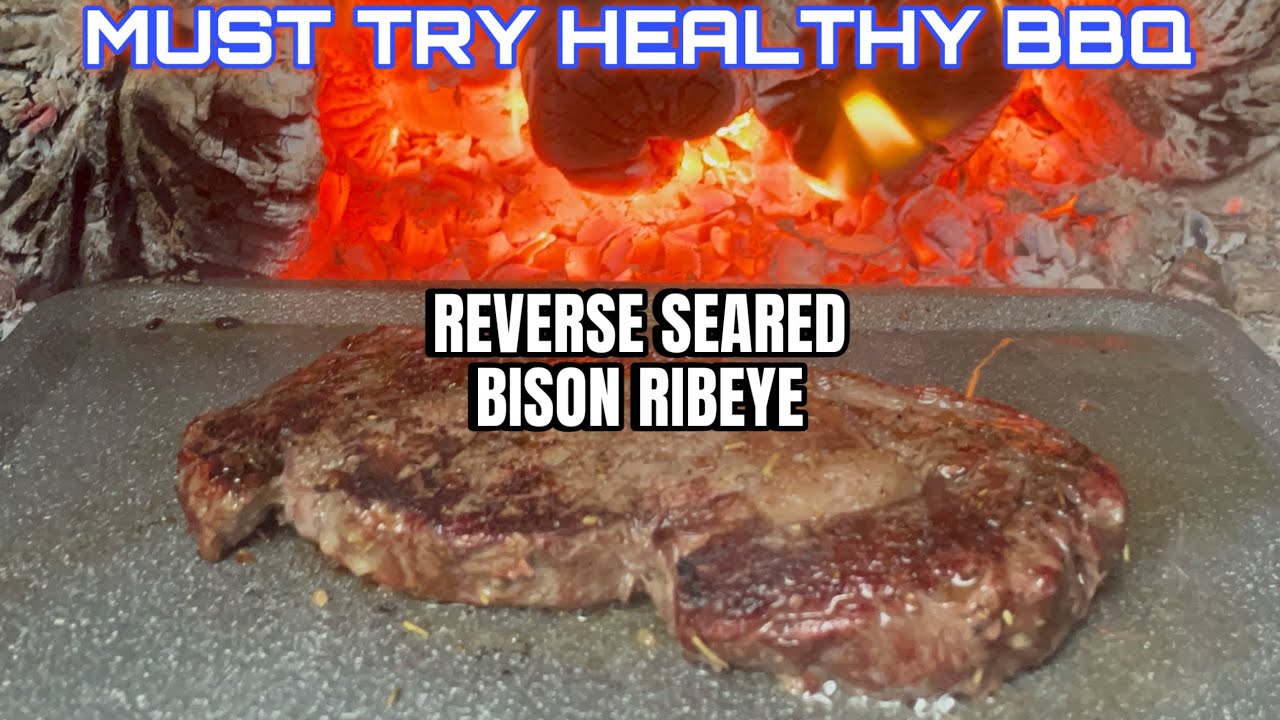
Reverse-Seared Bison Ribeye

A lean Lindsey Lake Farms bison ribeye smoked over sugar maple to 100°F, then seared blazing hot in the firebox for a perfect medium rare.
TimeLow & slow Prep10 min YieldServes 2 CategoryBison Watch4:23
Reverse-Seared Bison Ribeye — watch on YouTube

Watch the full cook on YouTube

Method

  1. 1Season the bison ribeye with South Shore Sea Salt Company rosemary and thyme sea salt.Salt alone is right for bison. It has a genuinely distinct flavour and burying it under a heavy rub defeats the point of buying it.
  2. 2Smoke low and slow over sugar maple on the offset smoker until it reaches 100°F internal.100°F is the pull temperature for the smoke phase, considerably lower than the 115°F you would use on a beef ribeye. Bison is leaner and climbs faster once it hits the sear.
  3. 3Move the steak to a blazing-hot Rock Cookware searing plate in the firebox and sear hard for a deep, caramelized crust.The firebox of an offset is the hottest surface on the property. Searing in there is what gives a crust in under a minute, which is all the time a lean steak has.
  4. 4Rest for 5 minutes — it should carry over to about 120°F internal for a perfect medium rare.Carryover on a reverse sear is real — five minutes takes it from the sear temperature to about 120°F. That is medium rare on bison, which sits where medium would on beef.
  5. 5Slice and serve.Slice across the grain. Ribeye is more forgiving than round, but it still helps.

Watch it on YouTube

What each ingredient is doing

Bison ribeye
The best-marbled cut on a very lean animal, which makes it far more forgiving than round or sirloin. It still carries roughly a third the fat of a beef ribeye, so the temperature targets all shift down.
Rosemary and thyme sea salt
Salt does the seasoning work; the herbs are aromatic support. Simple is right for bison — a heavy barbecue rub competes with a flavour you paid extra for.
Sugar maple
Mild and slightly sweet, which suits bison. Something as assertive as mesquite would bury it.
A searing plate in the firebox
The hottest surface available on an offset. That heat is what gives a crust in under a minute, which is all a lean steak can spare.

Temperature guide

StageTempWhat it means
Smoke to100°F / 38°CLower than the 115°F you would use on beef. Bison climbs faster.
SearBlazing, under a minute a sideFirebox heat. Crust fast or overcook the inside.
After carryoverAbout 120°F / 49°CMedium rare on bison.
The ceiling130°F / 54°CPast this a lean bison steak dries out quickly.
Rest5 minutesThe carryover happens here.

Pitmaster tips

  • Pull the smoke phase at 100°F, not 115°F. Bison is leaner than beef and climbs faster once it hits the sear.
  • Reverse sear is the right method for lean meat. The gentle first phase brings the inside up evenly, so the sear only has to make a crust.
  • The firebox is the hottest surface you have. Use it — a crust needs to form in under a minute on a steak this lean.
  • Dry the surface before searing. Any moisture has to boil off before browning starts, and that is time the inside cannot spare.
  • Salt and herbs only. Bison has a genuinely distinct flavour and a heavy rub buries what you paid for.
  • Use mild wood. Sugar maple or fruit woods suit bison; mesquite would overwhelm it.
  • Carryover on a reverse sear is real. Five minutes takes it from the sear to about 120°F, which is where you want it.
  • Medium rare on bison sits where medium would on beef. It is a leaner animal and the targets all shift down.
  • Use a thermometer at both stages. There is very little margin, and a bison ribeye is not cheap.
  • Slice across the grain. Ribeye is more forgiving than round, but it still helps.

If it goes wrong

It came out medium instead of medium rare
Pulled too late from the smoke, or rested too long. Pull at 100°F and rest five minutes.
No crust formed
The searing surface was not hot enough, or the steak was wet. Firebox heat, and pat the surface dry.
It is dry
Past 130°F. Even a ribeye has far less fat on a bison than on a steer.
The smoke flavour is overwhelming
Too strong a wood for the amount of time. Sugar maple or fruit wood suits bison.
The middle was cold when the crust was done
The smoke phase was cut short. 100°F internal before the sear, not less.
It tastes livery
That is bison's natural flavour, more noticeable than beef. Cooking it rarer and seasoning it simply suits it best.

Ways to change it up

Pellet or oven first stage
Any low, even heat works for the first phase — 225°F oven, pellet grill or offset.
Cast iron sear
A ripping-hot skillet indoors if you cannot get to a firebox. Butter-baste at the end.
Compound butter
Herb butter melted over after resting. It adds the fat bison does not have.
Different cut
Bison striploin or tenderloin take the same treatment. Adjust nothing but the timing.
Skip the smoke
Straight reverse sear in the oven. You lose the maple but keep the even cook.

What to serve it with

  • Sliced across the grain, flaky salt on the cut surface.
  • A herb compound butter melting over it.
  • Roasted potatoes or grilled vegetables.
  • Something green and sharp.
  • A big red wine.

Storage & reheating

Cooked bison keeps 3 days refrigerated. Store it whole rather than sliced, since every cut face dries and this is a lean cut to begin with.

Do not reheat a steak cooked to medium rare — it cannot come back without going past where it should be. Eat leftovers cold, sliced thin over a salad or in a sandwich, which is genuinely excellent.

Raw bison freezes for 6–12 months wrapped airtight, longer than beef because there is less fat to go rancid. Thaw overnight in the fridge, then pat dry thoroughly before cooking — freezing draws moisture to the surface and a wet steak will not crust.

FAQ

What is a reverse sear?

Cooking the steak gently to just below your target temperature first, then searing hard at the end for the crust. It gives you an evenly cooked interior edge to edge instead of the grey band you get from searing first, and it is especially suited to lean meat.

Why pull bison at 100°F before searing?

Beef is usually pulled around 115°F for a reverse sear, but bison is leaner and climbs faster once it hits searing heat. Pulling fifteen degrees earlier leaves room for the sear and carryover to land at about 120°F, which is medium rare on bison.

What temperature is medium rare for bison?

About 120°F, which is where medium rare sits on a leaner animal — roughly five to ten degrees below the equivalent beef target. Past 130°F a bison steak dries out noticeably, even a ribeye.

Is bison ribeye more forgiving than other bison cuts?

Yes. Ribeye is the best-marbled cut on the animal and has the most intramuscular fat to work with. It still carries roughly a third the fat of a beef ribeye, so the targets shift down, but it is considerably kinder than a round or sirloin.

What wood should I use for bison?

Something mild. Sugar maple, as here, or a fruit wood. Bison has a distinct, slightly sweet flavour that heavy woods like mesquite or a lot of hickory will simply bury.

Why sear in the firebox?

It is the hottest surface available on an offset smoker, considerably hotter than the cooking chamber or most home equipment. That heat forms a crust in under a minute, which is all the time a lean steak can spare before the inside overcooks.

Know your cook

More information, cause recipe back stories are stupid

No 500-word life story — just the good-to-know stuff on what’s actually in this cook. Here’s the rundown on every real ingredient, health and nutrition wise.

Beef
Beef is a complete protein and one of the best food sources of highly absorbable heme iron, zinc, and vitamin B12 — key for energy, immunity, and healthy blood. Fattier BBQ cuts are calorie-dense, so lean trimming and sensible portions keep it balanced.
Bison
Bison is leaner than most beef but just as rich in protein, iron, zinc, and B12, with fewer calories gram-for-gram. Because it's lean it cooks fast and is best pulled a touch early to stay tender.
Salt
Salt is essential for seasoning and, in brines and cures, for texture and safety — but sodium adds up fast in BBQ. Season with intention and balance salty cooks with fresh sides.
Fresh herbs
Fresh herbs add aroma and flavour with virtually no calories, sodium, or fat, plus a small dose of antioxidants. They're one of the easiest ways to season without reaching for salt.

General nutrition info only, not medical or dietary advice — portions, brands and add-ons change the numbers.

← All recipes  ·  All 3 bison recipes