Saucy Rossy BBQ
Chicken

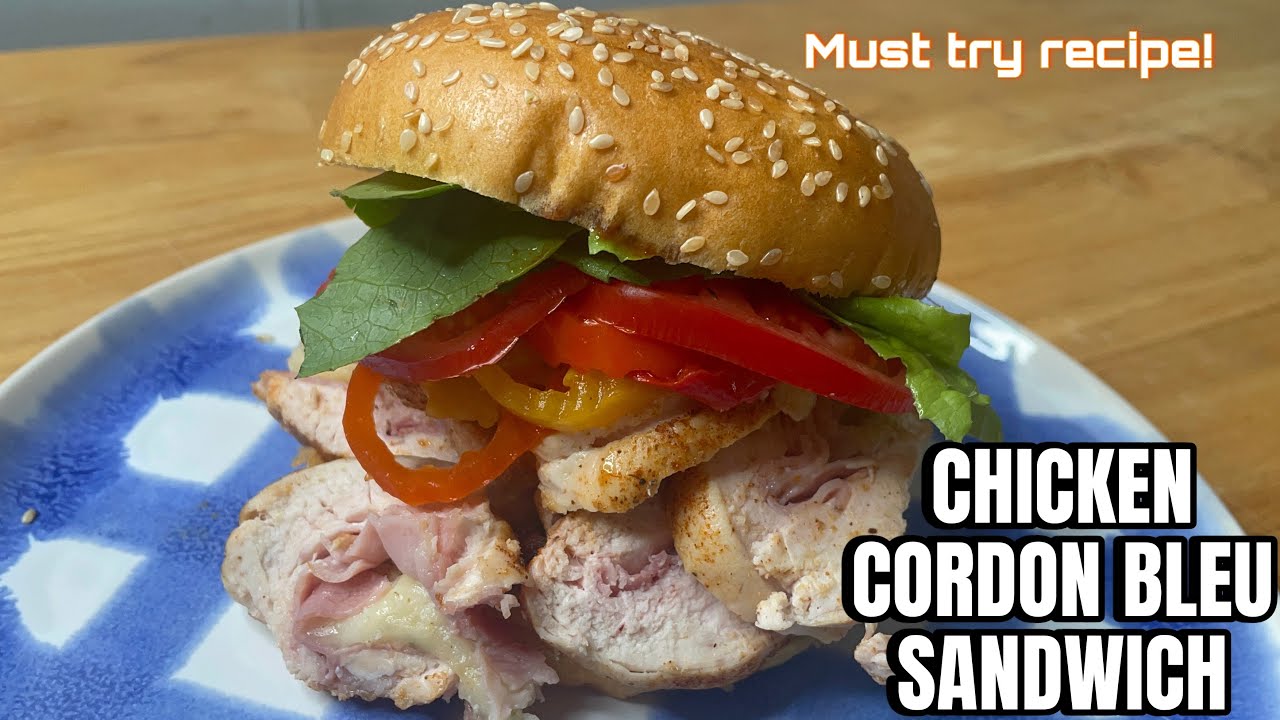
Chicken Cordon Bleu Sandwich

Rub-seasoned chicken breast baked with honey ham and Monterey Jack, sliced into medallions and stacked on a brioche bun with sweet-heat BBQ sauce.
Time~1 hr Prep15 min Yield4 sandwiches CategoryChicken Watch5:07
Chicken Cordon Bleu Sandwich — watch on YouTube

Watch the full cook on YouTube

Method

  1. 1Season the chicken breast with Royal Nova Sassy Chicken BBQ Rub.If the breasts are thick and tapered, butterfly them or pound them to an even thickness first — uneven chicken breast is the main reason one end dries out while the other is underdone. Pat dry before seasoning.
  2. 2Layer it with honey ham and Bothwell Monterey Jack, cordon bleu style.Classic cordon bleu rolls the ham and cheese inside the chicken; here it is layered on top, which is simpler and gives you melted cheese as a surface. Keep the cheese slightly inside the edge of the chicken so it does not all run off onto the tray as it melts.
  3. 3Bake at 350°F until the chicken is perfectly cooked through.165°F in the thickest part, and pull it there — chicken breast is very lean and dries out immediately past that. Expect 25–30 minutes depending on thickness. If the cheese is browning faster than the chicken is cooking, tent it loosely with foil.
  4. 4Slice the chicken into medallions and pile them onto a soft brioche bun.Rest the chicken 5 minutes before slicing so the juices settle. Slice across the grain into medallions roughly a centimetre thick — thin enough to eat easily in a sandwich, thick enough not to shred. Toast the brioche cut-side down in a dry pan first; brioche is soft and sweet and will collapse under hot chicken if it is not toasted.
  5. 5Finish with Royal Nova Sweet with a Little Heat BBQ Sauce, fresh lettuce, tomato, and pickled peppers.Build in order: sauce on the toasted base, then chicken while warm, then cheese-side up, then the cold ingredients on top so they do not wilt. Pat the tomato and pickled peppers dry — their liquid is what makes a sandwich soggy within minutes.

Watch it on YouTube

What each ingredient is doing

Chicken breast
The leanest cut on the bird, with almost no fat to protect it — which is why the temperature target matters so much. Pounding to an even thickness is the single most useful thing you can do to it. Thighs substitute well and are far more forgiving.
Honey ham
Sweet, salty and already cooked, so it only needs warming. Its salt seasons the chicken from above as it bakes and its fat adds a little richness to a very lean cut. Black forest or any deli ham works.
Monterey Jack
A mild, high-moisture cheese that melts smoothly without splitting or going oily. Swiss is the traditional cordon bleu cheese and is sharper; provolone and mozzarella also melt well. Avoid aged hard cheeses, which separate rather than melt.
Brioche buns
Enriched with egg and butter, so they are soft and slightly sweet — good against salty ham and BBQ sauce, but structurally weak. Toasting is not optional if you want the sandwich to survive being eaten.
Sweet with a Little Heat BBQ Sauce
Replaces the classic dijon or cream sauce of a traditional cordon bleu. Sweet and mildly hot, it plays against the salty ham. Honey mustard is the closest classic equivalent if you want to go that direction instead.
Pickled peppers
Doing real work, not garnish. Cordon bleu is rich — chicken, ham, cheese and a sweet sauce — and the acid is what stops the sandwich feeling heavy after two bites. Pat them dry before they go in.

Temperature guide

StageTempWhat it means
Chicken breast165°F / 74°CThe safe temperature and the ceiling. Breast has no fat to spare and goes dry within a few degrees past this.
CheeseVisualFully melted and just starting to colour. If it browns before the chicken is done, tent with foil.
Rest5 minutesBefore slicing, so the juices redistribute rather than running out onto the board.
BunToastedGolden on the cut face. An untoasted brioche will not survive contact with warm chicken and sauce.

Pitmaster tips

  • Pound the breasts to an even thickness before seasoning. Chicken breast tapers, and an untreated breast will always be dry at the thin end by the time the thick end is safe.
  • 165°F and not a degree more. Breast is the leanest cut on the bird and has no margin — this is the one chicken cut where the safety temperature really is also the target.
  • Toast the brioche cut-side down in a dry pan. Brioche is soft and sweet and collapses under warm chicken and sauce unless the cut face is sealed.
  • Put the sauce on the bread and the cold ingredients on top of the hot ones. Building in that order keeps the lettuce from wilting and the bun from going wet.
  • Pat the tomato and pickled peppers dry. Their liquid is the main cause of a soggy sandwich, and a few seconds with paper towel fixes it.
  • Keep the cheese slightly inside the edge of the chicken so it melts onto the meat rather than running onto the tray.
  • Rest the chicken 5 minutes before slicing. Slicing straight from the oven pushes the juices out onto the board instead of into the sandwich.
  • Slice across the grain into medallions about a centimetre thick — thin enough to bite through cleanly, thick enough not to shred apart.
  • Tent with foil if the cheese is colouring before the chicken is cooked. That happens with thick breasts and it is not a sign to raise the heat.
  • If you want the traditional version, roll the ham and cheese inside a butterflied breast, bread it, and pan-fry — same flavours, more work, crisper result.

If it goes wrong

The chicken is dry
It went past 165°F. Use a thermometer rather than time, pound the breasts even so they cook uniformly, and pull the moment it reads 165°F. Thighs are a much more forgiving swap if this keeps happening.
The cheese burnt before the chicken was cooked
The breasts were too thick. Pound them thinner, and tent loosely with foil once the cheese has melted so it stops colouring while the chicken finishes.
The bun went soggy
Untoasted bread, wet toppings, or sauce applied to the wrong layer. Toast the cut faces, dry the tomato and peppers, and put the sauce directly on the toasted bread rather than on top of the hot chicken.
The cheese all slid off onto the tray
It was placed right to the edge of the chicken. Keep it slightly inside the perimeter, and use a cheese that melts rather than runs — Monterey Jack and Swiss both hold better than mozzarella.
The sandwich falls apart when eaten
Too much filling, or medallions sliced too thick. Slice thinner, stack neatly rather than piling, and press the assembled sandwich gently for a few seconds so the layers settle together.
It tastes bland despite all the ingredients
Under-seasoned chicken. The ham and cheese are salty but they sit on top; the breast itself needs proper seasoning on both sides before it goes in the oven.

Ways to change it up

Traditional cordon bleu
Butterfly the breast, layer ham and cheese inside, roll it up, bread it in flour, egg and breadcrumbs, and pan-fry then finish in the oven. More work, but a crisp crust and molten centre.
Grilled instead of baked
Two-zone on the grill at 375°F, indirect, adding the ham and cheese for the last five minutes. Adds smoke and char that a sheet pan cannot.
Chicken thighs
Swap boneless thighs for breast. Far more forgiving, more flavour, and they can go to 180°F without drying. The best substitution in this recipe.
Honey mustard version
Replace the BBQ sauce with a honey dijon, which is closer to the classic cordon bleu sauce. Sharper and less sweet against the ham.
Air fryer
375°F for 18–22 minutes, adding the ham and cheese for the last three or four. Fast and it browns the cheese nicely.

What to serve it with

  • Fries or potato wedges — this is a diner-style sandwich and it suits them.
  • A sharp coleslaw, either on the side or piled into the sandwich itself.
  • Kettle chips for crunch, which the sandwich otherwise lacks.
  • Extra pickles or pickled peppers on the side; the acid keeps it from feeling heavy.
  • Cold lager or an iced tea against the salt and the sweet sauce.

Storage & reheating

Store the components separately, always. The cooked chicken keeps 3–4 days refrigerated in a sealed container — keep it as whole pieces rather than pre-sliced medallions, which dry out much faster. Assembled sandwiches do not keep at all; they are soggy within an hour.

Reheat the chicken covered at 300°F with a splash of stock, or in the microwave in short bursts, and add the cheese fresh so it melts properly rather than reheating rubbery. Because breast meat is so lean, gentle reheating matters more here than with dark meat.

Cooked chicken breast freezes for about three months, though the texture tightens noticeably — it is better destined for a sandwich or a salad after freezing than served as a piece of chicken. Freeze it whole, thaw overnight in the fridge, and slice cold.

FAQ

What is chicken cordon bleu?

Traditionally, a chicken breast rolled around ham and cheese, breaded and fried. The name is French for blue ribbon, and the dish is a mid-20th-century Swiss-American invention rather than a classical French one. This version keeps the flavours — chicken, ham, melted cheese — but layers them on top and builds it into a sandwich.

What temperature should chicken breast be cooked to?

165°F, and pull it there. Breast is the leanest cut on the bird with almost no intramuscular fat, so unlike thighs there is no benefit to going higher — every degree past 165°F costs moisture you cannot get back.

How do I stop chicken breast drying out?

Pound it to an even thickness so it cooks uniformly, use a thermometer rather than a timer, and pull at 165°F. Those three things solve almost every case. A brief brine adds insurance, but accurate temperature does more than anything else.

What cheese melts best for this?

Monterey Jack, Swiss, provolone or mozzarella — all high-moisture cheeses that melt smoothly. Swiss is the traditional cordon bleu choice. Avoid aged hard cheeses like a mature cheddar or parmesan, which split into oil and solids rather than melting cleanly.

How do I keep the bun from going soggy?

Toast the cut faces, put the sauce on the toasted bread rather than on the hot chicken, pat the tomato and pickled peppers dry, and build the cold ingredients on top of the hot ones. Brioche in particular is soft enough that skipping the toast guarantees a collapse.

Can I use chicken thighs instead?

Yes, and it is arguably better. Boneless thighs have more fat and collagen, so they stay juicy and can be cooked to 175–180°F without drying. They are the more forgiving choice if you have ever ended up with dry chicken breast.

Know your cook

More information, cause recipe back stories are stupid

No 500-word life story — just the good-to-know stuff on what’s actually in this cook. Here’s the rundown on every real ingredient, health and nutrition wise.

Chicken
Chicken is a lean, versatile source of complete protein, B vitamins (especially niacin and B6), and selenium. Skinless breast is leanest; thighs and skin add flavour and a little more fat. Always cook poultry to a safe 165°F.
Cheese
Cheese is a good source of protein and calcium and pairs naturally with smoke, but it's also high in saturated fat and sodium — a little delivers big flavour, so treat it as a rich accent.
Honey
Honey is a natural sweetener that adds gloss and flavour; it's still sugar, so it's used sparingly. In raw form it carries trace antioxidants and beneficial compounds.
Tomato
Tomatoes bring bright acidity plus vitamin C and lycopene, an antioxidant that becomes more available when cooked. They lighten and balance rich, fatty barbecue.

General nutrition info only, not medical or dietary advice — portions, brands and add-ons change the numbers.

← All recipes  ·  All 33 chicken recipes