Chicken
4:29
Offset Smoked Whole Chicken
A whole chicken coated in a margarine-and-seasoning binder, smoked over sugar maple at 325°F until the legs hit 185°F — juicy meat, tender dark meat and bite-through skin.
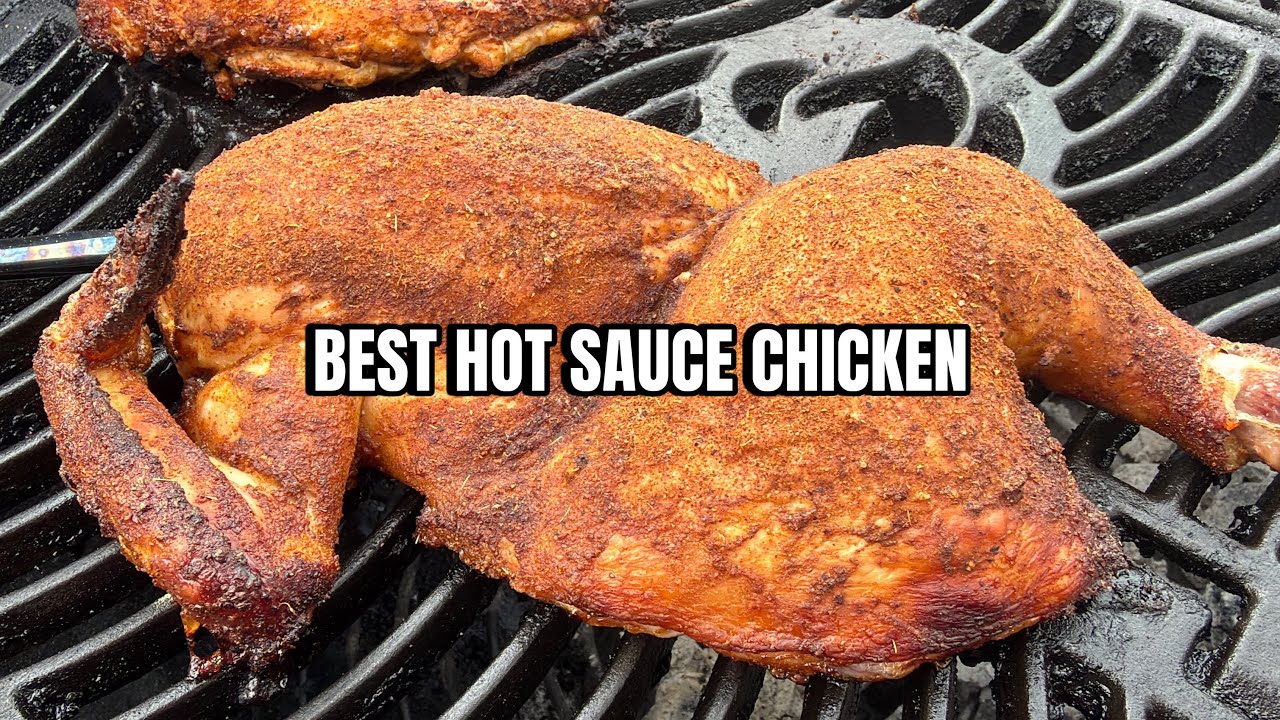
View recipe →A whole chicken split into halves, marinated two hours in a hot sauce, honey, Dijon and garlic blend, then cooked indirect over charcoal on a cast iron grate to 185–190°F for melting dark meat.
Watch the full cook on YouTube
| Stage | Temp | What it means |
|---|---|---|
| Food-safe minimum | 165°F / 74°C | Safe, but the dark meat is still firm and the skin has not fully rendered. |
| The target | 185–190°F / 85–88°C | Dark meat melting off the bone, skin properly rendered. The reason this recipe runs long. |
| Breast | Will exceed 165°F | A deliberate trade on a halved bird — the dark meat is the priority here. |
| Grill temp | ~350°F / 175°C | High enough for the skin, gentle enough to reach 190°F without burning. |
Carve the meat off the bone before storing rather than refrigerating whole halves — it cools faster and takes far less space. It keeps 3–4 days sealed. Keep the carcasses for stock.
The skin will not stay crisp in the fridge. Plan leftovers around sandwiches, wraps, salads and rice bowls rather than reheated chicken halves. If you do reheat, do it covered at 300°F with a splash of stock so the lean breast meat does not dry further.
Cooked chicken freezes for about three months. Portion it with a little stock or pan juice to protect it and thaw overnight in the fridge. Dark meat handles freezing noticeably better than breast, so if you are splitting the leftovers, freeze the thigh and leg meat and eat the breast fresh.
Because this is a dark-meat-first recipe. 165°F is the safety minimum, but thigh and leg meat is full of connective tissue that only breaks down above about 175°F — at 185–190°F it becomes genuinely tender and pulls off the bone. The trade is that the breast on the same half goes past its ideal, which this recipe accepts deliberately.
Cut down either side of the backbone with kitchen shears and remove it, then turn the bird over and cut through the breastbone. Keep the backbone for stock. If you would rather not, ask a butcher or buy halves directly.
Two hours works for this marinade, because the acidity is moderated by oil and honey. A sharper, straight-vinegar marinade should be capped at about an hour on poultry — beyond that the acid starts breaking down the surface proteins and the texture goes soft and mealy.
Yes. A wet marinade layer steams the skin rather than letting it crisp, and the honey in it scorches over heat. The flavour you want has already soaked in during the marinade — the coating left on the surface is working against you.
Not the marinade that held raw chicken, unless you boil it hard for several minutes first. The better approach is to set some aside before the chicken goes in. That gives you the same flavour with none of the risk.
Thermal mass. Cast iron holds and radiates heat far more evenly than thin wire, which buffers the temperature swings a charcoal grill is prone to over a 75-minute cook. It also gives better contact marks where the chicken touches it.
No 500-word life story — just the good-to-know stuff on what’s actually in this cook. Here’s the rundown on every real ingredient, health and nutrition wise.
General nutrition info only, not medical or dietary advice — portions, brands and add-ons change the numbers.