 Seafood
3:26
Seafood
3:26
Smoked Halibut with Garden Herb Rub
Fresh halibut seasoned with Garden Herb rub, smoked over maple, oak, and cherry pellets at 275°F, and finished with Frig That's Hot sauce.
View recipe →A whole red snapper grilled simply over charcoal with a two-zone fire, stuffed with shallots and cilantro and finished with a Bahamian steamed sauce.
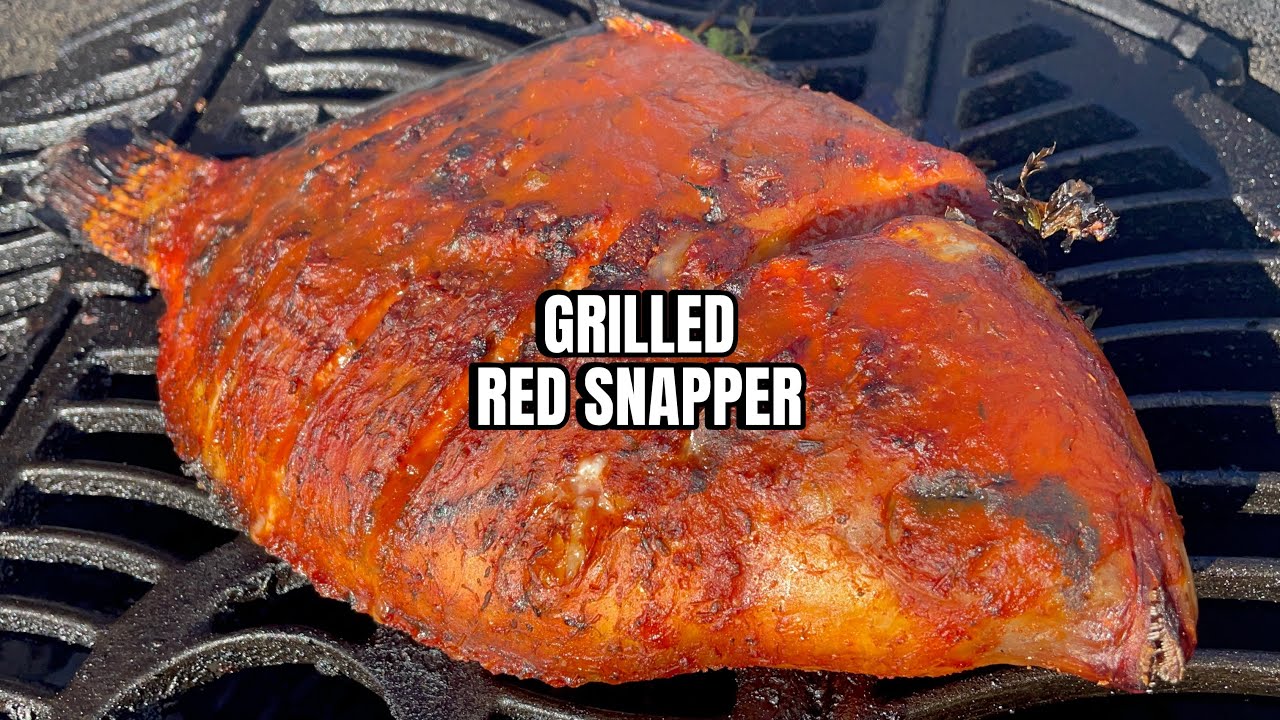
Watch the full cook on YouTube
| Stage | Temp | What it means |
|---|---|---|
| Setup | Two-zone, fish on the cool side | Direct heat burns the skin long before the middle cooks. |
| Final target | 145°F / 63°C | At the thickest point, near the backbone. |
| The visual test | Flesh flakes from the bone | It should separate cleanly at the spine. |
| Sauce | Last few minutes | Sugar burns over a 25-minute cook. |
| Rest | 3–5 minutes | Brief. Fish cools fast. |
Cooked fish keeps 2 days refrigerated at most, and it is genuinely best eaten the day it is cooked. Pick the meat off the bones before storing rather than refrigerating the whole fish.
Do not reheat it hard. Warm it gently, covered, or better still eat it cold — cold grilled snapper is excellent flaked into a salad, a taco or a rice bowl, and reheating fish is what gives it that unmistakable second-day smell.
Cooked fish does not freeze well, going watery and stringy on thawing. The carcass, on the other hand, is worth keeping: snapper bones make a fast, clean fish stock in twenty minutes and freeze for three months.
145°F at the thickest point, measured near the backbone. The visual confirmation is the flesh flaking cleanly away from the spine. Fish has very little margin above that temperature, so a thermometer is worth using.
Oil the grates and the fish, cook over a properly hot but indirect fire, and do not try to move it early. Fish releases on its own once the skin has set. A fish basket removes the problem entirely and makes turning a whole snapper possible.
Two reasons. Scoring lets heat into the thickest part of the fish so the middle cooks in step with the tail, and it stops the skin contracting and curling the fish as it tightens over the fire.
Bones and skin insulate the flesh from the heat, so a whole fish stays considerably moister than a fillet and picks up flavour from the bones. It also gives you a cavity to stuff, which perfumes the flesh from the inside.
Clear, full eyes rather than sunken and cloudy ones. Flesh that springs back when pressed. Red gills rather than brown. And it should smell clean and of the sea, not fishy — that smell is the first sign of age.
In the last few minutes. A tomato-based Caribbean sauce carries sugar, and twenty-five minutes over a fire is more than enough to blacken it. You want just long enough for it to tack onto the skin.
No 500-word life story — just the good-to-know stuff on what’s actually in this cook. Here’s the rundown on every real ingredient, health and nutrition wise.
General nutrition info only, not medical or dietary advice — portions, brands and add-ons change the numbers.
Seafood
3:26
Fresh halibut seasoned with Garden Herb rub, smoked over maple, oak, and cherry pellets at 275°F, and finished with Frig That's Hot sauce.
View recipe → Snacks & Sides
3:45
Snacks & Sides
3:45
Maple Leaf Prime hotdogs upgraded with a hot-sauce binder and Sweet Chipotle rub, then grilled two-zone over Kingsford charcoal for easy smoky flavour.
View recipe → Seafood
3:24
Seafood
3:24
A full pack of Canadian Cove PEI mussels steamed in Coldstream Clear Nova Scotia light beer with sautéed onion, garlic, and fresh parsley.
View recipe → Chicken
5:32
Chicken
5:32
Bone-in thighs marinated in a whisked sweet-and-spicy blend of garlic, Dijon, hot honey, BBQ seasoning, vinegar and oil, then grilled two-zone over charcoal to a properly tender 180°F.
View recipe → Seafood
5:41
Seafood
5:41
A whole rainbow trout grilled over charcoal with a two-zone fire — flaky, buttery, and stuffed with fresh dill and lemon.
View recipe → Seafood
4:19
Seafood
4:19
Quick-smoked salmon folded into cream cheese with Red Lava hot honey and green onion, piled onto a toasted bagel for a bold BBQ breakfast.
View recipe →