Saucy Rossy BBQ
Chicken

Charcoal-Grilled Cornish Game Hens

Cornish game hens slathered in a spicy Sassy Chicken butter and grilled over lump charcoal with cherry wood smoke for crispy skin and juicy meat.
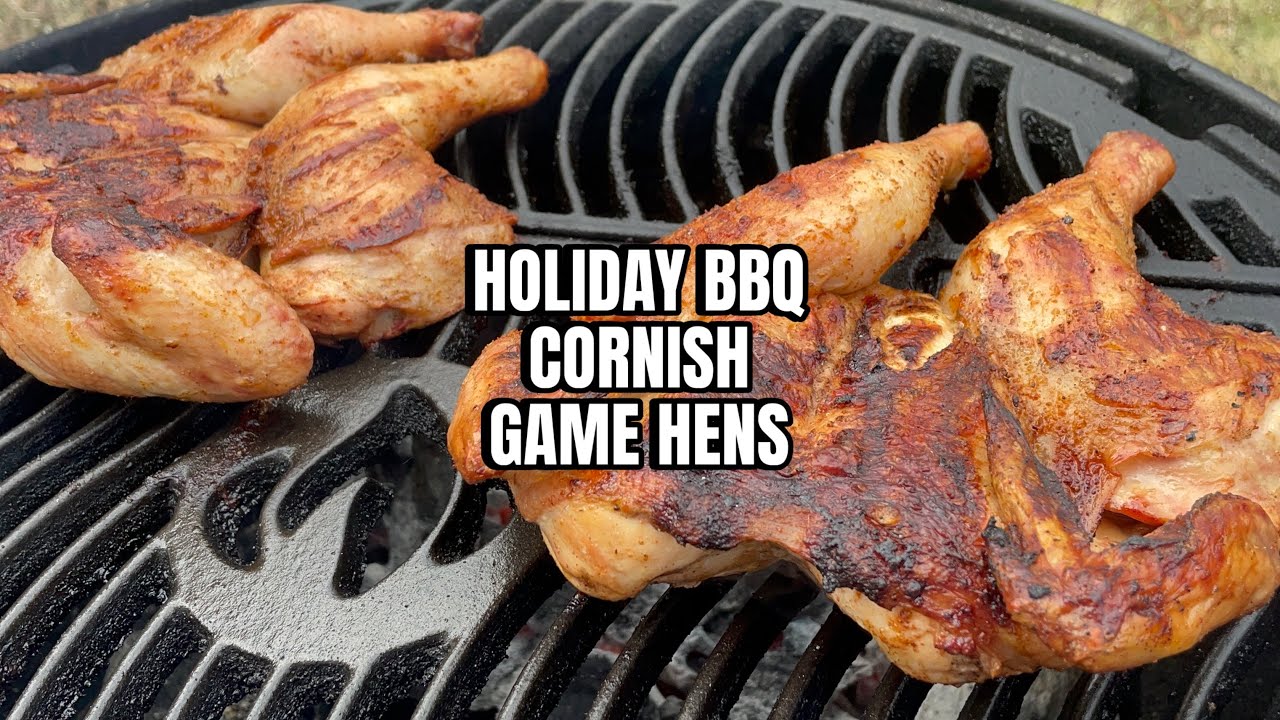
Time~1 hr Prep20 min YieldServes 4 (2 hens, half each) CategoryChicken Watch5:16
Charcoal-Grilled Cornish Game Hens — watch on YouTube

Watch the full cook on YouTube

Method

  1. 1Mix a rich compound butter from equal parts butter, Sassy Chicken BBQ Seasoning, and Turkey Burner hot sauce.Soften the butter to room temperature rather than melting it, so it holds together as a paste you can slather rather than a liquid that runs off. Mix it properly — hot sauce and butter will want to separate at first, so work it with a fork until it comes together into a smooth, spreadable compound.
  2. 2Coat the hens all over in the seasoned butter.Pat the hens completely dry first. Get butter under the breast skin as well as over the top — loosen it with your fingers from the neck end and work the compound in. That puts seasoning and fat directly against the lean breast meat, which is the part most likely to dry out on a small bird.
  3. 3Set up the charcoal grill with lump charcoal and add a chunk of cherry wood to the cool side for a subtle, sweet smoke.Two-zone, coals banked to one side, cherry chunk at the edge of the bed. Aim for 375–400°F on the indirect side — game hens are small and lean and want a reasonably hot, quick cook rather than a long low one. Put a drip tray under where the birds will sit.
  4. 4Grill the hens until the skin is crispy and the meat is juicy and cooked through.Start them breast-up on the indirect side with the lid down, then move them over the coals for the last few minutes to crisp the skin. Check the breast for 165°F and the thigh for 175°F. A hen is small — expect 45–60 minutes total, and start checking at 40.
  5. 5Rest briefly and serve — a simple holiday dinner that still feels special.Ten minutes on a board. A whole hen per person is generous; halved with kitchen shears down the breastbone serves four comfortably and makes the plate easier to eat.

Watch it on YouTube

What each ingredient is doing

Cornish game hens
Young chickens, usually 1–2 lb each, not actually game birds. Their small size means they cook fast and evenly but also dry out quickly — there is very little thermal buffer. One per person is generous; halved, one feeds two.
Butter
The vehicle for everything else and insurance against a lean bird drying out. Softened, not melted — you want a paste that clings to the skin and sits under it rather than a liquid that runs into the fire.
Sassy Chicken BBQ Seasoning
A sweet-savoury poultry rub. In the butter it distributes evenly across the surface and under the skin. Sugar content means the birds should spend most of the cook on the indirect side.
Turkey Burner hot sauce
Brings heat and acidity, and the vinegar in it cuts the richness of all that butter. Any vinegar-based hot sauce works — the acid is doing as much as the heat here.
Lump charcoal
Burns hot and clean, which suits a shorter, hotter cook like this. Its temperature drift matters less over an hour than it would over a long smoke.
Cherry wood chunk
Mild and sweet, and it gives poultry excellent colour. One chunk is plenty — small birds take on smoke quickly, and an hour of heavy smoke would overwhelm them.

Temperature guide

StageTempWhat it means
Breast165°F / 74°CThe ceiling for white meat on a bird this small — there is very little margin past it.
Thigh175–180°F / 79–82°CDark meat needs the higher range. On a hen the thigh is small, so it usually gets there naturally.
SkinVisualGolden and crisp. The butter helps browning, but the skin still needs real heat to render.
Rest10 minutesSmall birds lose heat fast, so do not rest much longer than this or you will be serving them cool.

Pitmaster tips

  • Get the compound butter under the breast skin, not just over it. On a lean little bird, fat and seasoning directly against the breast meat is the difference between juicy and dry.
  • Soften the butter, do not melt it. Melted butter runs straight off the skin and into the fire; a soft paste stays where you put it.
  • 375–400°F is the right range. Game hens are small, and a long low cook leaves them with soft skin and no benefit.
  • One chunk of cherry. A 1–2 lb bird takes on smoke very quickly, and more wood makes it acrid rather than aromatic.
  • Use a drip tray. Butter-slathered birds render a lot of fat, and it will flare if it hits the coals directly.
  • Start indirect, finish over the coals. That cooks them through gently and then crisps the skin at the end, rather than burning the butter early.
  • Start checking temperature at 40 minutes. Hens are small and go from perfect to overcooked in a very short window.
  • Halve them with shears before serving if you are feeding four. It portions cleanly and makes them far easier to eat.
  • Pat the birds dry before the butter goes on. Wet skin under butter steams rather than crisps.
  • Rest only about 10 minutes. Small birds shed heat fast, and a long rest means cold hens.

If it goes wrong

The breast meat is dry
Overcooked, which is easy on a bird this small. Pull at 165°F in the breast, and get butter under the skin next time — that fat layer buys you real margin. Check early; 40 minutes is not too soon to look.
The skin is soft
The grill was too cool or the birds never saw direct heat. Finish over the coals for 3–4 minutes at the end, watching closely because the butter and sugar will colour fast.
The butter all ran into the fire
It was melted rather than softened, or the birds went straight over direct heat. Use a soft paste, cook indirect for most of the cook, and put a drip tray underneath.
Flare-ups scorched the skin
Rendering butter and fat hitting coals. Drip tray, lid closed, and keep the birds on the indirect side until the final crisping.
The hens taste over-smoked
Too much wood for a small bird. One chunk of a mild wood is the correct dose, and it should be smouldering with thin blue smoke before the hens go on.
They finished much faster than expected
That is normal — game hens are small. Always start checking well before the recipe time, because there is very little thermal mass to slow things down.

Ways to change it up

Spatchcock the hens
Remove the backbone and press flat. They cook faster and far more evenly, and the skin crisps better because the entire surface faces the heat. The single best change you can make.
Herb butter instead
Swap the hot sauce for lemon zest, garlic and thyme. Same technique — softened compound butter over and under the skin — with a classic roast-chicken character rather than a spicy one.
Beer can style
Stand each hen on a small can or a vertical roaster. Heat circulates all around them and the skin crisps evenly, though on a bird this small the benefit is smaller than on a full chicken.
Oven roasted
425°F on a rack over a sheet pan, roughly 45–55 minutes. Identical butter treatment and temperatures. No smoke — add smoked paprika to the compound to bridge some of the gap.
Whole chicken instead
The same butter and method scale to a 4–5 lb bird; expect 75–90 minutes rather than an hour. Everything else — the under-skin butter, two-zone setup, target temperatures — is unchanged.

What to serve it with

  • Roast potatoes or a wild rice pilaf — this reads as a small holiday dinner and suits proper sides.
  • Something green and sharp: a lemony salad or green beans, against all that butter.
  • Cranberry sauce or a fruit chutney if you are leaning into the holiday angle.
  • Extra hot sauce on the side for people who want more heat than the butter gives.
  • A glass of crisp white or a cold cider — both cut butter well.

Storage & reheating

Cooked hens keep 3–4 days refrigerated. Carve the meat off the bone before storing rather than refrigerating whole birds — it chills faster and takes far less space. Keep the carcasses for stock; small bird bones make a light, clean broth.

The skin will not stay crisp. Plan leftovers around sandwiches, salads and soups, or reheat covered at 300°F with a splash of stock to keep the lean breast meat from drying out further. Because game hen meat is so lean, it punishes hard reheating more than chicken thighs would.

Cooked game hen freezes for about three months. Portion it with a little stock or the pan butter to protect it, and thaw overnight in the fridge. Leftover compound butter also freezes well — roll it in parchment into a log and slice off what you need for up to six months.

FAQ

What is a Cornish game hen?

A young chicken, usually slaughtered at about four to five weeks and weighing 1–2 lb. Despite the name it is not game and not a distinct species in any meaningful sense — it is a small chicken. That size is the whole point: it cooks quickly and one bird makes an impressive individual portion.

How long do Cornish hens take on the grill?

About 45–60 minutes at 375–400°F, depending on size. They are small, so start checking at 40 minutes — the window between properly cooked and dry is narrow because there is so little thermal mass.

What temperature should game hens be cooked to?

165°F in the breast and 175°F or more in the thigh. On a bird this small the thigh usually gets there on its own by the time the breast is ready, but check both — the breast is what will dry out if you overshoot.

Why put butter under the skin?

Because skin is a fat barrier, so seasoning on top of it mostly flavours the skin. Butter and rub worked underneath sit directly against the lean breast meat, seasoning it and basting it from the inside as the butter melts. On a small, lean bird this makes a real difference.

Should I spatchcock them?

It genuinely helps. Removing the backbone and pressing the bird flat means it cooks faster and more evenly and the whole skin surface faces the heat, so it crisps better. The only reason not to is presentation — a whole hen looks more impressive on the plate.

One hen per person or half?

One per person is the traditional serving and it is generous. Halved with kitchen shears down the breastbone, two hens comfortably serve four — and halves are considerably easier to eat than a whole small bird.

Know your cook

More information, cause recipe back stories are stupid

No 500-word life story — just the good-to-know stuff on what’s actually in this cook. Here’s the rundown on every real ingredient, health and nutrition wise.

Chicken
Chicken is a lean, versatile source of complete protein, B vitamins (especially niacin and B6), and selenium. Skinless breast is leanest; thighs and skin add flavour and a little more fat. Always cook poultry to a safe 165°F.
Turkey
Turkey is a lean, high-protein poultry rich in niacin, B6, selenium, and zinc, and the white meat is among the leanest meats you can smoke. Brining keeps it juicy without adding much fat.
Butter
Butter adds richness and helps carry sauce into the meat, but it's high in saturated fat and calories, so it works best as a finishing touch rather than by the cupful.

General nutrition info only, not medical or dietary advice — portions, brands and add-ons change the numbers.

← All recipes  ·  All 33 chicken recipes