Saucy Rossy BBQ
Pork

Charcoal Grilled Country Style Pork Ribs

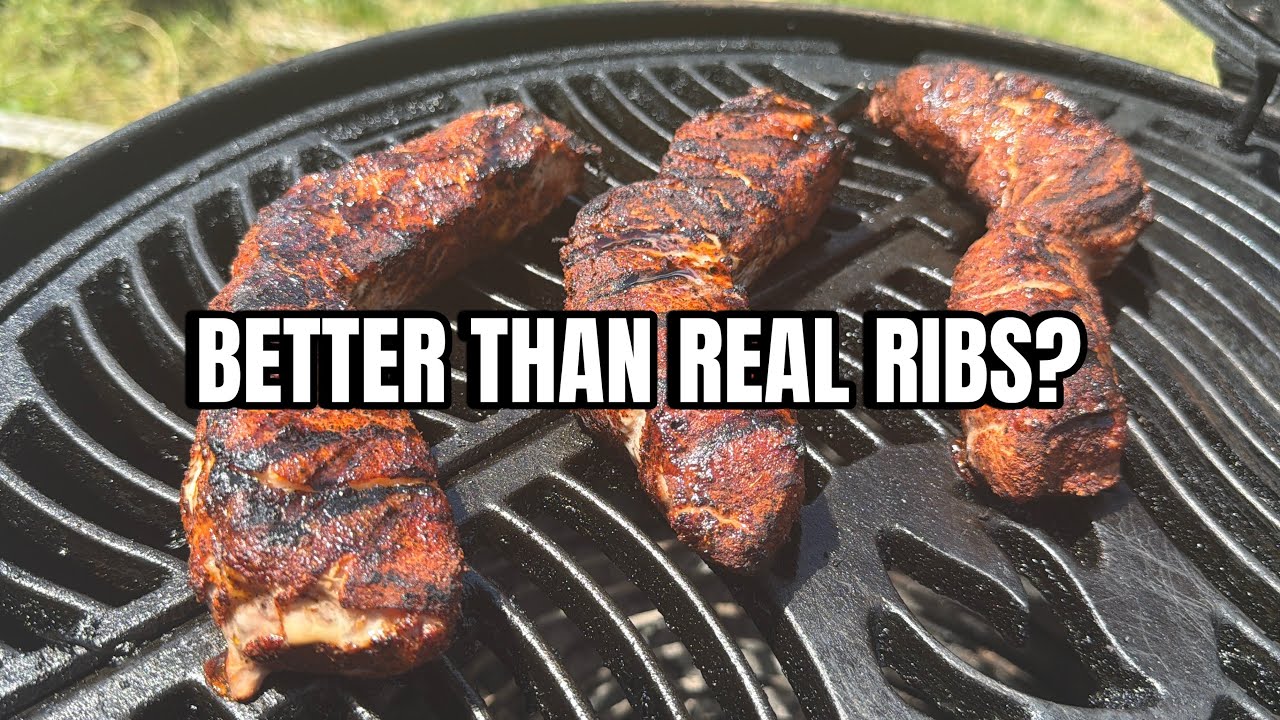
Pork chops sliced almost all the way through and opened out into thick, long country style ribs, seasoned with Oh Porky rub and grilled two-zone over lump charcoal to a juicy 145°F.
Time~30 min Prep10 min YieldServes 4 CategoryPork Watch5:08
Charcoal Grilled Country Style Pork Ribs — watch on YouTube

Watch the full cook on YouTube

Method

  1. 1Slice each pork chop almost all the way through and open it out flat.Cut horizontally through the chop, stopping short of the far edge so the two halves stay joined along one side — like opening a book, or a mouth. Opening it out gives you a longer, thinner piece with roughly double the surface area, which means more rub, more crust and faster, more even cooking than the same chop left thick.
  2. 2Season generously all over with Oh Porky BBQ Dry Rub.Pat the pork dry first. Season the newly opened inner faces as well as the outside — those are the surfaces you just created and they take the most seasoning. Get into the fold too.
  3. 3Set up the Napoleon charcoal grill two-zone with Royal Oak lump charcoal.Bank the lump against one side, leaving a third to a half of the grate empty. Lump burns hotter than briquettes, which suits a fast cook like this — you want a fierce direct zone for colour and a genuinely cool zone to finish over.
  4. 4Start the pork over the coal side for high-heat grilling and colour.Two or three minutes a side is enough. Opened-out chops are thin, so this is purely about building crust — do not try to cook them through here. Watch for flare-ups from the rendering fat and move a piece rather than spraying the fire.
  5. 5Move to the indirect side to finish gently without burning.Lid down. The hot side stays available for extra colour whenever you want it, which is the real advantage of a two-zone fire — you can always add char, but you cannot take it away. Expect 10–15 minutes indirect.
  6. 6Pull the pork once it reaches 145°F internal.145°F is the USDA safe temperature for whole-muscle pork and it leaves the centre faintly pink, which is correct. Probe the thickest part of the fold. A wireless probe is genuinely useful here because these cook fast and the window is narrow.
  7. 7Rest a few minutes, then serve — good alongside a fresh chickpea salad.Five minutes is enough for a cut this size; carryover takes it to around 150°F. Rest on a rack rather than a plate so the crust stays crisp underneath.

Watch it on YouTube

What each ingredient is doing

Thick-cut pork chops
The starting point, not a compromise. Genuine country style ribs are cut from the shoulder end of the loin and vary enormously between butchers; opening out a thick chop gives you a consistent, meaty piece with the same eating character and none of the guesswork.
Oh Porky BBQ Dry Rub
A sweet-savoury pork rub. There is some sugar in it, which is why the direct phase is short — sugar browns beautifully in two or three minutes and burns if it sits over lump charcoal much longer.
Royal Oak lump charcoal
Lump burns hotter and faster than briquettes with more temperature drift. On a 25-minute cook that heat is an advantage and the drift barely matters — it is exactly the right fuel for fast, hot grilling.

Temperature guide

StageTempWhat it means
The target145°F / 63°CUSDA safe for whole-muscle pork. Faintly pink in the centre, and correct.
After resting150°F / 66°CCarryover over a five-minute rest. Where it lands on the plate.
Too far160°F+ / 71°C+Dry. The old well-done pork advice predates modern pork and is why chops have a reputation for being tough.
Direct phase2–3 min per sideFor colour only. The cooking happens on the indirect side.

Pitmaster tips

  • Cut almost through, not all the way. The join is what keeps it one piece and gives you the long, thick shape — a chop cut fully in two is just two thin chops.
  • Season the newly cut inner faces. They are the surfaces you just created and they are where most of the extra flavour comes from.
  • 145°F, not 160°F. Modern pork is safe at 145°F with a rest and it is meant to be slightly pink. This single number is the difference between juicy and dry.
  • Sear first, then move across. These are thin once opened out — finishing over direct heat overcooks the outside long before the fold is warm.
  • Keep the direct phase to two or three minutes a side. A sugared rub over lump charcoal browns fast and burns not long after.
  • The hot side is there whenever you need it. Being able to add colour at any point is the whole advantage of a two-zone fire.
  • Use a probe rather than a timer. Opened-out chops cook fast and the window between 145°F and dry is only a few minutes.
  • Watch for flare-ups during the sear and move the pork rather than spraying — water on a fat fire throws ash onto the food.
  • Rest on a rack, not a plate, so the crust underneath stays crisp.
  • Buy chops at least an inch and a half thick. Thin chops opened out become too thin to handle and cook through before they colour.

If it goes wrong

The pork is dry
It went past 145°F. Use a thermometer, probe the thickest part of the fold, and pull the moment it reads. Pork loin has very little fat to fall back on.
The rub burnt
Too long over the coals. Oh Porky has sugar in it — two or three minutes a side is the limit over lump, then move to the indirect zone.
The chop fell into two pieces
Cut too far. Stop about half an inch short of the far edge; it feels like you are not cutting enough, and that is correct.
It cooked through before it browned
The chops were too thin to start with, or the fire was not hot enough. Buy thicker chops and get the lump properly lit and ashed over before anything goes on.
Constant flare-ups
Rendering fat hitting live coals. Move the pork to the cool side, shut the lid to smother the flame, and trim any large loose fat before cooking.
The two halves cooked at different rates
Uneven thickness when you opened it out. Press the opened chop flat with your palm, or give it a light pounding, so both sides are the same depth.

Ways to change it up

Actual country style ribs
Buy them as sold — cut from the shoulder end of the loin. They are fattier and less uniform, and they benefit from a longer, lower cook to around 195°F to break down the connective tissue, which is a different recipe from this one.
Glazed
Brush BBQ sauce on in the last three or four minutes over the indirect side. Sugar on sugar, so keep it late and thin.
Brined
A 30–60 minute brine in salted water before seasoning adds real insurance on a lean cut. Pat very dry afterwards or the crust suffers.
Stuffed
Because the chop opens out like a book, it will take a filling — apple and sage, or cheese and jalapeño. Close it and skewer, and add a few minutes on the indirect side.
Gas or cast iron
Gas: burners on one side, same two-zone logic. Cast iron: rip the pan hot for the sear then finish in a 375°F oven. The temperatures are identical.

What to serve it with

  • A fresh chickpea salad, as served in the video — light and lemony against rich pork.
  • Apple sauce or a fruit chutney; the pairing is old for good reason.
  • Grilled vegetables cooked on the direct side while the pork finishes indirect.
  • Crusty bread or potatoes to catch the juices.
  • Cold cider — apple and pork agree, and it cuts the fat.

Storage & reheating

Cooked pork keeps 3–4 days refrigerated. Store the pieces whole rather than sliced, since every cut face is somewhere moisture escapes from. Cool before sealing.

Because this is a lean cut pulled at 145°F, reheating pushes it past where it should be. Warm slices gently in a covered pan with a splash of stock, or use them cold in sandwiches and salads — genuinely the better option. A hard reheat undoes the whole point of the temperature discipline.

Raw pork chops freeze well for 4–6 months wrapped airtight, and they are a good thing to buy in bulk and portion. Freeze them before opening them out, since the butterflied shape is awkward to stack. Thaw overnight in the fridge and cut them just before cooking.

FAQ

What are country style pork ribs?

Confusingly, not ribs. They are usually cut from the shoulder end of the pork loin, sometimes with a bit of blade bone, and they vary a lot between butchers. This recipe makes something equivalent by opening out a thick chop, which gives a consistent, meaty piece without the guesswork of what you have actually been sold.

What temperature should pork chops be cooked to?

145°F, then rested to about 150°F. That is the USDA safe temperature for whole-muscle pork and it leaves the centre faintly pink, which is correct and safe. The old advice to cook pork to 160°F or beyond predates modern pork farming and is the single biggest reason chops get a reputation for being dry.

Why cut the chop almost through instead of leaving it whole?

Surface area. Opening the chop out roughly doubles the exposed surface, which means more rub, more crust and a faster, more even cook. A thick chop left whole has to be cooked long enough for heat to reach the centre, by which point the outside is well past its best.

Why two-zone instead of just grilling over the coals?

Because the sear and the cook want different heat. High direct heat builds crust in two or three minutes; the interior then needs gentler heat to reach 145°F without burning the outside. The hot side stays available for extra colour whenever you want it, which is why two-zone is the default setup for almost everything on charcoal.

Should I brine pork chops?

It helps but it is not required if you cook to 145°F, which is where most dry pork actually goes wrong. A 30–60 minute brine adds a little insurance and seasons the meat through — just pat the pork very dry afterwards, because a wet surface will not take a crust.

Lump charcoal or briquettes for this?

Lump, for a fast hot cook like this one. It burns hotter and lights quicker, and its main drawback — temperature drift over long cooks — is irrelevant across 25 minutes. Briquettes are the better choice when you need a steady bed for hours.

Know your cook

More information, cause recipe back stories are stupid

No 500-word life story — just the good-to-know stuff on what’s actually in this cook. Here’s the rundown on every real ingredient, health and nutrition wise.

Pork
Pork is a protein-rich meat that's especially high in thiamine (vitamin B1) — more than most other meats — plus B6, niacin, and selenium. Tenderloin and loin are lean; shoulder and belly are richer, so portion the fattier cuts.

General nutrition info only, not medical or dietary advice — portions, brands and add-ons change the numbers.

← All recipes