Saucy Rossy BBQ
Pork

Sweet & Sticky Pork Party Ribs

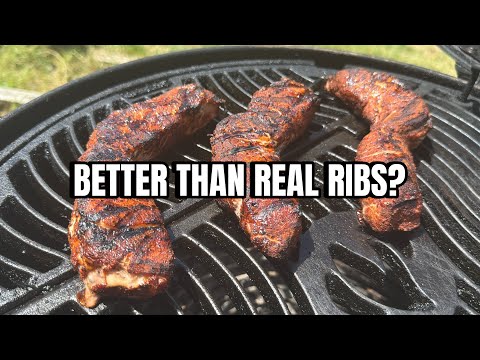
Pork ribs cut into individual bones before cooking, smoked at 225°F on a wire rack for two hours, then braised in a foil tray with butter and apple butter BBQ sauce until sticky and tender.

Time~3 hrs Prep15 min YieldServes 6–8 CategoryPork Watch4:19
Sweet & Sticky Pork Party Ribs — watch on YouTube

Watch the full cook on YouTube

Method

  1. 1Cut the rack into individual ribs before cooking, leaving the silver skin on.Portioning first is what makes these party ribs — every bone gets bark on all four sides instead of just the top, which is dramatically more surface area and more of the best part. Leaving the membrane on is unorthodox but works here: with the ribs already separated it is not blocking a whole face, and it helps each bone hold together through the braise.
  2. 2Season the ribs generously all over with Heavy Hands Hank Sweet Rub.Season every face, which is the point of separating them. A sweet rub suits pork and caramelizes into bark at 225°F. Because there are so many more surfaces than a whole rack, you will use noticeably more rub — do not be shy.
  3. 3Set the pellet grill to 225°F and arrange the ribs on a wire rack.The wire rack is a genuinely good trick. Instead of moving dozens of individual ribs one at a time later in the cook, you lift the whole rack and transfer everything into the foil tray in one movement. Space them so air circulates around each bone.
  4. 4Smoke for two hours.This is the smoke and bark phase. Individual ribs take on smoke much faster than a whole rack because of all that exposed surface, so two hours is plenty — longer and the sweet rub starts to darken past where you want it.
  5. 5Transfer to a foil tray with a couple of generous knobs of butter and a healthy coating of Apple Butter BBQ Sauce, cover tightly with foil and return to the smoker for another hour.Lift the whole wire rack and tip the ribs in. The butter and sauce become a braising liquid, and the tight foil cover traps steam so the ribs tenderise rather than dry. An hour is right — longer and individually cut ribs go past tender into falling apart.
  6. 6Uncover and check — the ribs should be juicy, tender and coated in a sticky glaze.Open the foil away from you; there is a lot of trapped steam. Toss the ribs in the sauce that has collected in the tray so every side gets coated. If you want the glaze firmer, put the uncovered tray back on the smoker for 15–20 minutes to let it tack up.
  7. 7Serve hot, straight from the tray.These are finger food and they are best hot, while the glaze is still sticky rather than set. Put the tray out with napkins.

Watch it on YouTube

What each ingredient is doing

Pork party ribs
Not a separate cut — an ordinary rack of ribs cut into single bones before cooking. The name describes the format: individual, handheld, easy to serve to a crowd. Spare ribs or St. Louis cut work best; baby backs are smaller and cook faster.
Sweet Rub
Sugar-forward, which suits pork and caramelizes into bark at 225°F. You will need more than you expect because separating the rack multiplies the surface area.
Butter
Fat in the braise. It enriches the sauce, keeps the ribs from drying during the covered hour, and gives the finished glaze gloss.
Apple Butter BBQ Sauce
A sauce built on apple butter — a thick, slow-cooked spiced apple preserve. Apple and pork is one of the oldest pairings there is, and the fruit sweetness plus the sauce's body is what makes these sticky rather than just wet.

Temperature guide

StageTempWhat it means
Smoke phase2 hours at 225°FBark set on all four sides. Individual ribs take smoke fast.
Braise phase1 hour, coveredButter and sauce steam the ribs tender. Longer risks falling apart.
Optional glaze set15–20 min uncoveredOnly if you want the sauce firmer rather than saucy.
DoneTender with a little biteThey should hold together when picked up, not collapse.

Pitmaster tips

  • Cut the rack into individual bones before cooking, not after. That is the entire idea — four sides of bark per rib instead of one.
  • Use a wire rack from the start. Lifting one rack into the foil tray beats moving thirty individual ribs with tongs, and it is the difference between this being easy and being tedious.
  • Use more rub than feels right. Separating the rack multiplies the surface area, so the same amount of seasoning goes much less far.
  • Two hours of smoke is enough. Individual ribs have far more exposed surface than a whole rack and take smoke much faster.
  • Cover the tray tightly. A loose cover lets the steam escape and you get roasting rather than braising, which is slower and drier.
  • Cap the braise at an hour. Cut ribs go from tender to falling apart faster than a whole rack, and falling apart is overcooked.
  • Open the foil away from you. There is a lot of trapped steam in a covered tray and it will scald.
  • Toss them in the tray sauce before serving so every side is coated — that collected liquid is the best thing in the tray.
  • Give them 15–20 minutes uncovered if you want the glaze to set rather than stay saucy. Both are good; it is a preference.
  • Serve them hot. The glaze sets as it cools and these are meant to be sticky.

If it goes wrong

The ribs fell apart
Too long in the covered braise. Individual ribs cook much faster than a whole rack — an hour is the limit, and 45 minutes may be right for baby backs.
They are tough
Not enough time in the braise. Cover them again and give them another 20–30 minutes; the covered phase is where the tenderising happens.
The rub burnt
The grill ran hotter than 225°F. A sweet rub is fine at that temperature but darkens quickly above 275°F — check the grill at grate level.
They came out wet rather than sticky
Skip straight from the braise to the plate and they will be saucy. Give them 15–20 minutes uncovered on the smoker to let the glaze tack up.
The sauce all ran to one end of the tray
The tray was on a slope, or too big for the quantity. Use a tray the ribs fill fairly snugly so the liquid stays in contact with them.
Some ribs are much more done than others
Uneven bone sizes. The end ribs of a rack are always smaller — put those toward the cooler part of the grill, or pull them earlier.

Ways to change it up

Remove the membrane
The conventional approach. With individual ribs it makes less difference than on a whole rack, but it does give a slightly cleaner bite. Worth doing if you have the time.
Whole rack instead
The same rub, sauce and phases on an uncut rack — but stretch the smoke to three hours and the braise to an hour, since a whole rack cooks slower. Less bark, more traditional presentation.
Different fruit sauce
Peach, apricot or cherry preserves all work in place of apple butter. Fruit and pork is the principle; the specific fruit is preference.
Sweet heat
Add hot sauce or chili flakes to the braise. The covered phase distributes the heat evenly through every rib, which a surface glaze cannot do.
Charcoal or offset
Any smoker holding 225°F works. The wire rack trick, the two phases and the timings are unchanged.

What to serve it with

  • Straight from the tray with plenty of napkins — this is finger food.
  • Coleslaw or a sharp pickle plate against all that sweetness.
  • Cornbread or soft rolls to mop up the tray sauce.
  • Extra sauce warmed on the side for dipping.
  • Cold lager or cider; apple and pork already agree, so cider is natural.

Storage & reheating

Cooked ribs keep 3–4 days refrigerated, stored in their tray sauce rather than drained — the liquid is what keeps them from drying out and the flavour deepens overnight. Cool before sealing.

Reheat covered at 250–300°F for 15–20 minutes so they steam gently back to temperature, then uncover for a few minutes if you want the glaze to tack up again. A microwave works in a pinch but makes rib meat rubbery.

They freeze well for about three months, in their sauce, in meal-sized portions. Thaw overnight in the fridge and reheat gently. Party ribs are actually one of the better barbecue leftovers because the braise leaves them sitting in liquid rather than drying out on a bone.

FAQ

What are party ribs?

An ordinary rack of pork ribs cut into individual bones before cooking rather than after. The name describes the format — single, handheld ribs that are easy to serve to a crowd. The real advantage is bark: every rib gets crust on all four sides instead of just the top.

Do I need to remove the membrane?

For party ribs it matters much less than on a whole rack. Once the ribs are separated, the membrane is not blocking an entire face from smoke and seasoning, and it helps each bone hold together through the braise. Removing it gives a slightly cleaner bite if you have the time.

Why cook them on a wire rack?

Purely practical, and it is the best tip in the recipe. When it is time to move to the foil tray you lift one rack rather than transferring thirty individual ribs with tongs. It also keeps them spaced so air and smoke circulate on all sides.

How long should the covered braise be?

About an hour for spare or St. Louis ribs, and possibly 45 minutes for smaller baby backs. Individual ribs tenderise considerably faster than a whole rack, and beyond an hour they go from tender to falling apart — which is overcooked, not perfect.

What is apple butter?

A thick, slow-cooked spiced apple preserve, with no dairy in it despite the name. It brings concentrated apple sweetness, a little acidity and real body. In a BBQ sauce it gives the glaze the stickiness these ribs are named for.

Can I make these ahead for a party?

Yes, better than most barbecue. Cook them fully, keep them in their sauce, and reheat covered at 250–300°F before serving — they hold and reheat well because they are sitting in liquid rather than drying out. Give them a few minutes uncovered at the end to re-set the glaze.

Know your cook

More information, cause recipe back stories are stupid

No 500-word life story — just the good-to-know stuff on what’s actually in this cook. Here’s the rundown on every real ingredient, health and nutrition wise.

Pork
Pork is a protein-rich meat that's especially high in thiamine (vitamin B1) — more than most other meats — plus B6, niacin, and selenium. Tenderloin and loin are lean; shoulder and belly are richer, so portion the fattier cuts.
Apple
Apples add natural sweetness, fibre, and vitamin C. In a brine or alongside pork they balance salt and smoke; on their own they're a low-calorie, gut-friendly fruit.
Butter
Butter adds richness and helps carry sauce into the meat, but it's high in saturated fat and calories, so it works best as a finishing touch rather than by the cupful.

General nutrition info only, not medical or dietary advice — portions, brands and add-ons change the numbers.

← All recipes