 Beef
6:48
Beef
6:48
Grass-Fed Nova Scotia Denver Steak
An underrated, well-marbled Denver steak grilled over charcoal with a two-zone fire and brandy-barrel smoke, sliced medium-rare and topped with a fresh chimichurri.
View recipe →Grass-fed Nova Scotia sirloin steaks seared in a Lodge cast iron pan on a propane stove, flipped repeatedly for an even crust, then basted with butter, garlic, rosemary and thyme and pulled at 132°F.
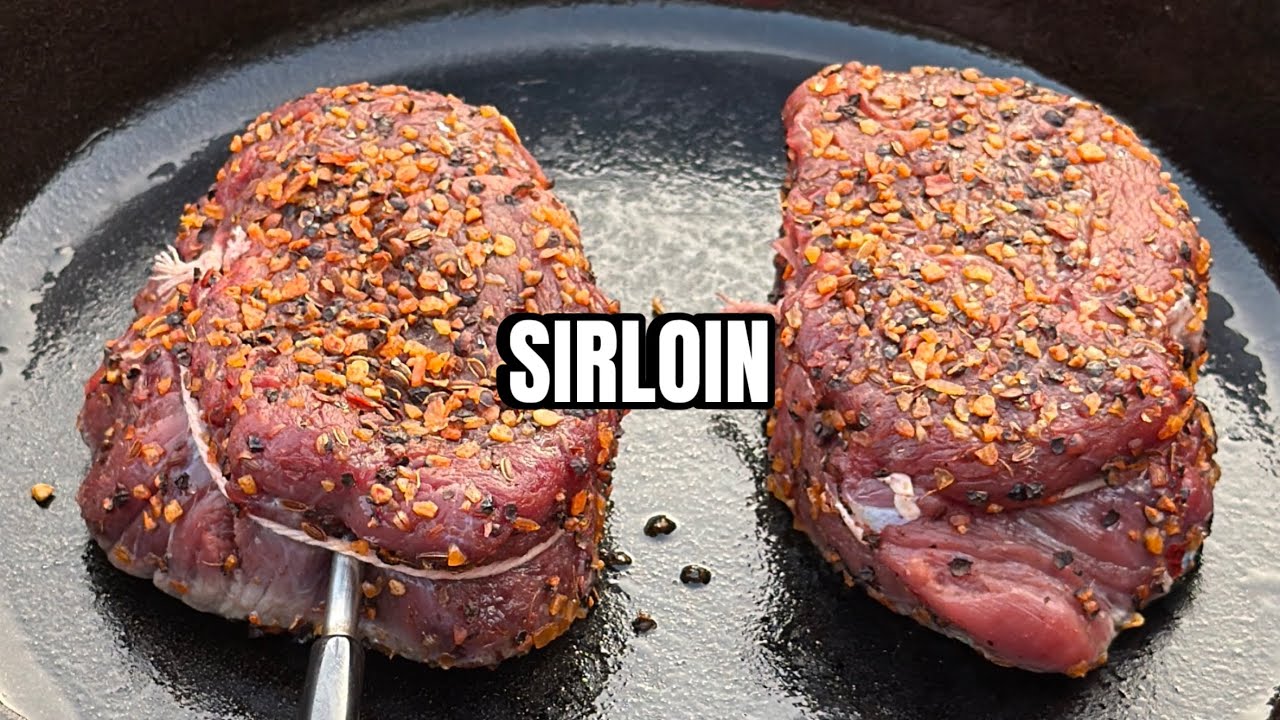
Watch the full cook on YouTube
| Stage | Temp | What it means |
|---|---|---|
| Pull | 132°F / 56°C | A few degrees early, because grass-fed beef is lean and carryover keeps working. |
| After resting | 135°F / 57°C | Medium-rare. Where it lands on the plate. |
| Too far | 145°F+ / 63°C+ | A lean grass-fed sirloin firms up noticeably past medium-rare. |
| Pan | Ripping hot, then lower | Hard heat for the sear, then back it off once the butter goes in. |
Cooked steak keeps 3–4 days refrigerated. Store it whole and unsliced — a sliced steak dries out fast. Because it was pulled at medium-rare, any real reheat pushes it past where it should be, so slicing it cold for salads and sandwiches is genuinely the better option.
If you do want it warm, sear the slices for seconds in a very hot pan, or warm them gently in the leftover pan butter. Both are far better than a microwave, which turns a medium-rare steak grey and rubbery.
Raw steaks freeze well for 6–12 months wrapped airtight, though grass-fed fat oxidizes slightly faster than grain-fed, so vacuum-sealing is worth the effort past a couple of months. Thaw overnight in the fridge and pat very dry before seasoning — a wet thawed steak will not take a crust.
Many times is fine, and arguably better. Flipping every 30–60 seconds keeps either face from overheating while both build colour, and it cooks the interior more evenly than a single flip. The idea that a steak must only be turned once is a myth — repeated flipping produces a good crust faster.
Butter's milk solids burn well below the temperature you need for a hard sear, so cooking in it from the start gives you a bitter, blackened pan. Sear in a high smoke point oil, then add butter once the crust has formed and back the heat off — it should foam rather than smoke.
Two things. It carries garlic and herb aromatics onto the meat, and — more importantly — the hot butter spooned over the top cooks that surface gently while the bottom sits on the pan. That evens out the cook, which is why basted steaks have a more uniform interior.
Yes. It is leaner and its fat has a slightly different melting point, so it cooks faster and has less margin for error. Pull it a few degrees earlier than you would a grain-fed steak of the same thickness. The flavour is more mineral and less sweet, which suits simple seasoning.
Anything with a high smoke point and a neutral flavour — grapeseed, avocado or refined canola. Olive oil and butter both burn at searing temperature and will make the pan and the steak taste bitter. Use a thin film, not a pool.
Because searing cast iron produces a great deal of smoke, and most kitchen extraction cannot cope with it. An outdoor burner lets you get the pan genuinely hot without filling the house or setting off smoke alarms — and it usually puts out more heat than a domestic hob.
No 500-word life story — just the good-to-know stuff on what’s actually in this cook. Here’s the rundown on every real ingredient, health and nutrition wise.
General nutrition info only, not medical or dietary advice — portions, brands and add-ons change the numbers.
Beef
6:48
An underrated, well-marbled Denver steak grilled over charcoal with a two-zone fire and brandy-barrel smoke, sliced medium-rare and topped with a fresh chimichurri.
View recipe → Beef
9:46
Beef
9:46
Tri-tip smoked over sugar maple at 275°F to 105°F internal, then seared in the firebox on hot cast iron and briefly straight over the coals, finished at 135°F and topped with fresh chimichurri.
View recipe → Sausage
4:55
Sausage
4:55
Beck Farms bratwurst braised in a Coldstream Clear lager with onion and red pepper in cast iron, then charred over the coals and served with green mustard.
View recipe → Pork
3:32
Pork
3:32
Pork ribs seasoned with an Indian-spiced rub, smoked at 225°F with a cider vinegar spritz, wrapped with butter and more vinegar, then glazed with chunky mango chutney instead of BBQ sauce.
View recipe → Beef
6:35
Beef
6:35
An inside round oven roast smoked at 225°F with apple pellets to 135°F, then wrapped and chilled overnight so it can be sliced paper-thin into deli-style roast beef for sliders.
View recipe → Beef
5:33
Beef
5:33
Leftover smoked brisket, diced and mixed into Sobeys Italian sausage meat, pressed into patties and cooked in cast iron on a Camp Chef stove, with a 3-2-1 burger sauce.
View recipe →