Saucy Rossy BBQ
Sausage

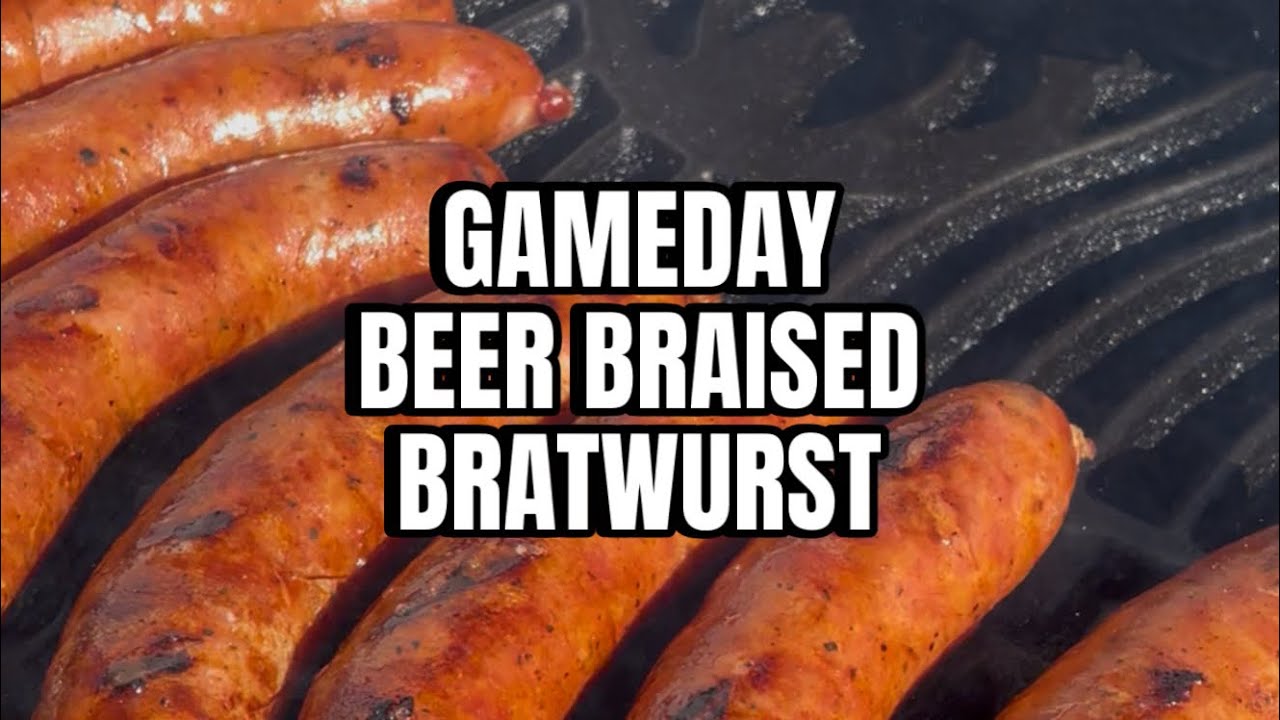
Beer-Braised Bratwurst with Peppers and Onions

Beck Farms bratwurst braised in a Coldstream Clear lager with onion and red pepper in cast iron, then charred over the coals and served with green mustard.

Time~45 min Prep10 min YieldServes 4–6 CategorySausage Watch4:55
Beer-Braised Bratwurst with Peppers and Onions — watch on YouTube

Watch the full cook on YouTube

Method

  1. 1Set up the charcoal grill for two-zone cooking with Kingsford briquettes.Two-zone is what makes this work. The braise happens on the cool side and the char happens over the coals, and you need both halves of the grill to do it.
  2. 2Add the bratwursts to a cast-iron skillet with the white onion, red bell pepper, and a Coldstream Clear Lager.Everything goes in cold and comes up together. The onions and peppers soften in the beer while the sausages poach, and they take on the sausage fat as they go.
  3. 3Simmer the sausages in the beer braise over the cooler side of the grill until cooked through and full of flavour.Simmer, never boil. A hard boil bursts casings and squeezes fat out of the sausage into the liquid, which is exactly the fat you want staying in the brat.
  4. 4Move the bratwursts directly over the coals and finish with a good char on all sides.Straight from the braise to the coals. The surface is wet, so give it a moment to dry before expecting colour, then turn for even char on all sides.
  5. 5Serve on sesame seed buns with the braised onions and peppers and a swipe of Maritime fine green mustard.The braised onions and peppers go on the bun with the sausage — they have been cooking in beer and sausage fat and they are half the sandwich.

Watch it on YouTube

What each ingredient is doing

Smoked bratwurst
Already smoked and cooked, so the braise is about flavour and moisture rather than reaching a safe temperature. Fresh brats work too but need longer in the beer to cook through.
Lager
A clean lager rather than something heavily hopped. Hop bitterness concentrates as the braise reduces, and an IPA can leave the onions genuinely bitter.
White onion and red pepper
Sliced, not diced, so they hold up to the braise and sit properly on a bun. They soften in the beer and take on rendered sausage fat as they go.
Cast-iron skillet
It holds heat steadily over a charcoal fire where a thin pan would scorch, and it can sit directly on the grate on either side of the grill.
Green mustard
Sharp and herbal against a rich sausage. Acidity is the thing a bratwurst most wants against it, which is why mustard has always been the partner.
Sesame seed buns
Sturdy enough to hold a sausage plus braised vegetables without falling apart. Toast them on the grill while the brats char.

Temperature guide

StageTempWhat it means
BraiseA bare simmerNever a boil — hard boiling bursts casings and pushes fat out.
Braise time20–25 minutesUntil the onions are soft and the beer has reduced.
Internal target160°F / 71°CFor fresh brats. Pre-smoked ones only need heating through.
Char4–6 minutes totalOver direct coals, turning for even colour.

Pitmaster tips

  • Set the grill up two-zone. The braise needs the cool side and the char needs the coals, so you genuinely need both.
  • Simmer, never boil. A hard boil bursts casings and squeezes fat out of the sausage into the liquid — that fat should be staying in the brat.
  • Use a clean lager rather than an IPA. Hop bitterness concentrates as the braise reduces and can leave the onions unpleasantly bitter.
  • Slice the onions and peppers rather than dicing them, so they hold up in the braise and sit properly on a bun.
  • Let the sausages dry for a moment after the braise before expecting colour. Wet surfaces steam before they char.
  • Braise first, char second. Charring first means the crust softens in the liquid and you lose it entirely.
  • Do not throw the braising liquid away. Reduce it down and spoon it over the sausages, or keep the onions swimming in it.
  • Toast the buns on the grill while the brats char. It takes a minute and it stops the bun going soggy.
  • The braised onions and peppers are half the sandwich. They have been cooking in beer and sausage fat all along.
  • Pre-smoked brats are already cooked, so the braise is about flavour and moisture. Fresh brats need to reach 160°F internal.

If it goes wrong

The casings split
The braise boiled. Keep it at a bare simmer on the cool side of the grill, and pierce nothing.
The brats are dry
Boiled rather than simmered, so the fat rendered into the liquid. Gentle heat is the whole trick with sausage.
The braise tastes bitter
A hoppy beer reduced down. Use a clean lager, or add less beer and top up with water.
No char
The sausages went on wet, or the coals were not hot enough. Let them dry a minute and make sure the direct side is properly hot.
The buns went soggy
Untoasted buns under wet vegetables. Toast them, and drain the onions slightly before they go on.
The onions are still crunchy
Not long enough in the braise. Give them a head start in the skillet before the sausages go in.

Ways to change it up

Different beer
A dark lager or bock adds malt sweetness. Avoid heavily hopped beers, which turn bitter as they reduce.
Add sauerkraut
Warm sauerkraut on the bun instead of, or alongside, the onions. Sharp and traditional.
Add caraway
A teaspoon of caraway seed in the braise. It is the flavour people associate with brats without knowing why.
Kielbasa or Italian sausage
Any good sausage takes to this treatment. Fresh Italian needs longer in the braise to reach 160°F.
Skillet only
Braise and sear in the same cast-iron pan on the stove if you are not lighting a fire. Less char, same idea.

What to serve it with

  • On toasted sesame buns with the braised onions and peppers.
  • A generous swipe of sharp green mustard.
  • Pickles or a vinegar slaw alongside.
  • Potato salad, if you are feeding people properly.
  • The rest of the lager, cold.

Storage & reheating

Cooked brats keep 3–4 days refrigerated, and they are better stored sitting in the braising liquid with the onions and peppers than dry on a plate.

Reheat gently in the liquid on the stove, then re-char briefly in a hot pan if you want the crust back. Microwaving works but the casing goes rubbery.

Braised brats freeze for two to three months in their liquid, which protects them from freezer burn. Thaw overnight in the fridge. The onions and peppers on their own are worth freezing too — they are excellent on any sandwich or stirred into eggs.

FAQ

Should I braise before or after grilling?

Braise first, char second. If you char first, the crust softens the moment it hits the liquid and you lose it entirely. Braising first cooks the sausage through gently and evenly, so the fire only has to do the browning.

Why did my bratwurst casings split?

The braise boiled. At a rolling boil the fat inside the sausage expands faster than the casing can stretch and it bursts, taking the fat with it. Hold a bare simmer on the cool side of the grill and the casings stay intact.

What beer should I use?

A clean lager. As the braise reduces, hop bitterness concentrates, so an IPA can leave the onions genuinely bitter. A dark lager or bock works well too if you want malt sweetness.

Should I pierce the sausages?

No. Piercing lets rendered fat escape into the pan, which is the opposite of what you want. Gentle heat keeps the casing intact without any need to vent it.

What temperature should bratwurst be cooked to?

160°F internal for fresh brats. Pre-smoked bratwurst is already fully cooked, so the braise is about flavour and moisture and you only need to heat it through.

What do I do with the braising liquid?

Do not throw it away. Reduce it down and spoon it over the sausages, or leave the onions and peppers sitting in it so they stay moist. It is beer, onion and rendered sausage fat, which is as good as it sounds.

Know your cook

More information, cause recipe back stories are stupid

No 500-word life story — just the good-to-know stuff on what’s actually in this cook. Here’s the rundown on every real ingredient, health and nutrition wise.

Sausage
Sausages are a tasty protein but tend to be higher in sodium and saturated fat than whole cuts, and cured ones add nitrites. Making them from scratch lets you control the salt and fat ratio; either way, enjoy in moderation.
Onion
Onions are low-calorie aromatics rich in fibre, vitamin C, and antioxidants such as quercetin. They add depth and gentle sweetness without much fat or salt.
Beer
Beer adds malt flavour and helps tenderize and steam in barbecue, and most of the alcohol cooks off with heat. As a drink, it's best enjoyed in moderation.

General nutrition info only, not medical or dietary advice — portions, brands and add-ons change the numbers.

← All recipes  ·  All 7 sausage recipes