Saucy Rossy BBQ
Beef

Steak School: Delmonico Steak

A steakhouse-classic Delmonico reverse-seared on the grill with Unreal Pepper rub — low and slow to medium-rare, then finished hot for a golden crust.
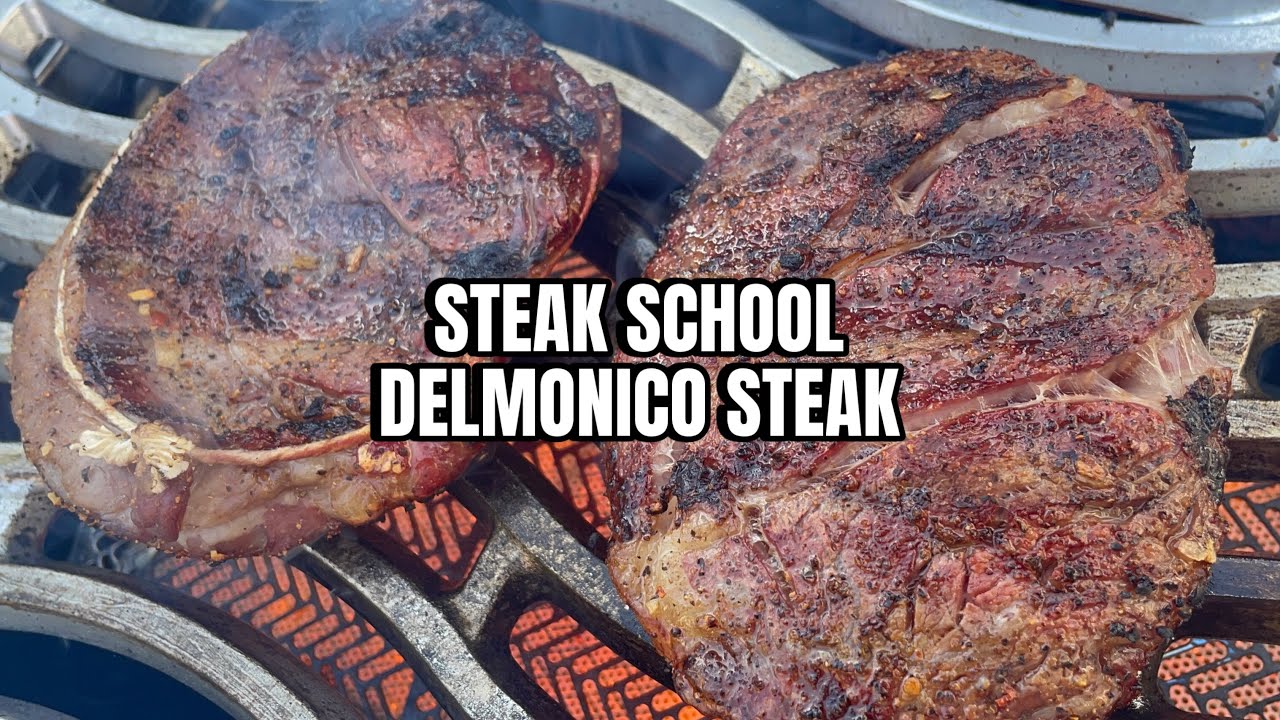
Time~1 hr Prep10 min YieldServes 2 CategoryBeef Watch5:13
Steak School: Delmonico Steak — watch on YouTube

Watch the full cook on YouTube

Method

  1. 1Season the Delmonico steak with Maritime Madness Unreal Pepper Dry Rub — bold, peppery, and it lets the natural beef flavour shine through.Pat it dry. A peppery rub suits a reverse sear because the long gentle phase mellows the pepper rather than scorching it, which is what happens on a straight hard sear.
  2. 2Start the steak over indirect heat to slowly bring the internal temperature up.Lid down, aiming for around 250°F on the indirect side. This is the phase that brings the interior up evenly with no grey band under the surface.
  3. 3Aim for 130–135°F internal for medium-rare.Pull off the indirect side about 10–15°F below your target — the final sear adds real temperature and skipping that margin is how a reverse sear ends up medium-well.
  4. 4Sear over high heat at the end to build a golden crust.Dry the surface again before the sear. A steak sitting over indirect heat sweats, and that moisture has to boil off before browning can start.
  5. 5Rest for 5–10 minutes before slicing.Rest 5–10 minutes. A reverse-seared steak needs less resting than a hard-seared one, but the final sear still drives moisture toward the centre.
  6. 6Slice against the grain to keep it tender.Slice across the grain — which direction that is depends on which cut your butcher sold you as a Delmonico.

Watch it on YouTube

What each ingredient is doing

Delmonico steak
A historical name rather than an anatomical one. Depending on the butcher it can be a boneless ribeye, a chuck eye, a top sirloin or a strip. Ask which cut you are actually getting, because it changes the cooking window and the grain direction.
Unreal Pepper Dry Rub
Pepper-forward, which suits a reverse sear specifically. The long gentle phase lets the pepper bloom and mellow; on a straight hard sear a heavy pepper crust scorches and turns acrid.
Two-zone grill setup
Essential to the method rather than a convenience — you need a genuinely cool side for the slow phase and a genuinely hot one for the finish.

Temperature guide

StageTempWhat it means
Off indirect115–120°F / 46–49°C10–15°F below target. The sear adds the rest.
Final130–135°F / 54–57°CMedium-rare, and right for every cut the Delmonico name covers.
Chuck-eye versionUp to 140°F / 60°CIf yours is a chuck eye it has more fat and is a little more forgiving.
Rest5–10 minutesLess than a hard-seared steak needs, but still needed.

Pitmaster tips

  • Ask your butcher what they mean by Delmonico. The name is historical rather than anatomical, and depending on the shop it can be a boneless ribeye, a chuck eye, a thick top sirloin or a strip — so the cooking window depends on what you actually bought.
  • The reverse sear here is the right call regardless of which cut you were handed. Bringing it up slowly over indirect heat then searing at the end gives you an evenly pink interior and a crust, which suits a thick steak of any origin.
  • Pull it off the indirect side about 10–15°F below your target. The final sear adds real temperature, and skipping that margin is how a reverse sear ends up medium-well.
  • Dry the surface before the sear, even mid-cook. A steak that has been sitting over indirect heat sweats, and that moisture has to go before browning starts.
  • A heavy pepper rub is well suited to a reverse sear — the long gentle phase mellows the pepper rather than scorching it, which is what happens when you put a peppery crust straight onto a ripping grate.
  • Rest it 5–10 minutes even though a reverse-seared steak needs less resting than a hard-seared one; the gentle cook means the juices are already more evenly distributed, but the sear still drives some to the centre.
  • Ask your butcher which cut their Delmonico actually is. The name is historical rather than anatomical, and the answer changes the cooking window and the grain direction.
  • Pull off the indirect side 10–15°F below target. The final sear adds real temperature, and skipping that margin is the classic reverse-sear mistake.
  • Dry the surface again before searing. A steak that has been sitting over indirect heat sweats, and wet meat will not brown.
  • A peppery rub is well suited to a reverse sear — the gentle phase mellows the pepper instead of scorching it.

If it goes wrong

It ended up medium-well
Came off the indirect side too hot. The sear adds 10–15°F on a thick steak — build that margin in rather than pulling at your target temperature.
The crust is thin
The surface was damp from the indirect phase. Pat it dry again before the sear, and make sure the hot zone is genuinely hot.
The pepper tastes burnt
Too long over direct heat. A reverse sear should be a short, hard finish — a minute or so a side is enough.
Half of it was chewy
Sliced with the grain. Since a Delmonico could be several different cuts, check the grain direction on the rested steak rather than assuming.
The indirect phase took much longer than expected
Steak thickness and grill temperature both vary a lot. Use a probe rather than a clock — the indirect phase is finished when the number says so.

Ways to change it up

Straight sear
Skip the indirect phase and sear hard from raw. Faster, with a more pronounced grey band under the crust. Fine on thinner steaks.
Butter baste the finish
Do the sear in a cast iron pan with butter, garlic and thyme rather than over the fire. More control and a richer result.
Add smoke
A wood chunk during the indirect phase. Twenty or thirty minutes at 250°F is enough to pick up real smoke on a steak.
Ask for a chuck eye
If your butcher's Delmonico is a chuck eye, lean into it — it is fattier and more forgiving, and it is the best value version of this steak.
Sous vide then sear
The most controllable version of the same principle — precise interior, then a hard sear. Same logic, different equipment.

What to serve it with

  • Chips or a baked potato.
  • A sharp salad or grilled vegetables.
  • Compound butter melted over the rested steak.
  • Flaky salt at the table.
  • A bold red wine.

Storage & reheating

Cooked Delmonico keeps 3–4 days refrigerated. Keep it whole and unsliced so it holds moisture, and reheat gently at low temperature if you must — a reverse-seared steak reheats better than most because it was never shocked with heat in the first place. Cold slices on a sandwich are the low-effort option and lose nothing.

Raw, it freezes for 6–12 months wrapped airtight. If it is a chuck-eye style Delmonico, it freezes particularly well because it carries a good amount of fat; thaw overnight in the fridge and pat dry before seasoning.

FAQ

What exactly is a Delmonico steak?

There is no single answer, and any source that gives you one is oversimplifying. The name comes from Delmonico's restaurant in 19th-century New York and has been applied over the years to boneless ribeye, chuck eye, top sirloin and strip steaks. Today it depends entirely on your butcher, so it is worth asking which cut you are getting.

What temperature should a Delmonico be cooked to?

130–135°F for medium-rare, which suits every cut the name gets applied to. If yours is a chuck-eye Delmonico it is a little more forgiving thanks to the fat; if it is a sirloin-style one, treat 135°F as a hard ceiling.

What is a reverse sear and why use it here?

You cook the steak gently over indirect heat until it is nearly at target, then sear it hard at the end. It gives an evenly pink interior instead of the grey band you get searing from raw, and it is especially suited to thick steaks — which is what a Delmonico usually is, whichever cut it turns out to be.

Do I need to rest a reverse-seared steak?

Less than a hard-seared one, but yes — 5–10 minutes. The gentle phase already distributes the juices fairly evenly, which is one of the method's advantages, but the final high-heat sear still drives moisture toward the centre and it needs a moment to settle.

What is a reverse sear and why use it here?

You cook the steak gently over indirect heat until it is nearly at target, then sear it hard at the end. It gives an evenly pink interior instead of the grey band you get searing from raw, and it suits thick steaks — which is what a Delmonico usually is, whichever cut it turns out to be.

Do I need to rest a reverse-seared steak?

Less than a hard-seared one, but yes — 5–10 minutes. The gentle phase already distributes the juices fairly evenly, which is one of the method's advantages, but the final high-heat sear still drives moisture toward the centre and it needs a moment to settle.

Know your cook

More information, cause recipe back stories are stupid

No 500-word life story — just the good-to-know stuff on what’s actually in this cook. Here’s the rundown on every real ingredient, health and nutrition wise.

Beef
Beef is a complete protein and one of the best food sources of highly absorbable heme iron, zinc, and vitamin B12 — key for energy, immunity, and healthy blood. Fattier BBQ cuts are calorie-dense, so lean trimming and sensible portions keep it balanced.

General nutrition info only, not medical or dietary advice — portions, brands and add-ons change the numbers.

← All recipes  ·  All 46 beef recipes