Saucy Rossy BBQ
Chicken

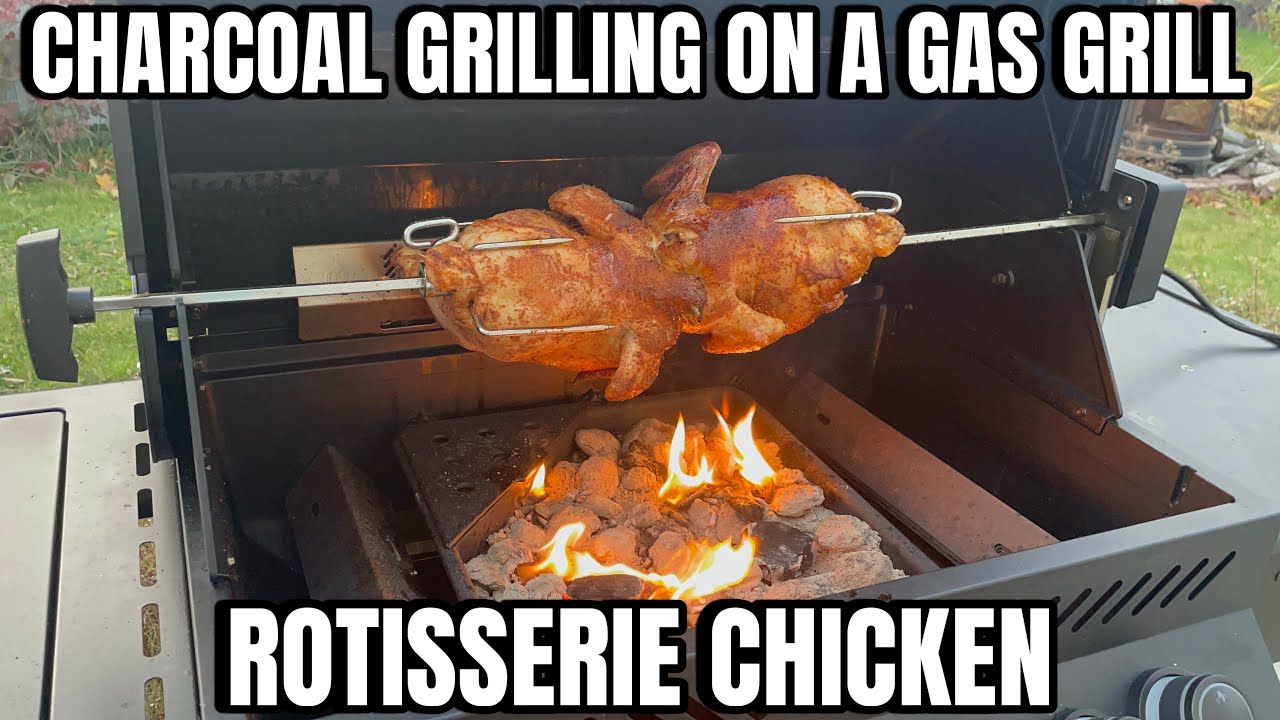
Rotisserie Cajun Chickens on a Gas Grill with Charcoal

Two whole chickens spun on the rotisserie over real charcoal and wood smoke, using a cast iron charcoal tray inside a Napoleon gas grill.
Time~1.5 hrs Prep20 min Yield2 whole chickens, serves 8 CategoryChicken Watch5:11
Rotisserie Cajun Chickens on a Gas Grill with Charcoal — watch on YouTube

Watch the full cook on YouTube

Method

  1. 1Set the cast iron charcoal tray above the gas burner, light the charcoal with the burner, then turn the gas down or off once the coals are lit.The gas burner is the world's easiest chimney starter. Once the coals are lit, turning the gas down means the charcoal is doing the cooking and you get real charcoal flavour out of a gas grill.
  2. 2Add wood chunks or pellets on top of the charcoal for clean smoke.Wood on top of lit coals rather than underneath. It starts smoking straight away and you can see when it settles from white to thin blue.
  3. 3Season both chickens all over with Maritime Madness Louisiana Cajun dry rub.Season under the skin as well as over it. Cajun rub on top of skin flavours the skin; rub underneath flavours the meat.
  4. 4Truss the chickens onto the rotisserie spit and set them spinning over the gentle charcoal heat.Truss properly — wings tucked, legs tied tight to the body. A loose bird on a rotisserie flops, throws the balance off, and cooks unevenly.
  5. 5Cook low and slow for about an hour and twenty minutes, until the chickens reach 165°F internal.Rotisserie is self-basting: the bird rotates through its own rendering fat continuously, which is why rotisserie chicken skin comes out the way it does.
  6. 6Rest briefly, carve, and serve juicy, smoky rotisserie chicken.165°F in the breast, 175°F in the thigh. Probe when the spit is stopped, in the thickest part, avoiding the bone.

Watch it on YouTube

What each ingredient is doing

Two whole chickens
Two fit most rotisserie spits and cook in the same time as one, which makes this an efficient way to feed a crowd or set up a week of leftovers.
Cajun dry rub
Paprika, cayenne, garlic, onion and herbs. Get it under the skin as well as over it — rub on top of skin only flavours the skin.
Cast iron charcoal tray
The bridge between gas and charcoal. It sits over a burner, which lights the coals, and then the gas comes down and the charcoal does the cooking.
Charcoal
Briquettes hold a steadier temperature over 80 minutes than lump does, which matters when you cannot easily adjust mid-cook.
Wood chunks or pellets
On top of the lit coals so they start smoking immediately. Wait for the smoke to settle from white to thin blue before the chickens go on.
Butcher's twine
Trussing matters more on a rotisserie than anywhere else. A loose bird flops, unbalances the spit and cooks unevenly.

Temperature guide

StageTempWhat it means
Grill temperature325–350°F / 163–177°CHot enough to crisp skin over 80 minutes.
Cook timeAbout 1 hour 20 minutesFor two average birds. Larger birds take longer.
Breast target165°F / 74°CNo margin above this.
Thigh target175°F / 79°CBetter than 165°F for dark meat.
Rest10 minutesBefore carving.

Pitmaster tips

  • Use the gas burner to light the charcoal, then turn the gas down or off. The coals do the cooking and you get real charcoal flavour from a gas grill.
  • Put the wood on top of the lit coals, not underneath. It starts smoking straight away and you can watch it settle from white to thin blue.
  • Wait for thin blue smoke before the chickens go on. White billowing smoke tastes acrid, especially on poultry.
  • Truss properly — wings tucked and legs tied tight. A loose bird flops on the spit, unbalances it and cooks unevenly.
  • Balance the birds on the spit before you start. An off-centre load makes the motor labour and can stall it entirely.
  • Get the rub under the skin as well as over it. Rub on top only ever flavours the skin.
  • Rotisserie is self-basting: the bird rotates continuously through its own rendering fat, which is exactly why the skin comes out the way it does.
  • Probe with the spit stopped, in the thickest part, avoiding the bone. Bone conducts heat and reads high.
  • 165°F in the breast, 175°F in the thigh. Two targets, two probes.
  • Cook two birds even if you only need one. They take the same time, and cold rotisserie chicken is one of the better leftovers there is.

If it goes wrong

The motor stalled
The load is unbalanced or too heavy. Centre the birds on the spit and re-balance before starting.
The skin is pale and rubbery
The grill ran too cool. Chicken skin needs 325°F or above to render and crisp.
It tastes acrid
The chickens went on into white smoke. Wait for it to settle to thin blue.
The chickens cooked unevenly
Badly trussed or off-centre. Legs tied tight, wings tucked, weight balanced on the spit.
The breast is dry
Cooked to the thigh's temperature. Probe both and pull the breast at 165°F.
The charcoal died halfway through
Not enough fuel for 80 minutes, or the tray was starved of air. Load it full and leave the burner on low if needed.

Ways to change it up

Brine first
A few hours in a simple salt brine makes the breast far more forgiving.
Different rub
Any poultry rub works. Lemon pepper, jerk, or a straight salt-garlic-paprika blend.
Butter under the skin
Compound butter worked under the skin bastes the meat from the inside as it renders.
Spatchcock instead
No rotisserie? Spatchcock and cook indirect at 350°F. More even skin, less theatre.
Add a drip pan
A pan under the birds catches the fat, which is worth saving for potatoes.

What to serve it with

  • Carved, with the pan drippings if you caught them.
  • Cajun rice or dirty rice.
  • A sharp slaw against the spice.
  • Cornbread, or good bread.
  • Cold beer, and the second bird for tomorrow.

Storage & reheating

Cooked chicken keeps 3–4 days refrigerated. Carve it off the bone but keep the pieces large — every cut face dries out.

Skin will not stay crisp through refrigeration. Reheat covered at 300°F with a splash of stock, then a few minutes under the broiler if you want the skin back.

It freezes for up to four months in portions with a little stock. Keep both carcasses: smoked rotisserie chicken frames make outstanding stock, and two birds gives you enough bones to make a batch worth the effort. Thaw overnight in the fridge.

FAQ

Can you use charcoal in a gas grill?

With a cast iron charcoal tray, yes. The tray sits over a burner, the burner lights the coals, and then you turn the gas down or off and let the charcoal do the cooking. It gives you genuine charcoal and wood flavour with gas-grill convenience.

How long does rotisserie chicken take?

About an hour and twenty minutes for two average birds at 325–350°F. Larger chickens take longer, and the only reliable measure is a thermometer: 165°F in the breast, 175°F in the thigh.

Why does trussing matter on a rotisserie?

More than anywhere else. A loose bird flops as it turns, which unbalances the spit, makes the motor labour, and cooks the bird unevenly because the distance to the heat keeps changing. Wings tucked, legs tied tight to the body.

Does rotisserie chicken need basting?

No, and that is the point of the method. The bird rotates continuously through its own rendering fat, self-basting the whole time. That constant coating is exactly why rotisserie skin comes out the way it does.

Why does my smoked chicken taste bitter?

It went on into white smoke. Freshly added wood throws thick white smoke as it off-gasses, and that tastes acrid — poultry shows it up more than red meat. Wait for the smoke to settle to a thin blue haze before the birds go on.

Why cook two chickens at once?

They take the same time as one. Rotisserie chicken is excellent cold, makes good sandwiches and salads all week, and the two carcasses together give you enough bones for a proper batch of stock.

Know your cook

More information, cause recipe back stories are stupid

No 500-word life story — just the good-to-know stuff on what’s actually in this cook. Here’s the rundown on every real ingredient, health and nutrition wise.

Chicken
Chicken is a lean, versatile source of complete protein, B vitamins (especially niacin and B6), and selenium. Skinless breast is leanest; thighs and skin add flavour and a little more fat. Always cook poultry to a safe 165°F.

General nutrition info only, not medical or dietary advice — portions, brands and add-ons change the numbers.

← All recipes  ·  All 33 chicken recipes