 Beef
7:17
Beef
7:17
Smoked Roast Beef for Sandwiches
Half tri-tip smoked and reverse-seared on a pellet grill, sliced paper-thin, and stacked on toasted bread with mustard and balsamic onions.
View recipe →A charcoal-smoked chuck roast braised with onions, mushrooms, and beef broth until pull-apart tender, piled on buns with spicy jalapeño cheese and au jus.
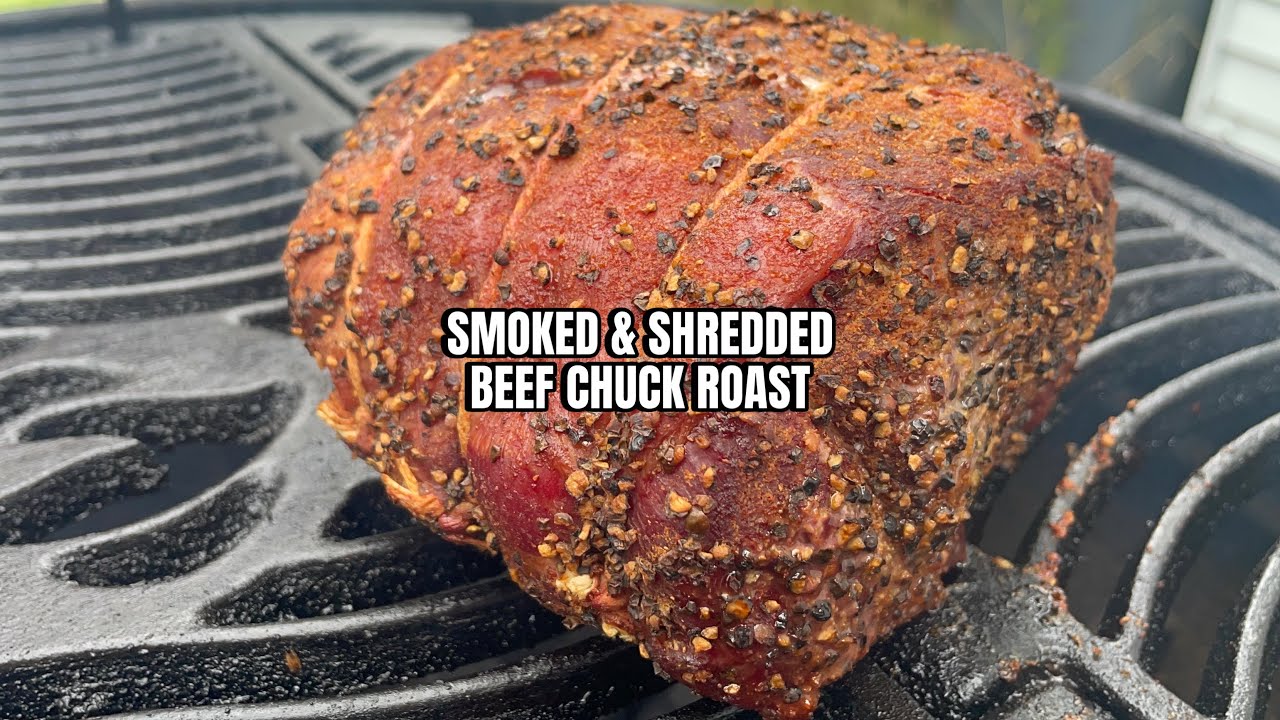
Watch the full cook on YouTube
| Stage | Temp | What it means |
|---|---|---|
| Open smoke phase | Until bark is dark and set | The entire flavour window — no more smoke goes on after this. |
| Braise to | ~203°F / 95°C | Or whenever it shreds with no resistance. |
| Below | 195°F / 91°C | It will still be tough. Collagen has not fully converted. |
| Au jus | Strained and skimmed | Let the fat rise before skimming, or it is greasy. |
Shredded chuck keeps 3–4 days refrigerated, and it should be stored sitting in its au jus — the liquid is what keeps it from drying out, and the flavour improves overnight. Reheat gently in a covered pan or at 250°F in the oven; it reheats better than almost any barbecue because there is so much gelatin and liquid in it.
It freezes excellently for about three months, again with the juices. Freeze in meal-sized portions so you can thaw only what you need. Thaw overnight in the fridge and reheat slowly — this is one of the few smoked meats that is genuinely as good the second time.
Charcoal briquettes laid in an overlapping row around the edge of a kettle grill, lit at one end. Each briquette ignites the next, so the fire creeps slowly along the line and holds a low temperature for hours without tending. It is what turns an ordinary kettle into a low-and-slow smoker.
Two different jobs. The open smoke phase builds bark and puts smoke flavour on the meat — once the roast is in liquid it will not absorb any more. The braise then supplies moisture and heat to break the chuck's heavy connective tissue down to gelatin, which is what makes it shreddable.
For pulled or shredded beef, it is arguably better — it is cheaper, more marbled, more forgiving, and it cooks faster. What it will not do is slice like a brisket, because its grain runs in several directions through the roast. For sandwiches and au jus, chuck is the smarter buy.
Around 203°F, or whenever it shreds with no resistance. Like brisket and short rib, chuck is a collagen-heavy working muscle, so the target is not doneness but the point at which all that connective tissue has converted to gelatin. Below about 195°F it will still be tough.
Two different jobs. The open smoke phase builds bark and puts smoke flavour on the meat — once the roast is in liquid it will not absorb any more. The braise then supplies moisture and heat to break chuck's heavy connective tissue down to gelatin, which is what makes it shreddable.
For pulled or shredded beef, arguably better — it is cheaper, more marbled, more forgiving and cooks faster. What it will not do is slice like a brisket, because its grain runs in several directions through the roast. For sandwiches and au jus, chuck is the smarter buy.
No 500-word life story — just the good-to-know stuff on what’s actually in this cook. Here’s the rundown on every real ingredient, health and nutrition wise.
General nutrition info only, not medical or dietary advice — portions, brands and add-ons change the numbers.
Beef
7:17
Half tri-tip smoked and reverse-seared on a pellet grill, sliced paper-thin, and stacked on toasted bread with mustard and balsamic onions.
View recipe → Sausage
4:55
Sausage
4:55
Beck Farms bratwurst braised in a Coldstream Clear lager with onion and red pepper in cast iron, then charred over the coals and served with green mustard.
View recipe → Beef
5:56
Beef
5:56
A fall-apart beef pot roast seared in a Dutch oven and braised low and slow in Blomidon Estates Baco Noir, served over garlic mashed potatoes.
View recipe → Pork
5:57
Pork
5:57
Budget-friendly pork rib tips smoked on a pellet grill, then braised sticky in a homemade Zombie Edition hot honey garlic sauce and served over rice.
View recipe → Beef
4:05
Beef
4:05
Buttery, lean beef tenderloin seasoned simply and grilled over Kingsford charcoal on a kettle grill for steakhouse results in the backyard.
View recipe → Beef
4:48
Beef
4:48
Vessel Meats oxtail seared in a Dutch oven and braised low and slow in Blomidon Baco Noir with onion, garlic, and carrots until fall-apart tender.
View recipe →