Saucy Rossy BBQ
Pork

Sweet Chipotle Homemade Bacon

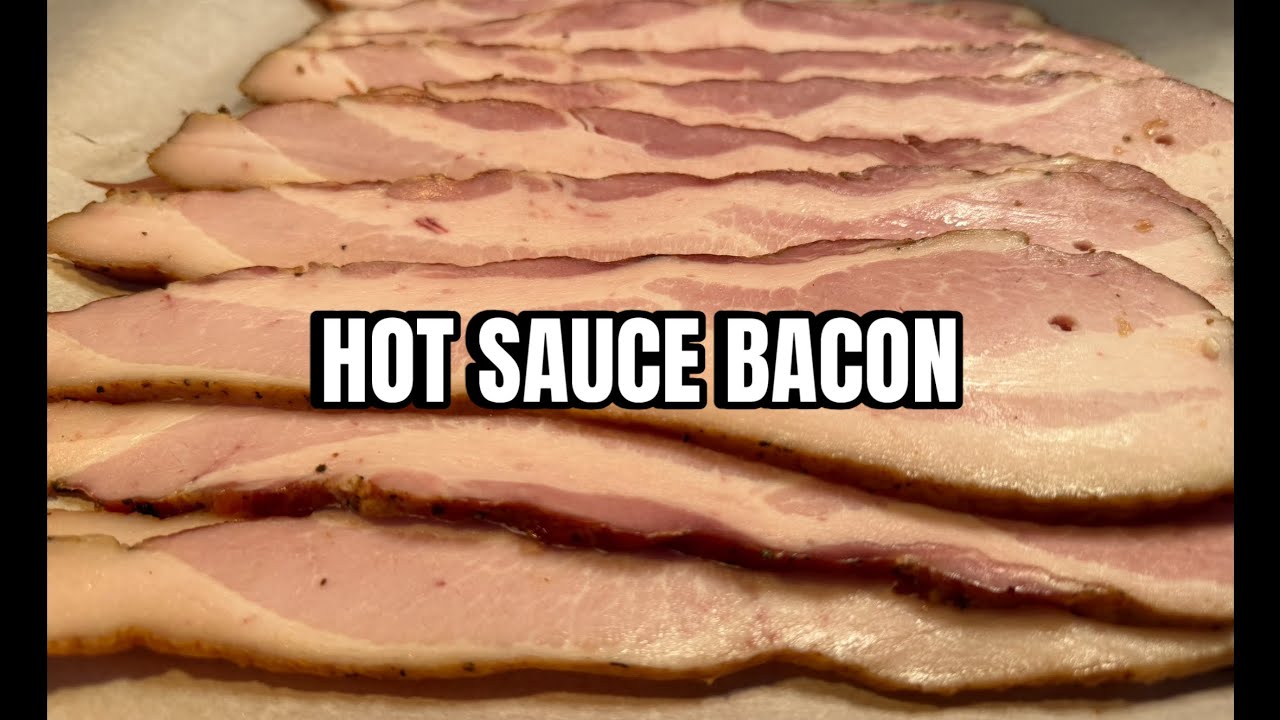
Pork belly cured for ten days with a precisely weighed cure, sweet chipotle rub, hot sauce and honey, then smoked on a pellet grill into sweet, smoky, gently spicy homemade bacon.

Time10 days cure + smoke Prep30 min YieldAbout 1 kg of bacon CategoryPork Watch5:08
Sweet Chipotle Homemade Bacon — watch on YouTube

Watch the full cook on YouTube

Method

  1. 1Weigh the pork belly and scale the cure to it.This recipe is written per kilogram of pork belly and the quantities are not decorative. Curing is the one area of barbecue where measuring by eye is genuinely unsafe — Cure #1 must be weighed on a scale accurate to at least 0.1 g. Weigh the belly first, then scale every ingredient proportionally. Trim the skin off if it is still on.
  2. 2Mix the Cure #1, kosher salt and brown sugar together, then combine with the sweet chipotle rub, hot sauce, honey, pepper, garlic powder and onion powder.Mix the three cure ingredients thoroughly first so the tiny amount of Cure #1 is evenly dispersed through a larger volume before anything else joins it. That even distribution is the whole point — a concentrated pocket of curing salt in one spot is exactly what you are trying to avoid. Then add the wet and flavour ingredients into a paste.
  3. 3Coat the pork belly thoroughly, making sure the mixture covers all sides.Every surface, edges included. Use all of the mixture — none of it is excess, because the quantities were calculated for this weight of meat. Massage it in rather than just laying it on.
  4. 4Vacuum seal the belly and refrigerate for 10 days.Vacuum sealing keeps the cure in constant contact with the meat rather than letting liquid drain away. A heavy zip bag with the air pressed out works if you do not have a sealer. Ten days is right for a standard belly thickness — this is an equilibrium cure, so a few days either way is not dangerous, unlike an overnight salt-box method.
  5. 5Rotate the package every couple of days to keep everything evenly distributed.The belly will release liquid as the salt draws moisture out, and that brine carries the cure. Flipping the bag every two days keeps it moving over the whole surface instead of pooling at the bottom.
  6. 6After 10 days, rinse the belly, pat it dry and form a pellicle.Rinse the surface cure off under cold water, then pat thoroughly dry and leave it uncovered on a rack in the fridge for several hours or overnight. That dry, slightly tacky surface is a pellicle, and it is what smoke actually sticks to — smoke slides straight off a wet surface.
  7. 7Smoke on the pellet grill at a low temperature until the belly reaches 150°F internal.Low and slow — around 180–200°F grill temperature — so the fat renders gently and the smoke has time to build. A pellet grill was chosen here specifically for the steady temperature control, which matters far more on bacon than on a forgiving cut like pork butt. 150°F internal is the finish for hot-smoked bacon.
  8. 8Chill thoroughly, then slice.Refrigerate the slab until properly cold — overnight is ideal — before slicing. Warm bacon compresses and tears under a blade; cold bacon slices clean and thin. Then fry as normal; this is uncooked bacon that still needs cooking.

Watch it on YouTube

What each ingredient is doing

Pork belly
The cut bacon is made from. Look for even thickness and a good balance of meat and fat — a belly that is mostly fat renders away to very little. Skin off, or remove it yourself before curing.
Cure #1
A mix of 93.75–96% salt and 6.25–4% sodium nitrite, dyed pink so it is never confused with table salt. It is what prevents botulism during a long low-temperature smoke, sets the colour and gives bacon its characteristic tang. It must be weighed precisely on an accurate scale, and it is not optional for smoked bacon.
Kosher salt
The bulk of the cure. It draws moisture out, seasons the meat through and firms the texture. Kosher rather than table salt because the coarser crystals are easier to weigh consistently and it contains no iodine.
Brown sugar
Balances the salt and helps with browning when the bacon is eventually fried. It also feeds the classic sweet-savoury bacon profile that pure salt curing lacks.
Sweet Chipotle dry rub
The flavour layer that makes this something other than plain bacon. Smoked chipotle reinforces the smoke from the grill rather than competing with it.
Hot sauce and honey
Wet ingredients that make the cure a paste rather than a dry rub, so it clings to every surface. Honey adds sweetness and gloss; hot sauce brings acidity and a background heat that survives the long cure.

Temperature guide

StageTempWhat it means
Cure10 days refrigeratedVacuum sealed, rotated every couple of days.
PellicleSeveral hours to overnightUncovered on a rack in the fridge. Dry and tacky — this is what smoke sticks to.
Smoke150°F / 66°C internalAt a low grill temperature, around 180–200°F, so the fat renders gently.
SliceChilled throughOvernight in the fridge. Warm bacon will not slice thin.

Pitmaster tips

  • Weigh everything on an accurate scale. Curing is the one part of barbecue where estimating is genuinely unsafe, and Cure #1 in particular must be measured to the tenth of a gram.
  • Scale the recipe to your actual belly weight. These quantities are per kilogram — a 1.4 kg belly needs 1.4 times everything.
  • Mix the Cure #1 into the salt and sugar first, before anything else. Dispersing it through a larger volume is what stops concentrated pockets forming.
  • Vacuum seal if you can. It keeps the cure in constant contact with the meat instead of letting the brine drain to the bottom of a bag.
  • Rotate the package every couple of days. The belly releases liquid as it cures, and turning it keeps that brine moving over the whole surface.
  • Form a pellicle before smoking. Rinse, pat dry, and leave the belly uncovered on a rack in the fridge — smoke slides straight off a wet surface and sticks to a tacky one.
  • Smoke low, around 180–200°F. You are rendering fat gently and building smoke, not cooking a roast; high heat renders the fat out and leaves the bacon dry.
  • Chill it hard before slicing. This is the same principle as deli meat — cold firms the slab so it cuts thin and clean instead of squashing.
  • Remember it is uncooked. Hot-smoked bacon at 150°F is safe to eat but is meant to be fried like any bacon.
  • Save the rendered fat when you fry it. Homemade bacon fat is one of the better by-products in the kitchen.

If it goes wrong

The bacon is far too salty
Too much salt for the weight of meat, or the belly was thinner than assumed. Soak sliced bacon in cold water for 30 minutes and pat dry before frying. Next time, weigh the belly and scale precisely.
It has no colour or bacon tang
The Cure #1 was omitted or under-measured. That pink curing salt is what sets the colour and gives bacon its characteristic flavour, and it is also the food-safety component in a long low-temperature smoke.
The smoke did not stick
No pellicle. Rinse the cure off, pat dry and leave the belly uncovered on a rack in the fridge for several hours before smoking. A wet surface repels smoke.
It came out dry and the fat rendered away
The smoker ran too hot. Bacon wants 180–200°F, not 250°F — at higher temperatures the fat renders out during smoking rather than staying in for the pan.
I cannot slice it thin
It was not cold enough. Chill the slab overnight, or firm it in the freezer for 30–40 minutes before slicing. Cold and a sharp knife are what matter.
It is not spicy enough
A long cure mellows heat considerably. Increase the hot sauce and rub next time, or finish the sliced bacon with a dusting of chipotle when you fry it.

Ways to change it up

Maple bacon
Swap the honey for maple syrup and the chipotle rub for black pepper. The classic direction, and maple stands up to a ten-day cure well.
Plain black pepper bacon
Cure #1, salt and brown sugar with a heavy coat of coarse cracked pepper and nothing else. Worth making once to see what your belly and your smoke actually taste like.
Different wood
Applewood, hickory and maple are all classic for bacon. Apple is mild and sweet; hickory gives the strongest traditional bacon character.
Longer cure
A thicker belly needs longer — up to 14 days. Because this is an equilibrium-style cure with weighed quantities, extra days make it saltier only slowly rather than dangerously.
Cold smoke
Keep the smoker below 90°F with a smoke tube for a traditional cold-smoked bacon. It stays raw and must be cooked before eating, and it demands more attention to food safety.

What to serve it with

  • Fried in a cold pan brought up gradually, which renders the fat properly.
  • In a carbonara, a BLT, or chopped over anything that wants salt and smoke.
  • Alongside eggs, obviously — homemade bacon is worth a proper breakfast.
  • Cubed as lardons into a salad or a braise.
  • The rendered fat saved for frying potatoes or greens.

Storage & reheating

Cured, smoked bacon keeps 7–10 days refrigerated as a whole slab, wrapped tightly. It keeps considerably better unsliced than sliced, so cut what you need and leave the rest whole.

It freezes very well for up to six months, which is the sensible way to handle a kilogram of it. Slice the slab first, then stack the rashers with parchment between them and freeze in portions — that way you can take out four slices without thawing the lot. Vacuum sealing extends it further.

Remember this is uncooked bacon and needs frying like any other. The cure and the smoke make it safe to store and give it its flavour, but it is not a ready-to-eat product. Rendered bacon fat keeps for months in a sealed jar in the fridge.

FAQ

Do I have to use Cure #1?

For hot-smoked bacon, yes. Sodium nitrite prevents botulism during long periods at the low temperatures where bacteria thrive, and it is what gives bacon its colour and characteristic tang. It must be weighed accurately — this is not an ingredient to estimate, and it is the one genuinely non-negotiable item in the recipe.

Why weigh everything instead of using spoons?

Because curing depends on the ratio of cure to meat, not on volume. A gram of Cure #1 too much or too little changes the safety and the saltiness meaningfully, and spoon measures vary hugely depending on how the salt is packed. A scale accurate to 0.1 g is essential kit for any curing.

What is a pellicle and do I need one?

It is the dry, slightly tacky surface that forms when cured meat is left uncovered in the fridge after rinsing. Smoke particles stick to it; they slide off a wet surface. Skipping it is the most common reason homemade bacon comes out with disappointingly little smoke flavour.

How long should bacon cure?

About ten days for a standard-thickness belly, up to fourteen for a thick one. Because this is a weighed, equilibrium-style cure rather than a salt-box method, a few extra days makes it only slightly saltier rather than inedible — so err on the longer side if you are unsure.

Is homemade bacon ready to eat after smoking?

No. Hot-smoked to 150°F it is safe to store and handle, but it is still bacon and needs frying like any other. The cure and the smoke are about preservation and flavour, not about cooking it through.

Why chill it before slicing?

Warm bacon compresses and tears under a blade. Chilling the slab firms the fat so it slices cleanly and thinly — the same principle as chilling a roast before slicing deli meat. Overnight in the fridge, or 30–40 minutes in the freezer.

Know your cook

More information, cause recipe back stories are stupid

No 500-word life story — just the good-to-know stuff on what’s actually in this cook. Here’s the rundown on every real ingredient, health and nutrition wise.

Pork
Pork is a protein-rich meat that's especially high in thiamine (vitamin B1) — more than most other meats — plus B6, niacin, and selenium. Tenderloin and loin are lean; shoulder and belly are richer, so portion the fattier cuts.
Chili peppers
Chili peppers are low in calories and high in vitamin C and antioxidants, and their heat comes from capsaicin, which may give metabolism a small nudge. Dial the amount to your spice tolerance.
Garlic
Garlic adds big flavour for almost no calories and contains sulphur compounds (like allicin) long studied for heart and immune benefits. It's one of the healthiest ways to season a cook.
Onion
Onions are low-calorie aromatics rich in fibre, vitamin C, and antioxidants such as quercetin. They add depth and gentle sweetness without much fat or salt.
Honey
Honey is a natural sweetener that adds gloss and flavour; it's still sugar, so it's used sparingly. In raw form it carries trace antioxidants and beneficial compounds.
Curing salt
Curing salt (sodium nitrite) is used in tiny, measured amounts to safely cure smoked sausage and give it its colour and tang. It's important for food safety in slow smokes and must be weighed precisely.
Salt
Salt is essential for seasoning and, in brines and cures, for texture and safety — but sodium adds up fast in BBQ. Season with intention and balance salty cooks with fresh sides.
Sugar
Sugar balances salt and heat and helps build bark and glaze, but it's a source of empty calories — rubs and sauces use it for flavour and browning, so a little goes a long way.

General nutrition info only, not medical or dietary advice — portions, brands and add-ons change the numbers.

← All recipes