 Beef
7:17
Beef
7:17
Smoked Roast Beef for Sandwiches
Half tri-tip smoked and reverse-seared on a pellet grill, sliced paper-thin, and stacked on toasted bread with mustard and balsamic onions.
View recipe →A beef tri-tip smoked low and slow on a charcoal grill using the snake method for steady heat, a great smoke ring, and melt-in-your-mouth texture.

Watch the full cook on YouTube
| Stage | Temp | What it means |
|---|---|---|
| Snake temperature | 250–275°F | A two-by-two snake around a 22-inch kettle holds this for 6–8 hours. |
| Wrap point | 170°F / 77°C | Foil with tallow, then into the oven. |
| Probe tender | ~203°F / 95°C | Start checking at 195°F. |
| Rest | 30–60 minutes | Before finding the grain change and slicing. |
Store tri-tip unsliced and refrigerated for 3–4 days with any juices from the wrap. Because it is a lean sirloin muscle it dries out faster than brisket once cut, so slice only what you are serving. Reheat wrapped in foil at 250°F with a splash of broth, or vacuum-sealed in barely simmering water.
It freezes for about three months in chunks rather than slices, vacuum-sealed with some of the tallow from the wrap. Thaw overnight in the fridge and reheat gently — a lean smoked roast reheated hard loses in ten minutes what took six hours to build.
Lay unlit briquettes in an overlapping row around the inner edge of the kettle — typically two wide and two high — leaving a gap so the fire cannot jump the ends and burn back on itself. Put wood chunks on top at intervals, set a water pan inside the curve, and light only the first few briquettes at one end.
A two-by-two snake around a standard 22-inch kettle typically runs 6–8 hours at 250–275°F, which is why it suits a cook like this. The exact time depends on briquette quality, vent settings and the weather — cold and wind both shorten it noticeably.
Once the meat is wrapped it cannot take on any more smoke, so the smoker has done everything it can. An oven holds a far steadier temperature than a kettle with a dying snake, which is exactly what you want for the braising phase that takes it to 203°F.
It is the strongest of the common barbecue woods and it goes bitter more readily than oak, hickory or fruit woods. Beef stands up to it better than pork or poultry, but use fewer chunks than you would otherwise, and make sure the fire is clean — mesquite smouldering badly is where the harsh, acrid flavour comes from.
Lay unlit briquettes in an overlapping row around the inner edge of the kettle — typically two wide and two high — leaving a gap so the fire cannot jump the ends. Put wood chunks on top at intervals, set a water pan inside the curve, and light only the first few briquettes at one end.
Once the meat is wrapped it cannot take on any more smoke, so the smoker has done everything it can. An oven holds a far steadier temperature than a kettle with a dying snake, which is exactly what you want for the braising phase that takes it to 203°F.
No 500-word life story — just the good-to-know stuff on what’s actually in this cook. Here’s the rundown on every real ingredient, health and nutrition wise.
General nutrition info only, not medical or dietary advice — portions, brands and add-ons change the numbers.
Beef
7:17
Half tri-tip smoked and reverse-seared on a pellet grill, sliced paper-thin, and stacked on toasted bread with mustard and balsamic onions.
View recipe → Beef
9:46
Beef
9:46
Tri-tip smoked over sugar maple at 275°F to 105°F internal, then seared in the firebox on hot cast iron and briefly straight over the coals, finished at 135°F and topped with fresh chimichurri.
View recipe →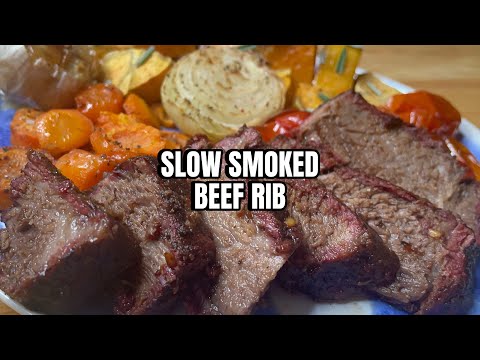 Beef
3:37
Beef
3:37
A marbled boneless beef rib smoked brisket-style at 225°F, wrapped in foil with beef tallow, and taken to 203°F for melt-in-your-mouth slices.
View recipe → Beef
8:08
Beef
8:08
A three-bone rack of beef plate ribs smoked at 225°F over applewood, wrapped in butcher paper with beef tallow at 170°F, taken to 201°F and rested for up to two hours.
View recipe → Beef
8:29
Beef
8:29
Budget-friendly picanha steaks cut from a whole Costco top sirloin, reverse seared over Kingsford charcoal and finished with a simple homemade chimichurri.
View recipe → Beef
4:47
Beef
4:47
A smoked beef tri-tip cooked like a brisket on an offset smoker — flavourful, tender, and far cheaper than a full packer.
View recipe →