Saucy Rossy BBQ
Beef

Smoked Brisket Burgers

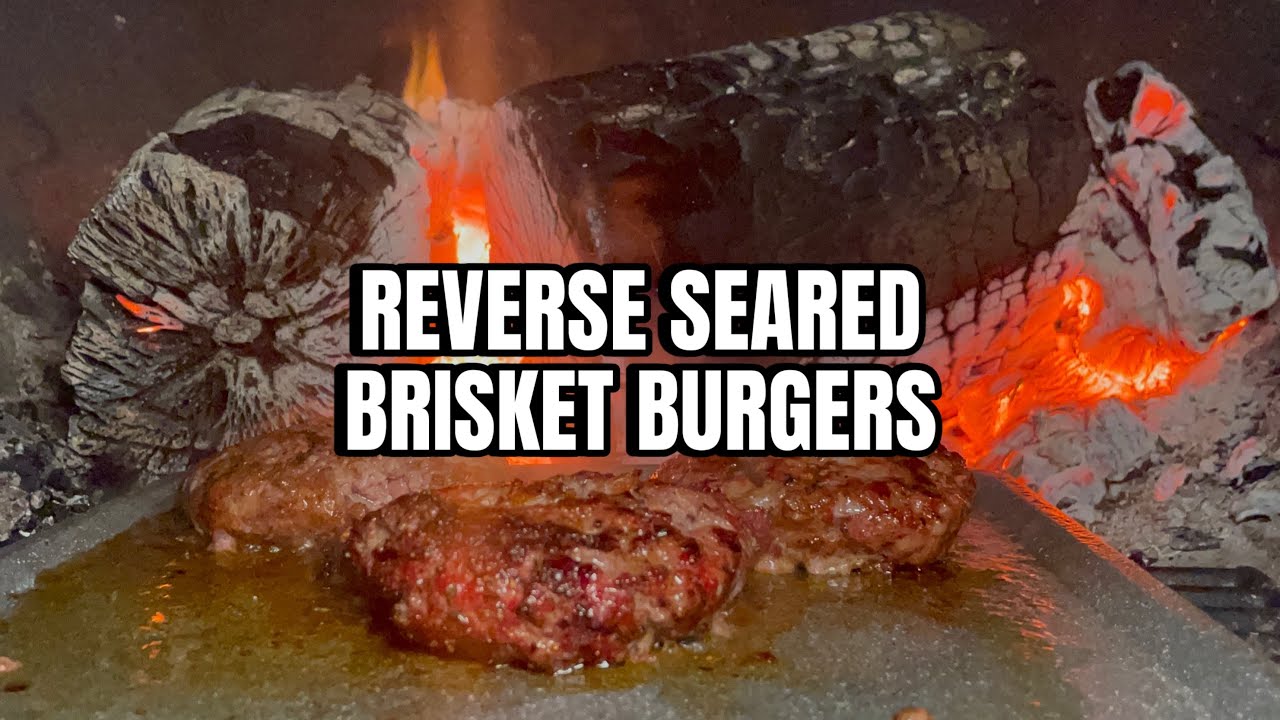
Brisket trimmings turned into thick, juicy smoked burger patties, firebox-seared for a killer crust.

Time~2 hrs Prep20 min Yield4 burgers CategoryBeef Watch5:10
Smoked Brisket Burgers — watch on YouTube

Watch the full cook on YouTube

Method

  1. 1Form thick patties from ground brisket trimmings and season with Sweet Chipotle BBQ dry rub.Handle the meat as little as possible — overworking ground brisket develops the proteins and turns a tender burger springy. Press a thumb dimple into the centre of each patty so it does not dome as it cooks.
  2. 2Smoke on an offset over applewood until 95°F internal.Applewood is mild, which suits beef that is already rich. 95°F is a handoff rather than a finish — this is a reverse sear, so the smoke does the cooking and the sear only builds the crust.
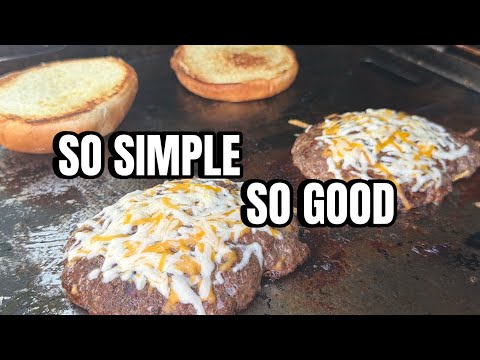
  3. 3Finish directly on a hot searing plate in the firebox for a crust; warm the buns in the firebox too.The firebox plate is ferociously hot, which is exactly what you want for a fast crust that does not overcook the inside. Toasting the buns in there takes seconds — watch them.
  4. 4Build with garlic aioli, Monterey Jack, tomato, red onion, and lettuce.Build with the cheese on the hot patty so it melts, and the cold ingredients on top so they stay crisp.

Watch it on YouTube

What each ingredient is doing

Brisket trimmings, ground
The offcuts from trimming a packer, which would otherwise be thrown away. Aim for roughly 20–25% fat — if your trim is mostly hard fat cap, cut it with some lean flat rather than grinding pure fat, which renders out and leaves a crumbly patty.
Sweet Chipotle BBQ dry rub
Smoky and slightly sweet, which suits beef. Season the outside only rather than mixing it through the meat — salt mixed into ground beef and left to sit starts curing it and gives a springy, sausage-like texture.
Garlic aioli
Fat and acid against a very rich patty. Homemade or shop-bought both work; what matters is that there is something sharp in the build.
Monterey Jack
A high-moisture cheese that melts smoothly rather than splitting into oil. Placed on the hot patty so it melts from residual heat.

Temperature guide

StageTempWhat it means
Off the smoker95°F / 35°CThe handoff. Low on purpose — the firebox sear adds a great deal.
Final160°F / 71°CGround beef, not steak. Grinding spreads surface bacteria through the patty.
CrustFirebox plateA minute or two a side. Ferocious heat is what builds crust without overcooking.
BunsSecondsThe firebox will scorch them in under a minute — stay with them.

Pitmaster tips

  • Aim for roughly 20–25% fat in the grind. Brisket trim runs fatty, so if yours is mostly hard fat cap, cut it with some lean flat rather than grinding the trimmings straight — pure fat renders out and leaves a crumbly patty.
  • Chill the meat and the grinder parts until they are almost frozen. Warm fat smears through the plate instead of cutting cleanly, and smeared fat renders out on the fire rather than staying in the burger.
  • Handle the patties as little as possible. Working ground brisket develops the proteins and turns a tender burger springy and dense — form them and leave them alone.
  • Press a thumb dimple into the centre of each patty. Thick patties dome as they cook, and the dimple is what keeps the finished burger flat enough to actually build on.
  • 95°F is a handoff, not a finish. Pulling that early leaves headroom for the firebox plate to build crust without blowing past your target — this is a reverse sear, so the smoke does the cooking and the sear only does the outside.
  • Cook ground beef to 160°F, not medium-rare. Grinding moves anything on the surface of the meat all the way through the patty, so a burger has to hit a higher safe temperature than the whole muscle it came from.
  • Season the outside only, never mixed through the meat. Salt worked into ground beef starts curing it and gives a springy, sausage-like texture.
  • Chill the formed patties for 20 minutes before they go on. They hold together far better and the fat stays put.
  • Grind once through a coarse plate. A second fine grind makes the patty pasty and destroys the loose steak-like texture that makes this worth doing.
  • Watch the buns in the firebox. That heat will take them from toasted to charcoal in well under a minute.

If it goes wrong

The patties fell apart
Too little fat, or the grind was too fine. Aim for 20–25% fat and a single coarse grind. Chilling the formed patties for 20 minutes before they go on also helps them hold.
They came out springy and dense
Overworked, or the rub was mixed through the meat. Handle the patties as little as possible and season only the outside.
They domed into meatballs
No dimple. Press a thumb into the centre of each raw patty — thick patties dome as the proteins contract, and the dimple compensates.
The fat rendered out and they were dry
The meat or the grinder was too warm when you ground it. Chill everything until almost frozen — warm fat smears through the plate instead of cutting cleanly.
The buns burnt in the firebox
That heat is extreme. Seconds, not minutes, and do not turn away.

Ways to change it up

Ground chuck instead
Similar fat ratio and far easier to source. You lose some brisket character, but the smoke-then-sear method is what does most of the work here.
Grill sear
Sear over a full chimney of lump instead of the firebox. Less ferocious, so give it an extra minute a side.
Smash finish
Smoke the patties, then smash them thin on a hot flat top for maximum crust. A completely different texture from the same starting point.
Add bacon
Brisket burger with bacon is excessive and worth it. Cook it in the firebox alongside.
Pickle and onion build
Swap the tomato and lettuce for dill pickles and pickled onions. On a patty this rich, more acid is better.

What to serve it with

  • Fries or potato wedges.
  • Pickles — a brisket burger is very rich and it needs the acid.
  • Extra aioli or a BBQ sauce on the side.
  • A sharp slaw rather than a leafy salad.
  • A cold lager; carbonation cuts the fat.

Storage & reheating

Cooked patties keep 3–4 days in the fridge in a sealed container. Reheat them gently — 275°F in the smoker or a covered pan over low heat until warmed through — because a hard reheat drives out the fat that makes a brisket burger worth the effort. Store the patties separately from the buns and aioli so nothing goes soggy.

Raw ground brisket is far more perishable than the whole packer it came from: grinding exposes a lot of surface area, so cook it within a day or freeze it. Patties freeze well for about three months if you stack them with parchment between and wrap them airtight; thaw in the fridge overnight before smoking.

FAQ

What is the best grind for brisket burgers?

A single coarse grind through roughly a 3/8-inch plate, at about 20–25% fat. Coarse keeps the texture loose and steak-like; a second fine grind makes the patty pasty. If you only have one plate, run it once and do not push the meat through — let the auger feed itself.

Why smoke a burger before searing it instead of just grilling it?

It is a reverse sear. Smoking to 95°F brings the whole patty up evenly and gives it time to take on smoke, so when it hits the searing plate you only need a minute or two a side for crust. Grilling from raw means the outside overcooks well before the middle is done, and there is no time for smoke to do anything.

What internal temperature should a brisket burger be?

160°F. Whole muscle is safe seared rare because bacteria live on the surface, but grinding distributes that surface through the entire patty — so ground beef needs to reach 160°F throughout regardless of how good the meat was. Grinding it yourself does not change that.

Can I make these without grinding my own brisket?

Yes — ask a butcher to grind brisket trim for you, or use ground chuck, which lands at a similar fat ratio. You lose some of the beefy brisket character, but the smoke-then-sear method is what does most of the work here and it applies to any coarse-ground patty.

Can I make these without grinding my own brisket?

Yes — ask a butcher to grind brisket trim for you, or use ground chuck, which lands at a similar fat ratio. You lose some of the beefy brisket character, but the smoke-then-sear method is what does most of the work here and it applies to any coarse-ground patty.

Why smoke a burger before searing it instead of just grilling it?

It is a reverse sear. Smoking to 95°F brings the whole patty up evenly and gives it time to take on smoke, so when it hits the searing plate you only need a minute or two a side for crust. Grilling from raw means the outside overcooks well before the middle is done, and there is no time for smoke to do anything.

Know your cook

More information, cause recipe back stories are stupid

No 500-word life story — just the good-to-know stuff on what’s actually in this cook. Here’s the rundown on every real ingredient, health and nutrition wise.

Beef
Beef is a complete protein and one of the best food sources of highly absorbable heme iron, zinc, and vitamin B12 — key for energy, immunity, and healthy blood. Fattier BBQ cuts are calorie-dense, so lean trimming and sensible portions keep it balanced.
Cheese
Cheese is a good source of protein and calcium and pairs naturally with smoke, but it's also high in saturated fat and sodium — a little delivers big flavour, so treat it as a rich accent.
Garlic
Garlic adds big flavour for almost no calories and contains sulphur compounds (like allicin) long studied for heart and immune benefits. It's one of the healthiest ways to season a cook.
Onion
Onions are low-calorie aromatics rich in fibre, vitamin C, and antioxidants such as quercetin. They add depth and gentle sweetness without much fat or salt.
Tomato
Tomatoes bring bright acidity plus vitamin C and lycopene, an antioxidant that becomes more available when cooked. They lighten and balance rich, fatty barbecue.

General nutrition info only, not medical or dietary advice — portions, brands and add-ons change the numbers.

← All recipes  ·  All 46 beef recipes