 Chicken
6:54
Chicken
6:54
Barrel-Smoked Hanging Whole Chicken
A whole chicken stuffed with garlic, onion, and lemon, hung vertically in a barrel smoker over applewood coals for crispy skin and juicy meat.
View recipe →Crispy-skinned BBQ chicken thighs over lump charcoal using a simple two-zone method, seasoned with a sweet dry rub and glazed with homemade BBQ sauce.
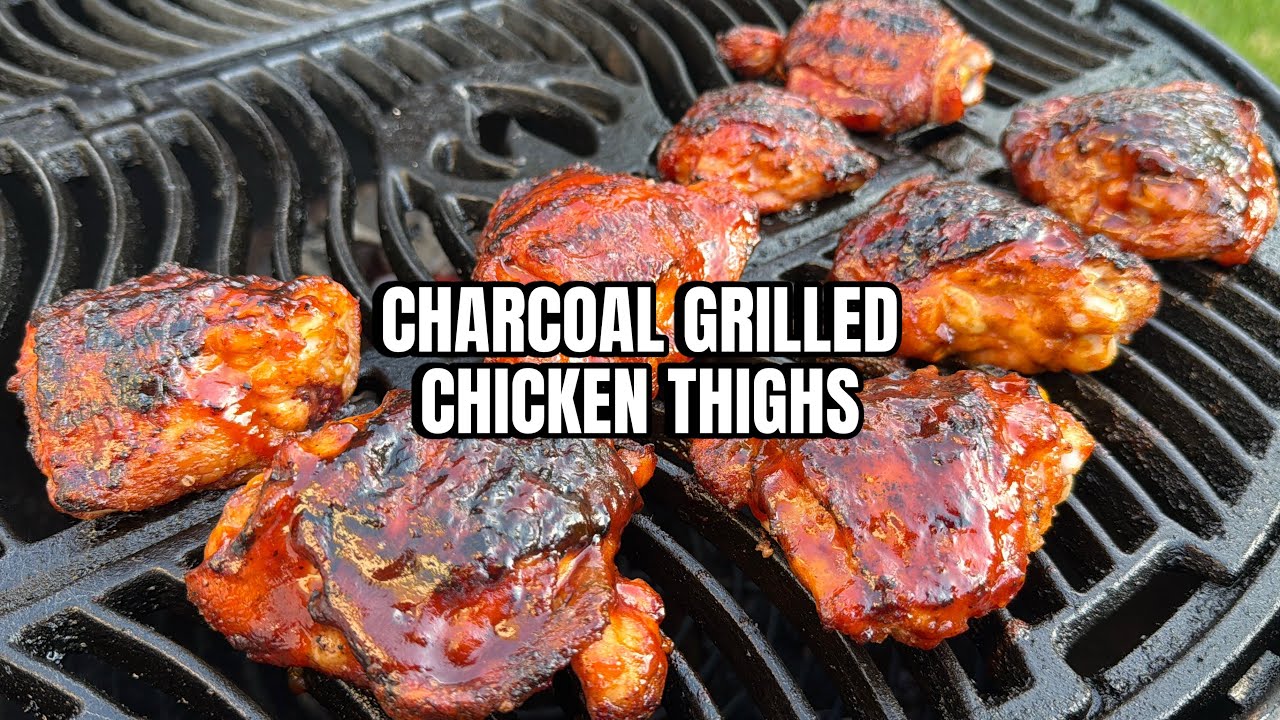
Watch the full cook on YouTube
| Stage | Temp | What it means |
|---|---|---|
| Food-safe minimum | 165°F / 74°C | Safe, but thigh meat at this temperature is still firm and slightly chewy — the connective tissue has not rendered. |
| Getting there | 175°F / 79°C | Collagen is converting. The texture noticeably softens and the meat starts releasing from the bone. |
| The target | 185–190°F / 85–88°C | Fully rendered dark meat. Tender, juicy, clean off the bone. This is where thighs belong. |
| Skin check | Visual | Deep mahogany with some blistering and a little char. If the skin is pale and soft, it has not rendered — give it more time skin-down before moving on. |
Cooked thighs keep 3–4 days refrigerated. Cool them to room temperature before sealing — trapping steam in a warm container is what turns leftover chicken skin soggy overnight. Store them whole and on the bone rather than pulled, which keeps the meat far moister.
The skin will soften in the fridge; that is unavoidable. Reheating in a 375–400°F oven or air fryer for 8–10 minutes brings a surprising amount of it back. A microwave does not, and it makes the meat stringy. If you have sauced them, expect the glaze to go slightly sticky and to re-set as it reheats.
Thighs freeze well for about three months — better than breast meat, because the higher fat content protects the texture. Freeze them whole, thaw overnight in the fridge, and reheat hot and dry. Leftover thigh meat pulled off the bone is excellent in quesadillas, tacos and soups, which is a better destination than a reheated whole thigh.
165°F is the safety minimum, but thighs are much better at 185–190°F. Dark meat is full of connective tissue that only renders at higher temperatures, so a thigh taken to 185°F is more tender and juicier than one pulled at 165°F — the exact opposite of how breast meat behaves.
Render the fat gently before you crisp it. Start skin-side down over indirect or cooler heat so the fat melts out slowly, then let it colour. Skin thrown straight onto a ripping fire burns on the outside while the fat underneath is still soft and rubbery. Dry skin and a trimmed thigh matter as much as the heat.
In the last 8 minutes or so, in two thin layers rather than one thick one, and over indirect heat. BBQ sauce is mostly sugar and burns at a much lower temperature than chicken needs to cook, so sauce applied early turns black and bitter.
Trim the excess skin and fat, cook two-zone, give the thighs space, and keep the lid closed. When a flare starts, move the chicken and shut the lid to smother it — spraying water kicks ash onto the food and does not put out a fat fire.
Bone-in, skin-on for grilling. The bone moderates the heat and slows the cook, giving the skin time to crisp, and the skin is the whole point. Boneless thighs cook in about half the time and work fine on a weeknight, but you lose both the skin and the margin for error.
Either the grate was dirty or cold, or you tried to move the chicken too early. Preheat properly, scrape and oil the grate, and then leave the thighs alone — skin releases by itself once it has browned. If it resists, it is not ready to turn.
Both work. Lump burns hotter and faster with more temperature swing and a cleaner flavour; briquettes are steadier and last longer, which makes managing a two-zone fire easier. For a 45-minute cook either is fine — briquettes just require less attention.
No 500-word life story — just the good-to-know stuff on what’s actually in this cook. Here’s the rundown on every real ingredient, health and nutrition wise.
General nutrition info only, not medical or dietary advice — portions, brands and add-ons change the numbers.
Chicken
6:54
A whole chicken stuffed with garlic, onion, and lemon, hung vertically in a barrel smoker over applewood coals for crispy skin and juicy meat.
View recipe → Chicken
5:55
Chicken
5:55
A whole chicken roasted upright over a can of Coldstream Clear Nova Scotia Lager on a charcoal grill with cherrywood smoke for crispy skin and juicy meat.
View recipe → Chicken
6:51
Chicken
6:51
Bone-in chicken legs seasoned under the skin with Garden Herb rub, grilled hot over charcoal, and glazed with Bold and Smokey BBQ sauce.
View recipe → Chicken
7:17
Chicken
7:17
Chicken hung over hickory and charcoal in a barrel smoker, seasoned island-style and finished with a sweet-heat maple habanero BBQ sauce.
View recipe → Chicken
4:55
Chicken
4:55
Vessel Meats South African chicken skewers grilled over a rolling oak fire on the ROAM V2 for juicy meat, crispy edges, and deep smoke flavour.
View recipe → Chicken
4:41
Chicken
4:41
Crispy, bite-through chicken wings grilled hot over lump charcoal with smouldering brandy-barrel smoke, then tossed in a sweet-with-a-little-heat BBQ sauce.
View recipe →