Saucy Rossy BBQ
Beef

Overnight Low & Slow Costco Brisket

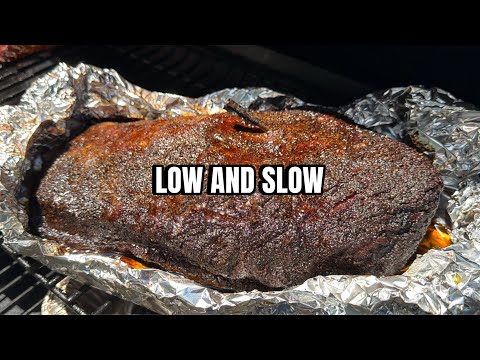
A $90 Costco brisket rubbed with three Royal Nova rubs, smoked overnight at 225°F on a Traeger Woodridge Pro, finished in a foil tray with beef tallow and rested 2½ hours.

TimeOvernight cook Prep3 hr 45 min YieldServes 12–16 (1 whole brisket) CategoryBeef Watch5:28
Overnight Low & Slow Costco Brisket — watch on YouTube

Watch the full cook on YouTube

Method

  1. 1Trim the brisket to remove the unnecessary fat and shape it to be aerodynamic for the smoker.Take off the hard fat and the thin, ragged edges that would dry out and burn, and round the corners so air flows smoothly over the meat. Leave an even layer of fat on the cap for protection; thick hard fat does not render fully and only blocks bark. The trim itself is covered in a separate video on the channel.
  2. 2Season every side liberally with Royal Nova Company SPG, Café Ember and Honey Anchor, plus cracked black pepper.Top, bottom, sides and ends — the goal is the best bark possible, and a whole brisket takes more rub than you expect. Layering the three rubs gives the crust sweet, savoury, umami and a little heat. Freshly ground pepper is best, but pre-ground works fine.
  3. 3Put the seasoned brisket back in the fridge for about 3 hours.This gives the rub time to adhere. Salt in the rub draws moisture to the surface, where it dissolves the seasoning into a tacky layer that stays put on the smoker instead of falling off when you handle it.
  4. 4At 10 PM, put it on the Traeger Woodridge Pro at 225°F with the MEATER Pro in, and let it run overnight.Put the probe in the thickest part of the flat, the section most likely to dry out. Fill the hopper before bed — at a 4 AM check the grill was still running smoothly with 60% of its pellets left. There is no spritzing in this method; the grill does the work.
  5. 5In the morning, leave it alone until the bark has set, even if it already looks good.At 6:30 AM this brisket looked great, but it still looked juicy on the surface and the bark had not built yet. Set bark is dark mahogany and the rub does not come away when you touch it. Wrapping before then softens the crust you spent the night building.
  6. 6Once it reaches about 175°F and the bark has set, move it into a foil tray, pour beef tallow over it and add a little beef broth.That was around 10:30 AM on this cook. The tallow bastes the brisket in beef fat as it finishes, which helps keep the lean flat moist, and the broth adds a little liquid. Keep the broth to a splash — too much and the bottom of the brisket braises and the bark goes soft.
  7. 7Cover the tray tightly with two layers of foil, push the MEATER Pro back through the foil and return it to the Traeger.Two layers seal in heat and moisture. Running the probe through the foil lets you keep watching the temperature without unwrapping and losing heat. The tray also catches every drop of rendered juice for serving.
  8. 8Cook until it reaches about 195–196°F and, more importantly, is probe tender.The number is a guide. Probe tender means the probe slides into the flat with almost no resistance, like pushing into soft butter. Check a few spots; if any still feel tight, give it more time and check again in 30 minutes.
  9. 9Rest it for about 2½ hours in a warm cooler.The rest lets the temperature even out and the juices settle back into the meat. No cooler? Heat an oven to 200°F, switch it off and put the brisket in, or hold it on the Traeger's 165°F keep-warm setting. Anywhere from 1 to 4 hours works; longer holds are possible but not necessary.
  10. 10Slice against the grain and serve.The grain runs in different directions in the flat and the point, so separate them or turn the brisket as you go to keep cutting across the fibres. Slice the flat about the width of a pencil. The fattier point is where the burnt ends come from.

Watch it on YouTube

What each ingredient is doing

Costco brisket
A whole brisket — the lean flat and the fattier point in one piece. At about $90 CAD it is good value for a cut this size. Wherever you buy, pick one that bends easily when held in the middle; a floppy brisket usually has more marbling.
Royal Nova Company SPG
Salt, pepper and garlic, the classic brisket base. It carries the savoury side of the bark. Kosher salt, coarse pepper and granulated garlic mixed at home do the same job.
Café Ember and Honey Anchor
The other two Royal Nova rubs in the stack. With the SPG they cover sweet, savoury, umami and a little heat, which builds a more complex bark than salt and pepper alone. Any sweet rub plus a bold, darker rub can stand in.
Cracked black pepper
Pepper is the backbone of brisket bark. Coarse cracked pepper gives better texture than fine; freshly ground is best, but pre-ground works.
Beef tallow
Rendered beef fat, poured over the brisket in the tray. It bastes the meat as it finishes and adds richness to the lean flat. Buy it, or render your own from the brisket trimmings; butter is the usual substitute.
Beef broth
Just a little, for moisture in the covered tray. Too much and the brisket braises and the bark turns soft. Stock or water works if that is what you have.

Temperature guide

StageTempWhat it means
Pit225°F / 107°CSet at 10 PM and left to run overnight.
Wrap~175°F / 79°COnly once the bark has set — around 10:30 AM on this cook.
Done~195–196°F / 91°CProbe tender is the real test: the probe slides in with almost no resistance.
Rest~2½ hoursIn a warm cooler. An oven heated to 200°F and switched off, or the Traeger at 165°F, also work.

Pitmaster tips

  • Trim before seasoning and shape the brisket smooth and rounded. Thin edges burn and thick hard fat never renders.
  • Season every face — top, bottom, sides and ends. A whole brisket takes more rub than you expect.
  • Give the rub a few hours in the fridge before smoking so it adheres instead of falling off.
  • Put it on at 10 PM. A pre-dawn start usually means eating at 8 or 9 PM; an overnight cook moves the long stretch into the hours you are asleep.
  • Fill the hopper before bed, and check the pellet level in the app if you wake up.
  • Do not spritz. At 225°F on a pellet grill it does not need it, and every lid opening costs heat.
  • Wrap on bark, not just temperature. 175°F is the guide; set bark is the signal.
  • Push the thermometer back in through the foil so you can keep watching without unwrapping.
  • Probe tender beats any number. Check several spots in the flat before you pull it.
  • Do not skip the rest. Two and a half hours in a warm cooler is what keeps the slices juicy.

If it goes wrong

The bark went soft in the tray
Too much broth, or it was wrapped before the bark had set. Keep the broth to a splash and wait until the bark is dark and firm before wrapping. Leaving the tray uncovered for the last 30 minutes firms it up again.
The temperature stalled for hours
Normal. Evaporation cools the surface and a brisket can sit in the 150s and 160s for hours. On an overnight cook the stall is built into the timing — let it ride and wrap once the bark has set.
The flat is dry
Usually it was not yet probe tender, or it was sliced without a proper rest. Check tenderness in several spots before pulling and give it the full rest.
The pellets ran low overnight
Fill the hopper completely before bed. This cook still had 60% left at 4 AM, but pellet use climbs in cold or windy weather.
It finished too early
Hold it. A brisket sits happily for hours in a warm cooler, in an oven heated to 200°F and switched off, or on the Traeger's 165°F keep-warm setting.
The slices are stringy and chewy
They were cut with the grain. The grain changes direction between the flat and the point — separate them and slice each one across the fibres.

Ways to change it up

Butcher paper
Wrap in pink butcher paper at the same point instead of the covered tray. Firmer bark, though you lose the tallow bath.
Salt and pepper only
Use SPG and coarse pepper alone for a plainer, Texas-style bark that lets the beef lead.
Oven finish
Once it is covered in the tray it takes no more smoke, so it can finish in an oven at the same temperature if you need the smoker for something else.
Longer hold
Hold it longer in a warm oven for a fully rendered, Texas-style result. The video notes this works well but is not necessary.
Any pellet smoker
Nothing here is specific to the Woodridge Pro. Any pellet grill that holds 225°F overnight does the same job.

What to serve it with

  • Sliced against the grain, with the burnt ends alongside, as in the video.
  • White bread, pickles and raw onion, Texas-style.
  • Coleslaw, baked beans or potato salad.
  • Leftovers in sandwiches, tacos or burritos.
  • A cold beer.

Storage & reheating

Cooked brisket keeps 3–4 days refrigerated. Store it in large unsliced pieces with some of the tray juices and tallow; sliced brisket dries out quickly.

Reheat wrapped in foil with a splash of the reserved juices or beef broth at 250°F until warmed through, then slice. A vacuum-sealed pack in barely simmering water also works well. Avoid the microwave, which squeezes the moisture out.

It freezes well for 2–3 months, vacuum-sealed or tightly wrapped with some of the juices. Thaw overnight in the fridge before reheating.

FAQ

Is it safe to smoke a brisket overnight on a pellet grill?

Yes, as long as the hopper is full and the grill sits on a stable surface away from the house. Pellet grills hold temperature on their own, and a wireless thermometer with an app lets you check the cook from bed. Clean out the grease trap and firepot before a long cook.

How long does a brisket take at 225°F?

Roughly 1 to 1½ hours per pound is the usual guide, but every brisket is different. This one went on at 10 PM, was wrapped around 10:30 AM and was done about 13 hours or so in. Cook it to probe tender, not to the clock.

When should I wrap a brisket?

When the bark has set — dark, firm and not coming off when touched. On this cook that lined up with about 175°F internal. Wrapping earlier softens the crust, so treat the temperature as a guide and the bark as the signal.

Why add beef tallow when wrapping brisket?

It bastes the brisket in beef fat while it finishes, adding richness and helping keep the lean flat moist. A little beef broth alongside adds moisture without drowning the bark.

How long should a brisket rest?

At least an hour. This one rested about 2½ hours in a warm cooler, and anywhere from 1 to 4 hours works well. Longer holds are possible but not needed for a juicy result.

Do I need to spritz brisket on a pellet smoker?

Not with this method. The brisket goes on at 225°F and is left alone overnight. A pellet grill holds a steady temperature, and every time the lid opens you lose heat and add time.

Know your cook

More information, cause recipe back stories are stupid

No 500-word life story — just the good-to-know stuff on what’s actually in this cook. Here’s the rundown on every real ingredient, health and nutrition wise.

Beef
Beef is a complete protein and one of the best food sources of highly absorbable heme iron, zinc, and vitamin B12 — key for energy, immunity, and healthy blood. Fattier BBQ cuts are calorie-dense, so lean trimming and sensible portions keep it balanced.
Honey
Honey is a natural sweetener that adds gloss and flavour; it's still sugar, so it's used sparingly. In raw form it carries trace antioxidants and beneficial compounds.
Beef tallow
Beef tallow is rendered beef fat used to wrap and baste — it keeps big cuts moist and adds beefy richness. It's pure fat and calorie-dense, so a light coat does the job.

General nutrition info only, not medical or dietary advice — portions, brands and add-ons change the numbers.

← All recipes  ·  All 46 beef recipes