Saucy Rossy BBQ
Pork

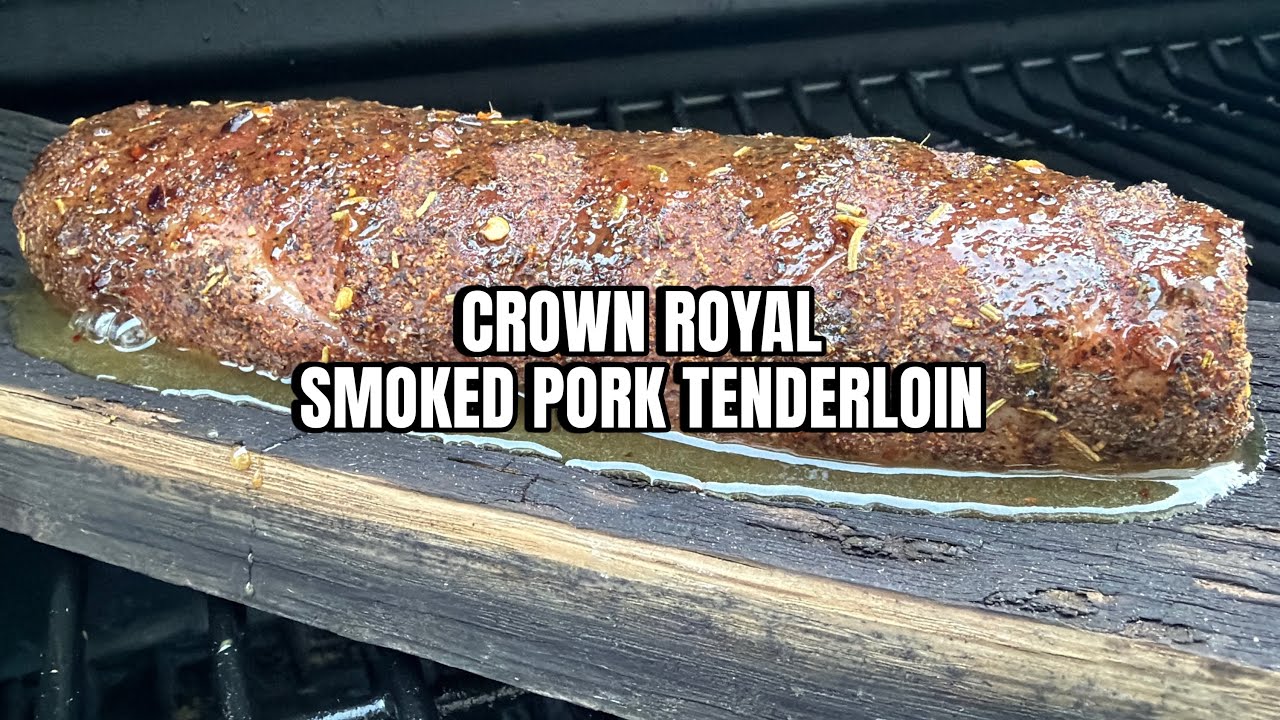
Whisky Barrel Plank Smoked Pork Tenderloin

Pork tenderloin smoked low and slow on a Crown Royal whisky barrel plank over matching barrel pellets, then glazed with a three-ingredient honey Dijon sauce.

Time~1.5 hrs Prep15 min YieldServes 3–4 CategoryPork Watch5:07
Whisky Barrel Plank Smoked Pork Tenderloin — watch on YouTube

Watch the full cook on YouTube

Method

  1. 1Trim the pork tenderloin and season it generously with Heavy Hands Hank's Everything BBQ Seasoning.Remove the silverskin first — the thin pearly membrane running along the top. It never renders and it shrinks as it cooks, bowing the tenderloin out of shape. Pat the meat dry, then season all the way round. A peppery, savoury rub suits this cook because the glaze brings the sweetness later.
  2. 2Soak the whisky barrel plank if the manufacturer calls for it, and set the Traeger to 250°F on the Low & Slow setting.Check the plank's instructions — some barrel planks are used dry, others want a soak so they smoulder rather than catch. 250°F is deliberately gentle: this is a lean cut and the point of the cook is to layer aroma into it, not to rush it. Let the grill come fully up to temperature and settle before the pork goes on.
  3. 3Place the tenderloin on the plank and smoke at 250°F, letting the plank heat slowly beneath it.The plank does something the pellets alone cannot — as it heats, the oak and residual whisky compounds in the wood release directly under the meat, so the pork sits in that aroma for the whole cook. Do not put the plank directly over a hot spot; you want it warming steadily, not charring.
  4. 4Cook until the pork reaches 145°F internal.145°F is the USDA safe temperature for whole-muscle pork and it leaves the centre slightly pink, which is correct. Tenderloin is the leanest cut on the pig and has essentially no fat to protect it, so this number matters more here than on almost anything else. Expect 60–90 minutes at 250°F, but check early — tenderloins vary a lot in thickness.
  5. 5Mix two parts honey with one part Dijon mustard and chili flakes to taste, and glaze the pork.Whisk it smooth; honey and mustard need a moment to come together. Brush it on in the last 10 minutes so it warms and tacks up without scorching — honey is sugar and will burn if it goes on at the start of a 90-minute cook.
  6. 6Rest, then slice and serve with roasted carrots, broccoli with cheese and crispy baked potatoes.Rest 5–10 minutes; carryover takes it to about 150–152°F. Slice across the grain into medallions. Resting a lean cut is not optional — cut it straight off the grill and the juice ends up on the board.

Watch it on YouTube

What each ingredient is doing

Pork tenderloin
The leanest cut on the pig, and the most easily ruined. It has almost no intramuscular fat, so the 145°F target is a genuine ceiling rather than a suggestion. It also cooks fast for its size, which is why the low 250°F is a sensible pace.
Everything BBQ Seasoning
A savoury, peppery all-purpose rub. Low sugar is the right choice here because the honey Dijon glaze supplies all the sweetness at the end — two sugar layers over 90 minutes would darken too far.
Whisky barrel plank
An oak stave from a used whisky barrel. As it heats it releases oak and residual spirit aromatics directly under the meat, which is a different and more immediate effect than smoke from the pellets. It also physically insulates the tenderloin from the grill's direct heat.
Whisky barrel pellets
Oak pellets from the same source, so the smoke and the plank run in the same direction rather than competing. Any oak or mild fruit pellet works; the pairing is what makes the flavour coherent.
Honey
Two parts to one part mustard — the sweet dominates, with the Dijon cutting it. It also gives the glaze its gloss. Maple syrup substitutes well and suits the oak.
Dijon mustard
Sharp and emulsifying. It keeps the honey from being merely sweet and helps the glaze cling rather than run. Yellow mustard is milder and sweeter; wholegrain adds texture.
Chili flakes
The third note, and the one that makes the glaze interesting rather than just sweet and tangy. Add to taste and remember the heat concentrates slightly as the glaze reduces on the meat.

Temperature guide

StageTempWhat it means
The target145°F / 63°CUSDA safe for whole-muscle pork. Slightly pink in the centre, and correct.
After resting150–152°F / 66°CCarryover during a 5–10 minute rest. This is where it should land on the plate.
Too far160°F+ / 71°C+Dry. Tenderloin has no fat to fall back on, and the old well-done advice is why it has a reputation for being dull.
GlazeLast 10 minHoney burns well below pork's cooking temperature. Late and thin.

Pitmaster tips

  • Trim the silverskin before seasoning. It does not render, and as it shrinks it bows the tenderloin into a curve that cooks unevenly.
  • 145°F and rest. This is the single most important number in the recipe — tenderloin is the leanest cut on the pig and the difference between 145°F and 160°F is the difference between juicy and dry.
  • Check the plank's instructions on soaking. Some barrel planks are meant to be used dry; others want a soak so they smoulder rather than ignite.
  • Keep the plank off any hot spot. You want it warming gradually and releasing aroma, not charring underneath the meat.
  • Use a savoury rub under a sweet glaze. Sugar in both would darken too far across a 90-minute cook.
  • Glaze in the last 10 minutes only. Honey is sugar and it scorches long before pork is done.
  • Whisk the honey and Dijon properly. They separate if you just stir them, and a split glaze runs off rather than clinging.
  • Cook the tenderloin whole and slice after. Medallions cut before cooking have far more surface area for their volume and dry out much faster.
  • Match the pellets to the plank. Oak pellets under an oak barrel plank compound the same flavour; a strong mesquite would fight it.
  • Rest 5–10 minutes before slicing. On a lean cut this is where the juice either goes back into the meat or onto the board.

If it goes wrong

The pork is dry
It went past 145°F. Use a thermometer rather than time, and pull the moment it reads 145°F — carryover does the rest. Tenderloin has no fat reserve, so there is no recovering it after the fact.
The tenderloin curled up as it cooked
The silverskin was left on. It contracts under heat and pulls the meat into a bow. Slide a thin knife under it and strip it off before seasoning.
The plank caught fire
Too much direct heat, or it needed soaking. Move it away from any hot spot and keep the grill at 250°F. A spray bottle handy is a sensible precaution with any plank cook.
The glaze burnt
It went on too early. Honey Dijon is mostly sugar — the last 10 minutes is all it can take, even at 250°F.
There is no whisky flavour
Barrel wood is subtle by nature, and at 250°F over 90 minutes it perfumes rather than shouts. If you want more, use the barrel pellets as well as the plank, as this recipe does, and avoid heavily seasoning over the top of it.
The glaze split into honey and mustard
It was stirred rather than whisked, or the honey was cold. Warm the honey slightly and whisk hard until it emulsifies into a smooth sauce.

Ways to change it up

Maple Dijon
Swap the honey for maple syrup. It suits the oak barrel character even better than honey and is slightly less sweet.
No plank
Cook the tenderloin directly on the grates at 250°F with the same pellets. You lose the plank aroma but everything else — the rub, the temperature, the glaze — is unchanged.
Reverse sear
Smoke to about 130°F, then sear hard over direct heat or in a ripping cast iron pan to finish at 145°F. Adds a crust the low-and-slow version does not have.
Bacon-wrapped
Wrap the seasoned tenderloin in bacon before it goes on the plank. The bacon bastes a very lean cut as it renders, which is real insurance against overcooking.
Different barrel
Bourbon, rum and wine barrel planks all work the same way with their own character — bourbon sweeter and more vanilla-forward, wine fruitier and more acidic.

What to serve it with

  • Roasted carrots, broccoli with cheese and crispy baked potatoes, as served in the video.
  • Extra honey Dijon on the side — it is good enough to want more of.
  • Something sharp: a green salad with vinaigrette, or apple slaw, against the sweet glaze.
  • Crusty bread to mop the plate.
  • A whisky to echo the barrel, or a cold cider against the sweetness.

Storage & reheating

Sliced pork tenderloin keeps 3–4 days refrigerated. Because it is so lean it reheats badly with dry heat — warm the slices covered with a splash of stock or apple juice at a low temperature, or use them cold in sandwiches and salads, which is honestly the better outcome. Store it as a whole piece and slice as you go if you can; whole meat dries out far more slowly than slices.

The honey Dijon glaze keeps a week refrigerated in a sealed jar and is worth making extra of — it is good on chicken, salmon and roast vegetables. Whisk it again before using, since it separates as it sits.

Cooked tenderloin freezes for about three months but the texture tightens noticeably. Raw tenderloin freezes better, up to six months wrapped airtight. Thaw either in the fridge overnight rather than on the counter.

FAQ

What is a whisky barrel plank and does it actually do anything?

It is an oak stave from a used whisky barrel, cut for cooking. As it heats it releases oak and residual spirit aromatics directly beneath the meat, which is more immediate than smoke drifting past from the pellets. It also insulates the food from direct heat. The effect is real but subtle — it perfumes rather than dominates.

What temperature should pork tenderloin be cooked to?

Pull it at 145°F and rest it to about 150–152°F. That is the USDA safe temperature for whole-muscle pork and it leaves the centre slightly pink, which is correct and safe. Cooking to 160°F or beyond is what gives tenderloin its undeserved reputation for being dry.

Do I need to soak the plank?

Check the manufacturer's instructions — barrel planks vary. Some are meant to be used dry so they smoulder and release aroma; others want a soak to stop them igniting. Either way, keep the plank away from direct hot spots and have a spray bottle nearby.

Is pork tenderloin the same as pork loin?

No, and they are not interchangeable. Tenderloin is a small, thin muscle about a pound that cooks in 60–90 minutes at this temperature. Pork loin is a much larger roast that takes considerably longer. Using loin timings on a tenderloin will ruin it.

Why is the glaze two parts honey to one part Dijon?

It puts the sweetness in front with the mustard behind it as a sharp counterweight, rather than a balanced sweet-and-sour sauce. The Dijon also acts as an emulsifier, helping the glaze cling to the meat instead of running off. Chili flakes give it a third dimension.

Can I make this without a pellet grill?

Yes. Any smoker or a two-zone charcoal grill holding 250°F works, with the plank on the indirect side. In an oven you can use the plank at 250°F too — you lose the smoke, but the plank aroma and the glaze still carry the dish.

Know your cook

More information, cause recipe back stories are stupid

No 500-word life story — just the good-to-know stuff on what’s actually in this cook. Here’s the rundown on every real ingredient, health and nutrition wise.

Pork
Pork is a protein-rich meat that's especially high in thiamine (vitamin B1) — more than most other meats — plus B6, niacin, and selenium. Tenderloin and loin are lean; shoulder and belly are richer, so portion the fattier cuts.
Chili peppers
Chili peppers are low in calories and high in vitamin C and antioxidants, and their heat comes from capsaicin, which may give metabolism a small nudge. Dial the amount to your spice tolerance.
Honey
Honey is a natural sweetener that adds gloss and flavour; it's still sugar, so it's used sparingly. In raw form it carries trace antioxidants and beneficial compounds.

General nutrition info only, not medical or dietary advice — portions, brands and add-ons change the numbers.

← All recipes