Saucy Rossy BBQ
Lamb

Smoked Lamb Neck Flatbread

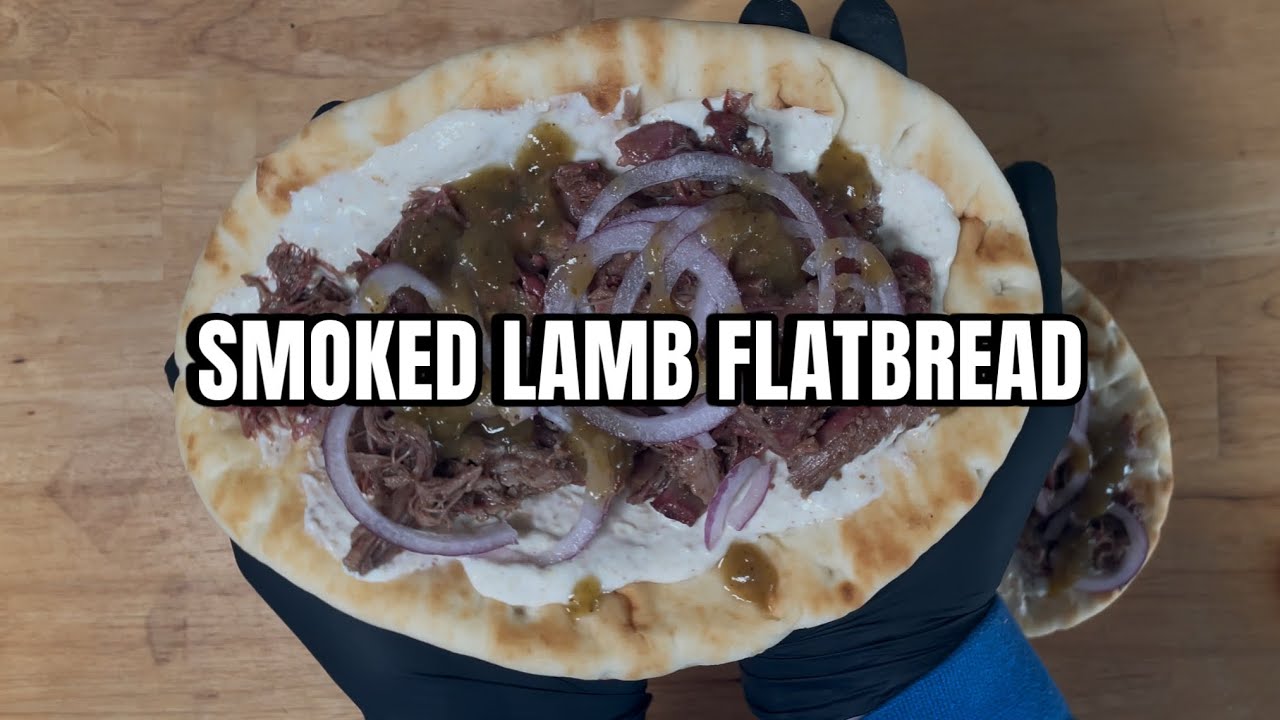
Fall-apart smoked lamb neck braised until tender and piled onto naan with a mustard-yogurt sauce, red onion, and a spicy apple finish.
Time~6 hrs Prep20 min YieldServes 4–6 CategoryLamb Watch6:32
Smoked Lamb Neck Flatbread — watch on YouTube

Watch the full cook on YouTube

Method

  1. 1Make a binder from equal parts Nor'Easter mustard and Liquid Gold olive oil and coat the lamb necks.Mustard and oil as a binder does two jobs: it grips the rub on an irregular surface, and the mustard's acidity works into the meat as the cook starts. The mustard flavour itself largely cooks away.
  2. 2Season generously with Perpetual Veg.Season generously. Lamb neck is a knuckly, uneven cut with a lot of surface area, and it takes far more rub than a flat piece of meat.
  3. 3Smoke on an offset at 250°F over sugar maple for 4–5 hours until a deep bark forms.250°F for four to five hours builds bark and sets the smoke. Neck is a hard-working muscle, so this is the beginning of a long conversion rather than the whole cook.
  4. 4Transfer to a foil tray and braise with apple cider vinegar, 1 tbsp Nor'Easter mustard, and ½ cup beef broth; cover and return to 250°F for 1–2 hours until 203°F internal and fall-apart tender.The braise is what turns neck into something you can pull. Vinegar helps break down connective tissue, and 203°F is where collagen has fully converted to gelatin.
  5. 5Pull the lamb, drain the excess liquid, and add back a little braise to rehydrate.Draining and adding back a controlled amount of braise is the right order. Pulled meat sitting in liquid goes soggy; pulled meat with a little liquid folded back in is perfect.
  6. 6Build on naan with a sauce of equal parts Nor'Easter mustard and Greek yogurt, shredded lamb, red onion, and Fearman's Fire Applesauce.Mustard and yogurt is a two-ingredient sauce that carries acidity and coolness at once, which is exactly what rich lamb needs against it.

Watch it on YouTube

What each ingredient is doing

Lamb neck
One of the most underrated cuts on the animal — a hard-working muscle riddled with connective tissue, which makes it tough if you rush it and outstanding if you do not. Northumberland Lamb is the Nova Scotian producer here.
Mustard and olive oil binder
Grips the rub on a knuckly, irregular cut, and the acidity works into the surface as the cook starts. The mustard flavour itself largely cooks away.
Apple cider vinegar (braise)
Acidity in the braise helps break down connective tissue and cuts through fatty lamb. It is doing chemistry, not just flavouring.
Beef broth
Braising liquid with body. Half a cup is enough — you are steaming the meat, not boiling it.
Mustard and Greek yogurt sauce
Two ingredients, equal parts, and it carries acidity and coolness at once. Rich lamb needs exactly that against it.
Naan
Sturdy enough to hold wet pulled meat, and better warmed. Cold naan under hot lamb is a missed opportunity.
Fire applesauce
Sweet-hot fruit against fatty lamb, which is a very old pairing in a new form. Added at the end so it stays bright.

Temperature guide

StageTempWhat it means
Smoke phase250°F for 4–5 hoursUntil a deep bark has set.
Braise250°F for 1–2 hoursCovered, with vinegar, mustard and broth.
Final target203°F / 95°CFull collagen conversion. It should shred with no resistance.
The real testFalls off the boneNeck is done when the meat lets go of the bone entirely.
After pullingDrain, then add braise backControlled moisture beats meat sitting in liquid.

Pitmaster tips

  • Lamb neck is one of the most underrated cuts there is. It is riddled with connective tissue, which makes it tough if you rush it and outstanding if you do not.
  • Use a wet binder. Mustard and oil grips the rub on a knuckly, irregular cut where dry seasoning would fall straight off.
  • Season more heavily than feels right. Neck has a lot of surface area and takes far more rub than a flat piece of meat.
  • The braise is not optional. Vinegar helps break down connective tissue and the covered steam is what finishes the collagen conversion.
  • 203°F is the target and the meat letting go of the bone is the confirmation. There is no shortcut to it.
  • Half a cup of broth is enough. You are steaming the meat, not boiling it, and too much liquid washes the bark off.
  • Drain the pulled meat, then add a controlled amount of braise back. Meat sitting in liquid goes soggy; meat with liquid folded through is perfect.
  • Warm the naan. Cold flatbread under hot pulled lamb is a missed opportunity and takes thirty seconds to fix.
  • The mustard-yogurt sauce is two ingredients and does more for the dish than anything else on it. Acidity and coolness against rich lamb.
  • Sugar maple suits lamb well — mild enough not to fight it, sweet enough to complement the fat.

If it goes wrong

The lamb will not shred
Not finished. Collagen conversion needs hours above 160°F — back in the covered tray until it lets go of the bone.
It is dry
Drained too thoroughly, or the braise was skipped. Fold some of the braising liquid back through the pulled meat.
It is greasy
Lamb neck carries a lot of fat. Let the braise settle and skim before adding it back to the meat.
The bark washed off
Too much braising liquid. Half a cup is enough to create steam without submerging the meat.
The flatbread went soggy
Wet meat on cold naan. Warm the bread, spread the sauce as a barrier, and drain the lamb properly.
It tastes too gamey
Lamb neck is a strong cut. More acid — extra vinegar in the braise and a sharper yogurt sauce.

Ways to change it up

Tzatziki instead
Yogurt, cucumber, garlic and lemon. The classic lamb partner.
Add pickled onion
Quick-pickled red onion instead of raw. Sharper, and softer to eat.
Lamb shoulder
If neck is hard to find, shoulder takes exactly the same treatment.
Pita or tacos
The same pulled lamb in pita pockets or corn tortillas.
Add feta and herbs
Crumbled feta, mint and parsley over the top for a Greek direction.

What to serve it with

  • On warm naan with the mustard-yogurt sauce.
  • Sliced red onion for sharpness.
  • Fire applesauce drizzled over.
  • Fresh herbs — mint or parsley.
  • A glass of red, and something to catch the drips.

Storage & reheating

Pulled lamb keeps 3–4 days refrigerated, stored with some of its braising liquid rather than dry. The fat sets solid when chilled, which is normal and re-melts on reheating.

Reheat covered at 275°F with a splash of broth, or in a pan on the stove. Because it is already fully converted, it reheats better than most barbecue.

It freezes for up to three months. Portion it with a spoonful of braise in each bag, press the air out, and thaw overnight in the fridge. The mustard-yogurt sauce keeps about five days refrigerated but does not freeze — it splits on thawing.

FAQ

What is lamb neck and why use it?

A hard-working muscle from the top of the shoulder, riddled with connective tissue and usually one of the cheapest cuts on the animal. That collagen is exactly the point: given hours above 160°F it converts to gelatin, giving meat that is both tender and rich in a way a leg never is.

What temperature should lamb neck be cooked to?

203°F, the same target as pork shoulder and beef chuck, and for the same reason — that is where collagen has fully converted to gelatin. The real confirmation is the meat letting go of the bone entirely.

Why braise after smoking?

The smoke phase builds bark and sets flavour, but neck needs steam and time to finish the collagen conversion. The vinegar in the braise also helps break down connective tissue, and the covered tray pushes the meat through the stall.

Should I drain the pulled meat?

Drain it, then add a controlled amount of the braise back. Pulled meat left sitting in liquid goes soggy and loses its bark texture entirely; meat with a measured amount folded back through is moist without being wet.

Why mustard and yogurt as a sauce?

Two ingredients that between them bring acidity, sharpness and coolness — exactly what rich, fatty lamb wants against it. Equal parts is the starting point; adjust to taste. It takes thirty seconds and does more for the dish than anything else on the plate.

How much braising liquid should I use?

Half a cup or so. You are creating steam in a covered tray, not boiling the meat. Too much liquid washes the bark off and dilutes everything you spent five hours building.

Know your cook

More information, cause recipe back stories are stupid

No 500-word life story — just the good-to-know stuff on what’s actually in this cook. Here’s the rundown on every real ingredient, health and nutrition wise.

Beef
Beef is a complete protein and one of the best food sources of highly absorbable heme iron, zinc, and vitamin B12 — key for energy, immunity, and healthy blood. Fattier BBQ cuts are calorie-dense, so lean trimming and sensible portions keep it balanced.
Lamb
Lamb is a rich red meat high in protein, iron, zinc, and B12, plus useful omega-3s from grass-fed animals. It's flavourful and a bit fattier, so trim and portion accordingly.
Onion
Onions are low-calorie aromatics rich in fibre, vitamin C, and antioxidants such as quercetin. They add depth and gentle sweetness without much fat or salt.
Apple
Apples add natural sweetness, fibre, and vitamin C. In a brine or alongside pork they balance salt and smoke; on their own they're a low-calorie, gut-friendly fruit.

General nutrition info only, not medical or dietary advice — portions, brands and add-ons change the numbers.

← All recipes