 Pork
3:31
Pork
3:31
Moon Mist Smoked Party Ribs
Party-style pork ribs smoked over apple wood, buttered, and glazed with Moon Mist Rimmer for a grape, banana, and bubblegum East Coast finish.
View recipe →A rack of pork ribs portioned into individual party ribs, smoked then finished in a buttery, saucy foil tray until gooey and tender.
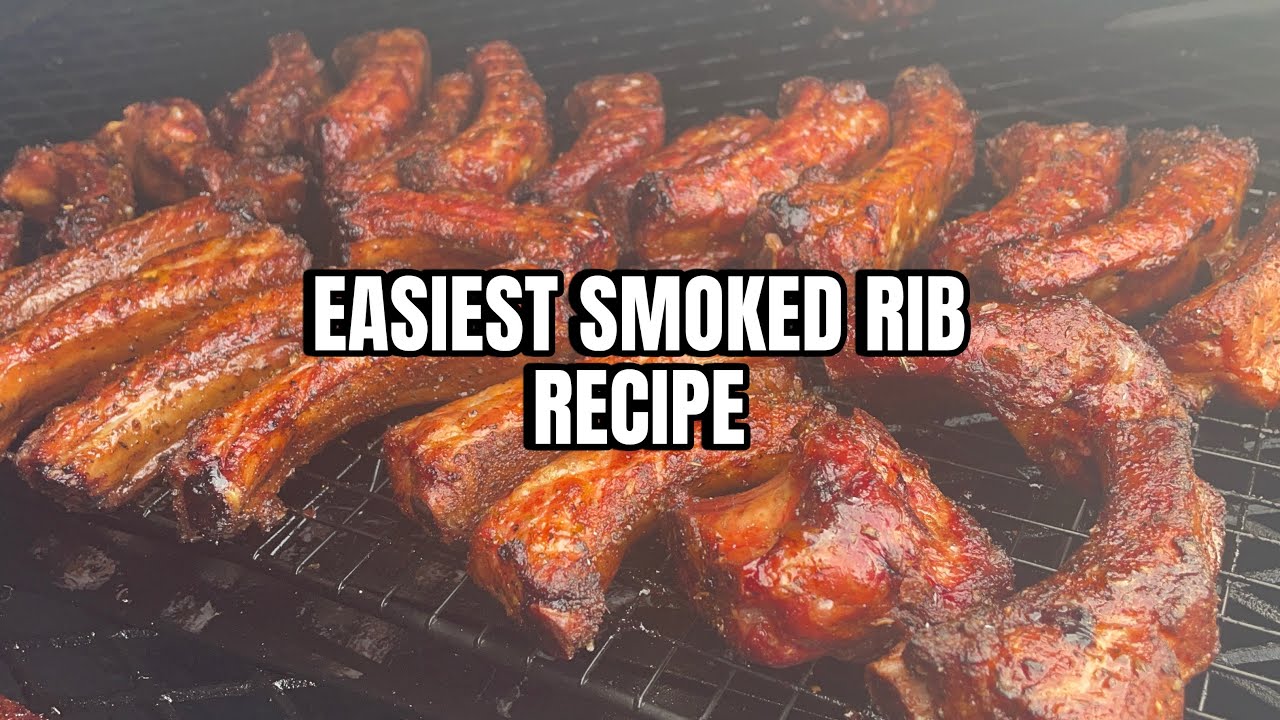
Watch the full cook on YouTube
| Stage | Temp | What it means |
|---|---|---|
| Smoke phase | 2 hours | Spritzing every 30 minutes after the rub has bonded. |
| Covered braise | 1½ hours at 275°F | Sealed tightly. Where the tenderising happens. |
| Done | Fall-apart tender | As the recipe intends — softer than a competition rib. |
| Rest | 20 minutes | Before serving from the tray. |
Cooked party ribs keep 3–4 days refrigerated, stored in their tray sauce rather than drained. The liquid is what keeps them from drying out and the flavour deepens overnight.
Reheat covered at 250–300°F for 15–20 minutes so they steam gently back to temperature, then uncover for a few minutes if you want the glaze to tack up. A microwave works in a pinch but makes rib meat rubbery.
They freeze well for about three months in their sauce, in meal-sized portions. Thaw overnight in the fridge and reheat gently. Party ribs are one of the better barbecue leftovers precisely because the braise leaves them sitting in liquid rather than drying out on a bone.
An ordinary rack of pork ribs cut into individual bones before cooking rather than after. The name describes the format — single, handheld ribs that are easy to serve to a crowd. The real advantage is bark: every rib gets crust on all four sides instead of just the top.
It keeps the surface moist and tacky, which helps smoke keep adhering, and it slows the bark setting so it develops more evenly. It does not meaningfully add moisture to the meat. Wait an hour before the first spritz so the rub has bonded, or you will simply wash it off.
No. Once the ribs are covered they take on no more smoke, so the smoker has done everything it can. An oven holds a far steadier temperature than a fire that is winding down, which is exactly what a covered braise wants.
About an hour to an hour and a half for individual ribs — noticeably less than a whole rack would need. Cut ribs tenderise much faster because there is more surface in contact with the braising liquid, and beyond that they go from tender to falling apart.
Layering gives more dimension than either alone. The herb rub provides a savoury backbone and the sweet chipotle brings smoky heat and the sugar that builds bark. On a cut with this much surface area you have room for both without either dominating.
It matters less than on a whole rack, because once the bones are separated the membrane is not blocking an entire face from smoke and seasoning. Removing it still gives a slightly cleaner bite if you have the time.
No 500-word life story — just the good-to-know stuff on what’s actually in this cook. Here’s the rundown on every real ingredient, health and nutrition wise.
General nutrition info only, not medical or dietary advice — portions, brands and add-ons change the numbers.
Pork
3:31
Party-style pork ribs smoked over apple wood, buttered, and glazed with Moon Mist Rimmer for a grape, banana, and bubblegum East Coast finish.
View recipe → Pork
5:44
Pork
5:44
Tender, sticky pork ribs smoked low and slow on a pellet grill with a butter wrap and a bold Atlantic-Canadian hot-sauce glaze.
View recipe → Pork
8:08
Pork
8:08
Pork shoulders smoked low on an offset, braised in apple juice, tossed in Sweet with a Little Heat sauce, and stacked on toasted King's Hawaiian rolls.
View recipe → Pork
4:21
Pork
4:21
St. Louis ribs smoked over hardwood on a custom offset, wrapped with butter and Super Sauce, then finished until sticky, smoky, and tender.
View recipe → Pork
5:09
Pork
5:09
A pork money muscle smoked over sugar maple, butter-wrapped, and sliced into juicy medallions finished with candied cranberry hot sauce.
View recipe → Pork
7:17
Pork
7:17
Pork ribs brined in Coldstream Clear Lager with apples, blood orange, red onion, and garlic, then smoked low and slow for juicy, game-day ribs.
View recipe →