 Sausage
5:12
Sausage
5:12
Maple Smoked Sausages
A repeatable, beginner-friendly maple smoked sausage on an offset smoker, with a proper cure for that classic snap, colour, and flavour.
View recipe →From-scratch pork sausages loaded with jalapeños and cheddar, stuffed into natural casings, cured overnight, and slowly smoked for a perfect snap and juicy texture.
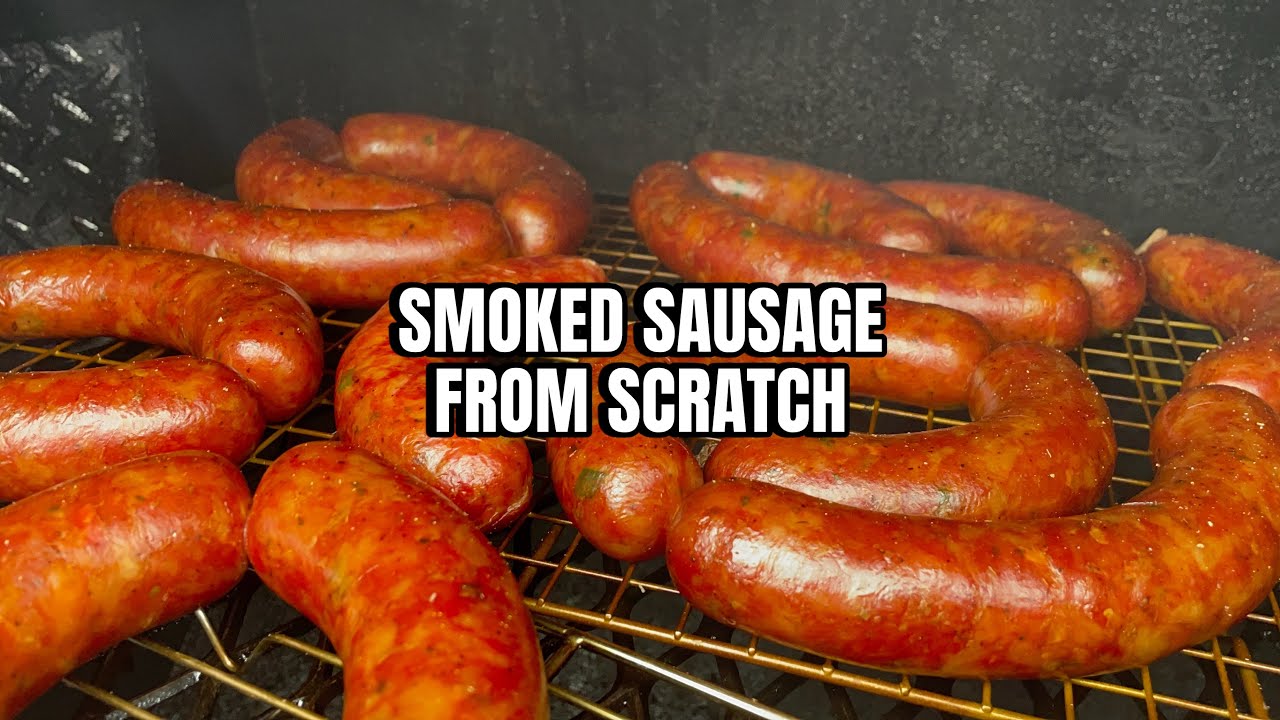
Watch the full cook on YouTube
| Stage | Temp | What it means |
|---|---|---|
| Mix | Sticky and tacky | The protein bind. If it does not stick to your hand upside down, keep mixing. |
| Overnight rest | 8–12 hours | Uncovered in the fridge. Cure distributes, casings dry, smoke will adhere. |
| Smoke schedule | 150°F rising to 200°F | Step up hourly. Rushing renders the fat out. |
| Done | 150–155°F / 66–68°C | Then straight into an ice bath to stop carryover. |
Because they're cured and cooked, these sausages keep well: refrigerate up to a week, or vacuum-seal and freeze up to 3 months. Let them dry fully before sealing.
Reheat gently — a low oven, a warm grill, or a simmer — since they're already cooked through; you're just warming, not cooking. They also freeze and thaw better than most fresh sausage thanks to the cure.
For a low, slow smoke like this — where the sausage spends hours in the danger zone — yes. Curing salt (sodium nitrite) protects against botulism and gives the cured colour and tang. Don't confuse it with regular salt, and use the precise weight given.
Too much heat, too fast. Use cubes of higher-melt cheese (not shredded), keep everything cold when mixing, and climb the smoker temperature gradually so the cheese softens without running out.
Natural hog casings give the classic snap for links this size. Soak and rinse them well before stuffing. Collagen casings work too but don't have quite the same bite.
Cook to an internal temperature of about 150–155°F. Going higher risks drying them out and forcing the fat out; a thermometer is the only reliable way to tell.
For a long low-temperature smoke like this, yes. Sodium nitrite prevents botulism during the hours the sausage spends in the temperature range where bacteria thrive, and it is also what gives cured sausage its colour and characteristic tang. Weigh it precisely — this is not an ingredient to estimate.
The protein bind never formed. Salt and mechanical mixing extract myosin from the meat, which acts as glue — you mix until the mixture is genuinely sticky and clings to an upturned hand. Too little salt, or a mixture that warmed up during mixing, both prevent it.
No 500-word life story — just the good-to-know stuff on what’s actually in this cook. Here’s the rundown on every real ingredient, health and nutrition wise.
General nutrition info only, not medical or dietary advice — portions, brands and add-ons change the numbers.
Sausage
5:12
A repeatable, beginner-friendly maple smoked sausage on an offset smoker, with a proper cure for that classic snap, colour, and flavour.
View recipe → Sausage
5:30
Sausage
5:30
Homemade cured pork sausage seasoned with Halifax Honey Company Stingin' Hot Seasoning, smoked low and slow for sweet heat, juicy texture, and a perfect snap.
View recipe → Sausage
5:17
Sausage
5:17
From-scratch pork sausages loaded with jalapeño and Monterey Jack, cured overnight and smoked in slow stages over charcoal and cherry wood for a perfect snap.
View recipe → Snacks & Sides
5:10
Snacks & Sides
5:10
Cold smoke cheddar on a gas grill with just a smoke tube — no dedicated smoker needed. Perfect for homemade gifts.
View recipe → Sausage
6:09
Sausage
6:09
Sweet, smoky homemade cranberry pork sausage — ground, cured, cold smoked, and finished low for great snap and balance.
View recipe → Sausage
4:32
Sausage
4:32
Halifax's official food turned into a smoked sausage — spiced donair beef ground fresh, cured, and smoked low and slow on an offset.
View recipe →