Saucy Rossy BBQ
Pork

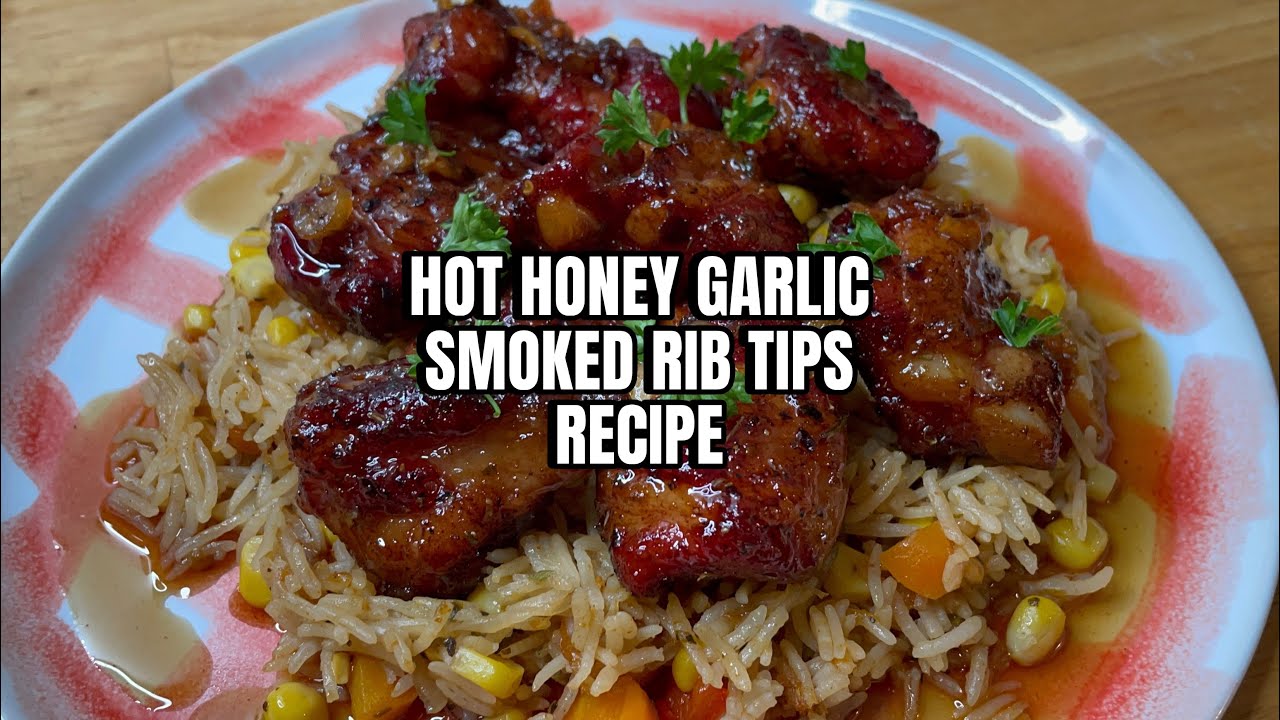
Smoked Hot Honey Garlic Rib Tips

Budget-friendly pork rib tips smoked on a pellet grill, then braised sticky in a homemade Zombie Edition hot honey garlic sauce and served over rice.
Time~2.5 hrs Prep15 min YieldServes 4 CategoryPork Watch5:57
Smoked Hot Honey Garlic Rib Tips — watch on YouTube

Watch the full cook on YouTube

Method

  1. 1Season the rib tips lightly — just enough to enhance flavour without overpowering the glaze.Season lightly and deliberately. The glaze is doing the flavour work and a heavy rub underneath would fight a sweet honey garlic sauce rather than supporting it.
  2. 2Smoke the rib tips on the pellet smoker at 300°F for 1.5–2 hours, until the edges start to crisp and the fat begins to render.300°F rather than 225°F is right for rib tips — they are the cartilage-heavy trimmings from a spare rack, full of connective tissue and fat, and the higher heat renders them properly rather than slowly drying them. You want the edges crisping and the fat visibly rendering before the braise.
  3. 3Cook the minced garlic in a saucepan until fragrant, then stir in the Zombie Edition Hot Honey along with the soy sauce and lemon juice.Cook the garlic until fragrant but not browned — it goes bitter fast, and there is a lot of it in a small volume of sauce.
  4. 4Bring the sauce to a quick boil, then drop the heat and simmer for a few minutes to thicken and blend.A quick boil then a simmer. That short reduction thickens the honey and lets the soy and lemon integrate rather than tasting like three separate things.
  5. 5Place the rib tips in a tinfoil tray, pour the hot honey garlic sauce over top, cover with foil, and return to the smoker for another 45 minutes to braise.Cover tightly. This is a braise now, and a loose cover roasts rather than braises. 45 minutes is where the cartilage softens and the tips turn genuinely tender.
  6. 6Spoon the sticky rib tips and sauce over hot rice and serve.Serve over rice so the sauce has something to soak into — half the point of the dish is the sauce.

Watch it on YouTube

What each ingredient is doing

Pork rib tips
The cartilage-heavy strip trimmed off a spare rack to make it St. Louis cut. Cheap because they are offcuts, and excellent because all that cartilage turns silky when braised. They are not ribs and should not be cooked like them.
Hot honey
Sweet and hot at once, and the backbone of the glaze. Two-thirds of a bottle sounds like a lot; reduced with soy and lemon it lands as a thick sticky sauce rather than pure sweetness.
Garlic
Minced and cooked until fragrant only. Browned garlic turns bitter, and in a small volume of sauce there is nowhere for that to hide.
Soy sauce
Salt and umami, and the thing that stops the glaze being one-dimensionally sweet. A couple of dashes is enough — it is concentrated.
Lemon juice
Acidity to cut the honey. Without it the sauce cloys after a few bites.
Rice
Not a garnish. Rib tips throw a lot of sauce and rendered fat, and the rice is what carries it.

Temperature guide

StageTempWhat it means
Smoke phase1.5–2 hours at 300°FEdges crisping, fat visibly rendering.
Braise45 minutes coveredWhere the cartilage softens and the tips turn tender.
DoneCartilage soft, meat yieldingRib tips are about texture rather than a target temperature.
SauceSimmered to thickenA quick boil then a few minutes down.

Pitmaster tips

  • 300°F rather than 225°F. Rib tips are cartilage and fat, and the higher heat renders them properly where a low slow cook just dries them out.
  • Season lightly. The glaze is the flavour, and a heavy rub underneath competes with a sweet honey garlic sauce.
  • Cook the garlic until fragrant, not browned. Browned garlic goes bitter and there is a lot of it in a small volume of sauce.
  • Simmer the sauce for a few minutes before it goes on. That short reduction thickens it and integrates the soy and lemon rather than leaving three separate flavours.
  • Cover the tray tightly for the braise. A loose cover roasts rather than braises, which is slower and drier.
  • The lemon is not optional. Without acid a honey-based glaze cloys after a few bites.
  • Serve over rice. Rib tips throw a lot of sauce and rendered fat, and rice is what makes that an asset rather than a mess.
  • Buy rib tips deliberately rather than treating them as scraps — they are one of the best value cuts on the counter and cook in half the time of a rack.
  • Skim some fat off the tray before serving if it looks excessive. Rib tips render a great deal.
  • Chili flakes are worth adding if your hot honey is on the mild side — the sauce reduces and the heat dilutes.

If it goes wrong

The tips are chewy and rubbery
Undercooked. That is cartilage that has not broken down yet — cover them again and give another 20–30 minutes in the braise.
The sauce is thin and runs off
Not reduced enough. Simmer it a few minutes longer before it goes over the tips; honey thickens noticeably as it cooks down.
It tastes bitter
The garlic browned. Cook it just until fragrant — in a small saucepan that takes under a minute.
It is cloyingly sweet
Not enough acid. Add more lemon juice, and a splash of vinegar works too.
It is greasy
Rib tips render a lot of fat. Skim the tray before serving, or tip some off before adding the sauce.

Ways to change it up

Use spare ribs
The same treatment works on a full rack cut into pieces, though it needs longer. Rib tips are the cheaper and faster option.
Add ginger
Grated fresh ginger with the garlic takes the sauce firmly in an Asian direction and suits the soy.
Finish uncovered
15 minutes with the foil off at the end to let the glaze tack up. Stickier, less saucy.
Maple instead of honey
Maple syrup with chili flakes gives a similar sweet-hot result with a different character.
Over noodles
Instead of rice. The sauce suits either, and noodles carry it just as well.

What to serve it with

  • Over hot rice, so the sauce has something to soak into.
  • Scattered with sliced green onion and sesame seeds.
  • A sharp cucumber salad or quick pickles against the sweetness.
  • Extra chili flakes for anyone who wants more heat.
  • Cold lager.

Storage & reheating

Rib tips keep 3–4 days refrigerated, stored in their sauce rather than drained — the liquid keeps them from drying and the flavour deepens overnight. Cool before sealing.

Reheat covered at 275°F for 15–20 minutes, or gently in a covered pan on the stovetop with a splash of water. The sauce thickens considerably when chilled and loosens back on reheating. A microwave works but tends to make the meat rubbery.

They freeze well for about three months in their sauce, in portions. Thaw overnight in the fridge and reheat gently. Rib tips are one of the better barbecue leftovers precisely because the braise leaves them sitting in liquid rather than drying out.

FAQ

What are rib tips?

The cartilage-heavy strip trimmed off a rack of spare ribs to square it into a St. Louis cut. They are cheap because they are an offcut, and genuinely good because all that cartilage turns silky and gelatinous when braised. They are not ribs and should not be cooked on a rib timetable.

Why cook them at 300°F rather than low and slow?

Rib tips are cartilage and fat rather than a big muscle. Higher heat renders them properly and crisps the edges; a low, slow cook mostly just dries them out over a longer period without achieving anything a hotter cook would not.

Why does the sauce need lemon juice?

Acidity. A honey-based glaze with garlic and soy is sweet and salty but has nothing cutting through it, and it cloys within a few bites. The lemon is what makes the sauce keep tasting good rather than becoming heavy.

How do I know when rib tips are done?

By texture rather than temperature. The cartilage should be soft and yielding rather than rubbery, and the meat should give easily. If they are chewy they need more time in the covered braise, not less.

Can I make the sauce ahead?

Yes — it keeps a week refrigerated in a sealed jar and reheats easily. It thickens as it chills, so warm it gently before pouring over the tips. Making it ahead also lets the garlic mellow into the honey.

My hot honey is not very hot — what should I do?

Add chili flakes to the saucepan. The sauce reduces during simmering and again during the braise, but heat also disperses through the fat, so a mild honey often lands milder still. Taste the finished sauce before it goes on and adjust.

Know your cook

More information, cause recipe back stories are stupid

No 500-word life story — just the good-to-know stuff on what’s actually in this cook. Here’s the rundown on every real ingredient, health and nutrition wise.

Pork
Pork is a protein-rich meat that's especially high in thiamine (vitamin B1) — more than most other meats — plus B6, niacin, and selenium. Tenderloin and loin are lean; shoulder and belly are richer, so portion the fattier cuts.
Chili peppers
Chili peppers are low in calories and high in vitamin C and antioxidants, and their heat comes from capsaicin, which may give metabolism a small nudge. Dial the amount to your spice tolerance.
Garlic
Garlic adds big flavour for almost no calories and contains sulphur compounds (like allicin) long studied for heart and immune benefits. It's one of the healthiest ways to season a cook.
Citrus
Citrus brightens rich, smoky food and brings vitamin C and antioxidants along with its acidity. A squeeze at the end cuts fattiness and lifts flavour without added salt or sugar.
Honey
Honey is a natural sweetener that adds gloss and flavour; it's still sugar, so it's used sparingly. In raw form it carries trace antioxidants and beneficial compounds.
Salt
Salt is essential for seasoning and, in brines and cures, for texture and safety — but sodium adds up fast in BBQ. Season with intention and balance salty cooks with fresh sides.

General nutrition info only, not medical or dietary advice — portions, brands and add-ons change the numbers.

← All recipes  ·  All 38 pork recipes